 By Hemant Sharma
 Madhya Pradesh sits quietly at the heart of India, yet its influence stretches far beyond geography. Often called the Heart of India, Madhya Pradesh connects north to south and east to west, not just by location but by culture, history, and heritage. This land has witnessed prehistoric humans, powerful empires, spiritual movements, and wildlife that still roams freely.
What makes Madhya Pradesh special is its depth. It doesn’t shout for attention like some regions—it reveals itself slowly. Ancient caves, dense forests, sacred rivers, and historic cities exist side by side. To understand India fully, one must understand Madhya Pradesh. Let’s check out the top 10 interesting facts about Madhya Pradesh and see why this state is one of the most significant yet underrated parts of the country.
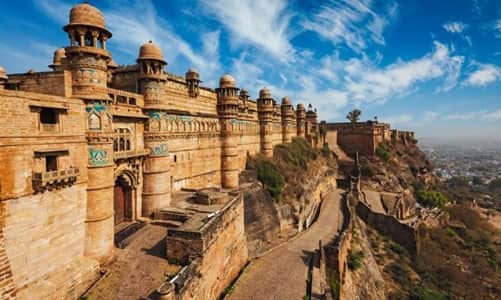
1. Madhya Pradesh Is Literally the Heart of India
Madhya Pradesh is located at the geographical center of India.
This central position has shaped its history for centuries. Trade routes, empires, and cultures passed through this region, leaving behind a rich mix of influences. Because of this, Madhya Pradesh shares cultural similarities with northern, southern, eastern, and western India, making it a true cultural bridge.
2. The State Has One of the Richest Ancient Histories
Human presence in Madhya Pradesh dates back over 100,000 years.
The Bhimbetka rock shelters contain prehistoric cave paintings that are among the oldest in the world. These paintings show early human life, hunting scenes, rituals, and daily activities. They prove that Madhya Pradesh has been a cradle of civilization long before recorded history.
3. Madhya Pradesh Is Home to the Famous Khajuraho Temples
The Khajuraho Group of Monuments is one of India’s greatest architectural treasures.
Built by the Chandela dynasty, these temples are famous for their intricate carvings and artistic expression. While often misunderstood for their erotic sculptures, the temples actually represent the full cycle of human life—spirituality, duty, pleasure, and liberation—blended into stone with extraordinary skill.
4. Madhya Pradesh Has the Highest Forest Cover in India
Among Indian states, Madhya Pradesh has the largest forest area.
These forests support rich biodiversity, including tigers, leopards, deer, and countless bird species. Forests are deeply tied to tribal life, ecology, and climate balance. The state plays a major role in preserving India’s natural heritage.
5. Madhya Pradesh Is Known as the Tiger State of India
Madhya Pradesh is often called the Tiger State of India because it has the highest tiger population in the country.
National parks like Kanha, Bandhavgarh, Pench, and Satpura are globally known for wildlife conservation. These parks not only protect animals but also support eco-tourism and local livelihoods. The success of tiger conservation here is a model for the rest of India.
6. Sanchi Is One of the Most Important Buddhist Sites in the World
The Sanchi Stupa, built during the reign of Emperor Ashoka, is one of the oldest stone structures in India.
It represents the spread of Buddhism across Asia. The carvings on the stupa depict stories from the Buddha’s life and teachings without using human figures. Sanchi reflects a time when Madhya Pradesh was a major center of learning and spiritual exchange.
7. Ujjain Is One of Hinduism’s Holiest Cities
Ujjain is one of the seven sacred cities of Hinduism and hosts the famous Mahakaleshwar Jyotirlinga.
It is also one of the four locations where the Kumbh Mela is held. Beyond religion, Ujjain was an ancient center of astronomy and science. Indian calendars were once calculated based on the prime meridian passing through this city.
8. Madhya Pradesh Has a Large and Diverse Tribal Population
Madhya Pradesh is home to one of India’s largest tribal populations, including Gond, Bhil, Baiga, and Sahariya communities.
These tribes have unique languages, art forms, music, festivals, and ecological knowledge. Their traditions are closely linked to forests and nature. Tribal culture adds depth and diversity to the state’s identity.
9. The Narmada River Is Central to the State’s Identity
The Narmada River flows through Madhya Pradesh from east to west, unlike most Indian rivers.
It is considered sacred and lifegiving. The Narmada Parikrama, a pilgrimage around the river, reflects deep spiritual connection. The river also supports agriculture, settlements, and ecosystems across the state.
10. Madhya Pradesh Balances Heritage With Modern Growth
In recent years, Madhya Pradesh has focused on infrastructure, education, and industry while preserving its heritage.
Cities like Bhopal and Indore are growing rapidly, with Indore repeatedly ranked among India’s cleanest cities. Development here aims to move forward without erasing the past—a balance that many regions struggle to achieve.
Conclusion
Madhya Pradesh is not just the center of India on a map—it is the center of India’s story. From prehistoric caves and sacred rivers to wildlife sanctuaries and spiritual cities, the state carries layers of history that few places can match.
Quiet, vast, and deeply rooted, Madhya Pradesh doesn’t demand attention. It earns respect through depth. To explore this state is to explore the soul of India itself—ancient, resilient, and endlessly fascinating.