 By Hemant Sharma
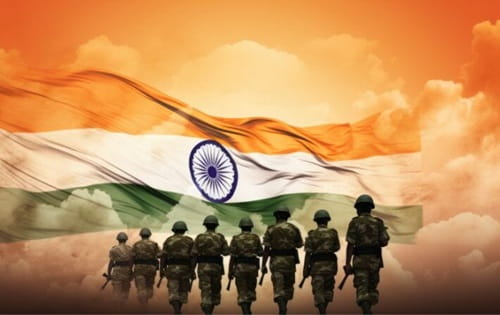
 Indian Army is not just a military force—it is a symbol of discipline, sacrifice, and quiet strength. While civilians live their everyday lives, soldiers of the Indian Army stand guard in deserts, jungles, mountains, and frozen glaciers, often in conditions where survival itself is a challenge. They do not seek attention, yet they carry the responsibility of protecting over a billion lives.
What makes the Indian Army truly remarkable is not only its size or weapons, but its values. Courage, duty, and service come before comfort. From border security to disaster relief, the Army serves the nation far beyond the battlefield. Let’s check out the top 10 facts about the Indian Army and understand why it commands deep respect across the country.
1. The Indian Army Is One of the Largest in the World
The Indian Army is among the largest standing armies on the planet, with over a million active soldiers and a massive reserve force.
Despite its size, the Army functions with precise coordination and discipline. Managing such a large force requires advanced training systems, strong leadership, and a clear chain of command. The strength of the Indian Army lies not just in numbers, but in unity and organization.
2. The Indian Army Guards Some of the Harshest Terrains on Earth
Indian soldiers are deployed in some of the most extreme environments in the world.
From the icy heights of the Siachen Glacier to scorching deserts of Rajasthan and dense northeastern jungles, the Army adapts to every condition. Soldiers train specifically for high-altitude warfare, extreme cold, and survival in isolation. Few armies globally operate across such diverse terrain year-round.
3. Discipline Is the Backbone of the Indian Army
Discipline in the Indian Army is not enforced by fear—it is built through training, tradition, and responsibility.
From day one, soldiers are trained to follow orders, respect hierarchy, and maintain self-control even under pressure. This discipline ensures that decisions are executed quickly and effectively during critical situations where hesitation can cost lives.
4. The Indian Army Plays a Major Role in Disaster Relief
The Indian Army is often the first responder during natural disasters.
Floods, earthquakes, landslides, cyclones, and pandemics—whenever civilian systems are overwhelmed, the Army steps in. Soldiers rescue civilians, distribute supplies, build temporary infrastructure, and restore communication. This humanitarian role earns the Army deep trust among citizens.
5. Women Serve in Key Roles in the Indian Army
Women are an important part of the Indian Army and serve as officers in various branches.
They command units, fly helicopters, serve in medical corps, and handle critical administrative and technical roles. Over time, opportunities for women have expanded, reflecting the Army’s evolving structure while maintaining the same standards of discipline and excellence.
6. The Indian Army Follows a Strong Code of Ethics
The Indian Army operates under strict rules of engagement and ethical conduct.
Respect for civilians, prisoners, and humanitarian laws is emphasized during training. Soldiers are taught that power must be exercised responsibly. This moral framework helps the Army maintain professionalism even in high-pressure conflict zones.
7. Training in the Indian Army Is Among the Toughest
Army training pushes soldiers to their physical and mental limits.
Recruits undergo rigorous routines that test endurance, alertness, teamwork, and resilience. Training continues throughout a soldier’s career, adapting to new threats, technologies, and combat methods. The goal is not just strength, but readiness in every situation.
8. The Indian Army Has a Rich History and Traditions
The Indian Army carries traditions that date back centuries.
Regiments have unique histories, mottos, uniforms, and battle honors. These traditions create pride and belonging among soldiers. Regimental identity strengthens morale and preserves stories of bravery passed from one generation to the next.
9. The Army Operates Modern and Indigenous Technology
The Indian Army uses a mix of modern imported systems and indigenously developed equipment.
From advanced tanks and artillery to drones and communication systems, the Army continuously upgrades its capabilities. Collaboration with Indian defense industries strengthens self-reliance and technological growth.
10. Service in the Indian Army Is a Way of Life
Being a soldier is not just a job—it is a lifelong identity.
Even after retirement, soldiers carry the values of discipline, integrity, and service. Families of soldiers also share sacrifices, living with uncertainty and long separations. This collective commitment makes the Army a true institution, not just an organization.
Conclusion
The Indian Army stands firm not because it is visible everywhere, but because it is reliable everywhere. Its soldiers operate quietly, enduring hardship without complaint, guided by duty rather than recognition.
In a changing world filled with uncertainty, the Indian Army remains a pillar of stability. It protects borders, supports citizens, and upholds values that go beyond uniforms and ranks. Understanding the Indian Army is understanding the spirit of service—strong, silent, and unwavering.