 By Hemant Sharma
 Forests do not scream when they lose a tree. Orchids do not cry when their last flower falls. A rare palm does not make headlines like a tiger or elephant. Yet, deep inside rainforests, islands, swamps, and dry mountains, some of Earth’s most unusual plants are standing on the edge of forever. Many of them have survived ice ages, fires, storms, and shifting continents, but now they are losing the battle against habitat destruction, climate change, poaching, disease, invasive species, and human greed.
The IUCN Red List remains one of the world’s most important sources for tracking extinction risk, and it now assesses more than 172,000 species, with over 48,000 listed as threatened. Recent global tree assessments also show that more than one in three tree species faces extinction, proving that plant extinction is not a small or hidden issue anymore.
Here are ten of the most endangered and remarkable plants still fighting for survival on our Earth.
1. Wood’s Cycad
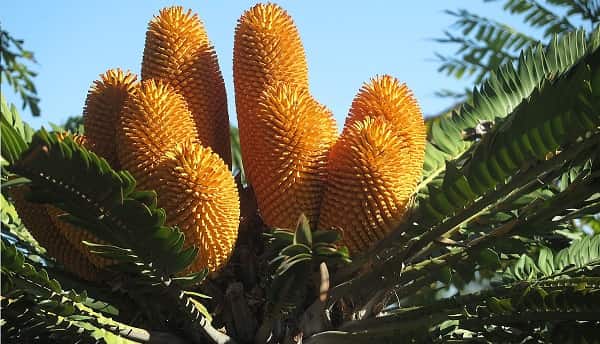
Wood’s Cycad is often called one of the loneliest plants in the world. It was discovered in South Africa in the 1890s, but today it is considered Extinct in the Wild. The saddest part is that all surviving plants are clones of the same male plant. No female Wood’s Cycad has ever been found, which means natural reproduction is almost impossible unless a female is discovered someday. Kew lists Encephalartos woodii as Extinct in the Wild under IUCN criteria.
This ancient-looking cycad belongs to a plant group that existed long before humans. Its survival now depends on botanical gardens, scientific care, and cloning. It is alive, but only because humans are keeping it alive.
2. Three Kings Kaikōmako
The Three Kings Kaikōmako, also known as Pennantia baylisiana, is one of the rarest trees on the planet. It grows naturally only on the Three Kings Islands of New Zealand. For a long time, only one tree was known in the wild. The New Zealand Plant Conservation Network says only one tree occurs in the wild and warns that the species remains at serious risk until more trees survive naturally.
This plant shows how fragile island species can be. A single storm, drought, disease attack, or old age could wipe out the last wild individual. Conservationists have propagated it in cultivation, but restoring it safely in nature remains the real challenge.
3. Bois Dentelle
Bois Dentelle is a beautiful flowering tree from Mauritius, known for its delicate white bell-shaped flowers. Its name means “lace wood,” and the flowers truly look like fine natural lace. But behind this beauty is a frightening reality. Reports have described only a tiny number of Bois Dentelle trees remaining in Mauritius, and it has been listed among the world’s most threatened species.
Its biggest enemies are habitat loss and invasive plants that crowd out native vegetation. Mauritius has already lost many unique species because of deforestation and introduced plants. Bois Dentelle is a reminder that beauty alone cannot save a species.
4. Wollemi Pine
The Wollemi Pine looks like a tree from the age of dinosaurs, and in a way, it is. It belongs to an ancient plant family around 200 million years old. Scientists believed it was known only from fossils until living trees were discovered in Australia in 1994. Today, the wild population is extremely small. NSW National Parks says only 46 adult trees and 43 juveniles remain in the wild.
Its exact wild location is kept secret to protect it from disease and illegal collection. Fire, climate stress, and pathogens are major risks. The Wollemi Pine is not just a tree; it is a living bridge to Earth’s deep past.
5. Franklin Tree
The Franklin Tree once grew along the Altamaha River in Georgia, USA. Today, it is Extinct in the Wild but survives in gardens and arboretums. Kew lists Franklinia alatamaha as Extinct in the Wild, while Harvard’s Arnold Arboretum notes that all living Franklin trees trace back to collected material from the past.
It has creamy white flowers and a gentle fragrance, but no one has confirmed it growing naturally in the wild for more than two centuries. Its story is painful but also hopeful: careful cultivation saved it from total extinction.
6. Western Underground Orchid
The Western Underground Orchid is one of the strangest plants on Earth. It lives its entire life underground, even when it flowers. Found in Western Australia, it has no green leaves and does not depend on sunlight like ordinary plants. Instead, it survives through a relationship with fungi connected to shrubs.
The Australian Government lists Rhizanthella gardneri as Critically Endangered, and all known habitat is considered critical to its survival. Because it stays underground, it is very hard to find and protect. Agriculture, drought, soil changes, and habitat loss make its future highly uncertain.
7. Ghost Orchid
The Ghost Orchid is famous for its haunting white flower that seems to float in humid swamp forests. It grows in parts of Florida and Cuba and is one of the most admired orchids in the world. That admiration has also become a danger. Illegal collection, habitat loss, water changes, hurricanes, and climate pressure have pushed it toward extinction.
In 2025, the U.S. Fish and Wildlife Service moved to list the Ghost Orchid as endangered, identifying poaching as one of its primary ongoing threats. Recent Florida guidance also notes major declines caused by habitat fragmentation, poaching, and climate shifts.
8. Attenborough’s Pitcher Plant
Named after Sir David Attenborough, this pitcher plant grows in the Philippines and is known for its large trap-like pitchers. These pitchers collect liquid and trap insects, making the plant one of the most dramatic carnivorous species in the world.
Nepenthes attenboroughii is assessed as Critically Endangered due to its very limited range and threats from plant poachers. Its beauty has made it famous, but fame can be dangerous for rare plants. Illegal collection can destroy a wild population faster than people realise.
9. Suicide Palm
The Suicide Palm of Madagascar has one of the most dramatic life cycles in the plant kingdom. It grows for many years, then produces a huge flowering display and dies after fruiting. Kew notes that a census recorded 740 known individuals on the peninsula, while other conservation sources still highlight the extremely small number of adult trees in its restricted habitat.
It is Critically Endangered because it grows in a very limited area and depends on strong local conservation. Its survival is closely tied to community protection, seed collection, and habitat care.
10. Jellyfish Tree
The Jellyfish Tree is found only on Mahé Island in Seychelles. It gets its name from the unusual shape of its fruit, which looks like a jellyfish. For years, people even thought it had disappeared, until it was rediscovered in the 1970s. Today, it remains Critically Endangered and is one of the rarest island trees.
Its small population, poor regeneration, invasive species, and habitat pressure make its future fragile. Like many island plants, it survives in a narrow ecological space. Once that space is damaged, there is nowhere else for it to go.
Conclusion
Endangered plants are not just rare decorations of nature; they are living history, medicine, oxygen, food chains, and climate protectors. Saving them means saving the quiet foundation of life on Earth. If these plants disappear, the planet becomes poorer in ways we may understand only when it is too late.