 By Hemant Sharma
 Some trees give shade. Some give flowers. Some give fruits. But a few trees do something more powerful — they rise like living towers and make humans feel small. In the Himalayan forests, they stand wrapped in mist. In the Western Ghats, they push through the rainforest canopy. In Kerala, Assam, Arunachal Pradesh, Uttarakhand, Himachal Pradesh, Karnataka, and Madhya Pradesh, these trees are not just tall plants. They are old guardians of rivers, mountains, soil, birds, insects, and forest life.
India does not have one simple official list of the “top 10 tallest individual trees” because tree height changes with age, forest condition, rainfall, and measurement method. So this article focuses on the tallest tree species found in India, including native giants and a few introduced species that have grown impressively in Indian conditions.
1. Eucalyptus Grandis
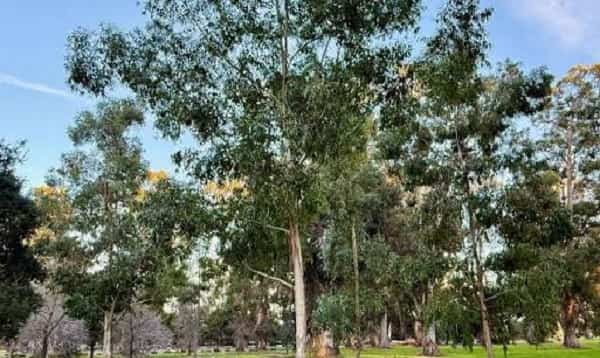
Eucalyptus grandis, also known as rose gum or flooded gum, is one of the tallest tree species grown in India. It is not native to India, but it has been planted in several parts of the country for timber, pulpwood, plantations, and forestry use. Under good conditions, Eucalyptus grandis usually reaches around 45–55 metres, and some sources describe it as capable of growing even taller in its native range.
In India, eucalyptus plantations are common in states like Kerala, Tamil Nadu, Karnataka, Andhra Pradesh, Telangana, and parts of north India. The tree grows straight, fast, and high, which makes it commercially useful. However, eucalyptus should be planted carefully because large plantations may affect local water balance and biodiversity if not managed properly.
Approximate height: 45–55 metres
Common regions in India: Kerala, Tamil Nadu, Karnataka, Andhra Pradesh, Telangana
Main value: Timber, pulpwood, plantation forestry
2. Deodar Cedar
Deodar is one of the grandest trees of the Himalayas. Its name comes from the Sanskrit word “Devadaru,” meaning “wood of the gods.” This name suits it perfectly because an old deodar forest feels spiritual, silent, and majestic. Deodar is native to the Himalayan region and is especially seen in Himachal Pradesh, Uttarakhand, Jammu & Kashmir, and parts of the western Himalayas.
The tree can commonly reach 40–50 metres and, in exceptional conditions, around 60 metres. It has drooping branches, a strong trunk, and a graceful pyramid-like crown when young. Deodar wood has been traditionally valued for construction because it is durable and naturally aromatic.
Approximate height: 40–60 metres
Common regions in India: Himachal Pradesh, Uttarakhand, Jammu & Kashmir
Main value: Timber, mountain ecology, cultural importance
3. Pindrow Fir
Pindrow Fir, also called West Himalayan Fir, is another tall conifer of the Himalayan forests. It grows in cool, moist, high-altitude regions and often stands with deodar, spruce, and blue pine. Its straight trunk and conical crown give it a classic mountain-forest appearance.
Reliable conifer records describe Abies pindrow as reaching up to 60 metres in height. In India, it is mainly seen in the western Himalayas, especially at higher elevations. It plays an important ecological role by supporting mountain forest structure, soil protection, and high-altitude biodiversity.
Approximate height: Up to 60 metres
Common regions in India: Jammu & Kashmir, Himachal Pradesh, Uttarakhand
Main value: Himalayan forest ecology, timber, soil protection
4. Himalayan Spruce
Himalayan Spruce, also known as Morinda Spruce or West Himalayan Spruce, is a tall evergreen conifer found in the western Himalayas. It has long needle-like leaves and drooping branchlets that make it look graceful and slightly mysterious in misty forests.
Conifer records describe Picea smithiana as a tree that can grow up to 60 metres tall. It usually grows in cool temperate forests at high elevations. In India, it is mainly associated with Himalayan states and is often found along with deodar, fir, and blue pine. Its height and elegant form make it one of India’s finest mountain trees.
Approximate height: 50–60 metres
Common regions in India: Himachal Pradesh, Uttarakhand, Jammu & Kashmir
Main value: Mountain forest cover, timber, ornamental value
5. Blue Pine
Blue Pine, also called Himalayan Pine or Kail, is a tall conifer found in Himalayan valleys. It gets its name from the bluish-green shade of its long needles. Compared to chir pine, blue pine usually prefers cooler and slightly wetter mountain regions.
Pinus wallichiana can reach around 30–50 metres, with some descriptions noting trees above 50 metres in favourable conditions. It is important in Himalayan forestry and is also planted as an ornamental tree in large gardens and hill stations. Its cones, needles, and overall form make it one of the most attractive tall pines of India.
Approximate height: 30–50+ metres
Common regions in India: Kashmir, Himachal Pradesh, Uttarakhand
Main value: Timber, resin, mountain forest beauty
6. Wild Jack Tree
Wild Jack Tree, scientifically known as Artocarpus hirsutus, is one of the tall native evergreen trees of the Western Ghats. It is related to jackfruit but grows wild in moist forests. It is also known as Aini or Jungle Jack in some regions.
CABI describes Artocarpus hirsutus as a large tree of the Western Ghats that can reach up to 60 metres in height. It is found mainly in Kerala, Karnataka, and parts of the southern Western Ghats. Its timber is valued, and the tree also supports forest wildlife through fruits and habitat.
Approximate height: Up to 60 metres
Common regions in India: Kerala, Karnataka, Western Ghats
Main value: Timber, fruits for wildlife, evergreen forest ecology
7. Dipterocarpus Indicus
Dipterocarpus indicus is one of the great rainforest trees of the Western Ghats. It is an endemic species, meaning it is naturally restricted to this region. These trees grow in evergreen forests and can rise above the surrounding canopy as emergent giants.
This species can reach about 50 metres in height and is considered endangered. It is found from northern Karnataka to southern Kerala in low and medium elevation evergreen forests. Because it is rare and ecologically important, protecting its habitat is more important than using it as a timber tree today.
Approximate height: Around 50 metres
Common regions in India: Karnataka, Kerala, Western Ghats
Main value: Rainforest ecology, endemic biodiversity, conservation value
8. Sal Tree
Sal is one of India’s most important native forest trees. It dominates large forest belts in central, eastern, and northern India. Sal forests are common in states like Jharkhand, Chhattisgarh, Odisha, Madhya Pradesh, West Bengal, Uttar Pradesh, Bihar, and Uttarakhand.
World Agroforestry notes that Sal can reach up to 50 metres in exceptional cases, though normal trees are usually shorter. Sal wood is strong, durable, and highly valued. Ecologically, Sal forests support elephants, deer, birds, insects, fungi, and countless forest-dependent communities.
Approximate height: 30–50 metres
Common regions in India: Jharkhand, Chhattisgarh, Odisha, Madhya Pradesh, West Bengal, Uttarakhand
Main value: Hardwood timber, forest ecology, tribal livelihood
9. Chir Pine
Chir Pine is one of the most common tall trees of the lower Himalayas. It grows on dry slopes and ridges and is easily recognised by its long needles and reddish-brown bark. In Uttarakhand and Himachal Pradesh, chir pine forests cover large mountain areas.
Conifer records describe Pinus roxburghii as capable of reaching up to 55 metres. The tree is useful for resin, timber, fuelwood, and local livelihoods. However, chir pine forests can also be fire-prone because dry pine needles collect on the forest floor. Proper forest management is therefore very important.
Approximate height: 30–55 metres
Common regions in India: Uttarakhand, Himachal Pradesh, Jammu region, lower Himalayas
Main value: Resin, timber, hill forest ecology
10. Teak
Teak is one of India’s most famous timber trees. It may not always be as tall as Himalayan conifers, but old and well-grown teak trees can become extremely impressive. Teak grows naturally in several parts of India, especially in Madhya Pradesh, Maharashtra, Karnataka, Kerala, Tamil Nadu, Odisha, Chhattisgarh, and the Northeast.
Kew notes that teak can grow up to 40 metres, while World Agroforestry records maximum heights of about 45 metres in older stands. Kerala’s famous Kannimara Teak in Parambikulam is one of India’s celebrated giant teak trees, showing how grand this species can become when protected for centuries.
Approximate height: 30–45 metres
Common regions in India: Madhya Pradesh, Maharashtra, Kerala, Karnataka, Tamil Nadu, Odisha
Main value: Premium timber, plantations, forest heritage
Conclusion
India’s tallest trees are not just forest giants; they are climate protectors, water guardians, wildlife homes, and living heritage. From Himalayan deodar to Western Ghats rainforest trees, these giants remind us that protecting forests is the only way to keep India’s natural height alive.