 By Meghna Sharma
 India’s supermarket business in 2026 is being reshaped by two forces at once. Large organised retailers are opening more stores in Tier 2 and Tier 3 cities, while quick-commerce platforms are changing what shoppers expect from price, assortment and delivery speed. Yet the physical supermarket remains important for the monthly family basket, fresh produce, bulk purchases, private-label products and categories that customers still prefer to compare in person.
The leading chains have very different models. Reliance uses several grocery formats, DMart is built around large value-focused stores, More is pushing deeper into smaller towns, and regional chains such as Ratnadeep and Vijetha have created dense local networks. This ranking considers current physical footprint, grocery focus, geographic reach, brand strength, operating scale and expansion momentum rather than store count alone. It also includes major hypermarket formats where grocery is a central part of the business.
1. Reliance Smart Bazaar
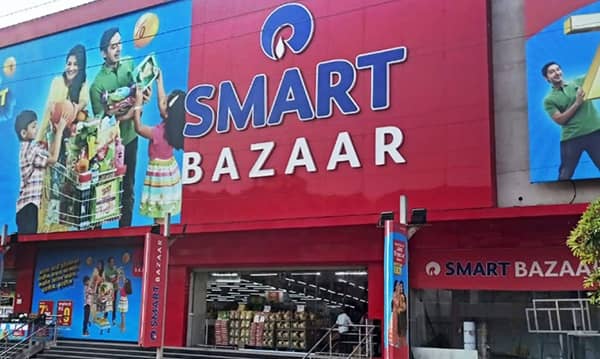
Reliance Smart Bazaar sits at the top of India’s organised grocery market because of the scale and ecosystem behind it. Reliance Retail said its Smart Bazaar network crossed 1,000 stores during FY2025-26, with a large share of the network now serving Tier 2 and smaller markets. The wider grocery business also includes Smart Superstore, Smart Point, Fresh Signature, Freshpik and other formats.
Smart Bazaar is positioned as a large-format value destination for staples, packaged food, fresh produce, home and personal care, general merchandise and household needs. Reliance’s advantage is not simply outlet count. It can connect stores with JioMart, private brands, farmer sourcing, warehousing and a huge customer base. That combination makes Reliance the strongest overall grocery-retail platform in India in 2026.
2. DMart
DMart remains one of India’s most powerful supermarket brands and arguably the country’s clearest benchmark for value retailing. Avenue Supermarts operated 503 DMart stores as of June 30, 2026, after adding three stores during the first quarter of FY2026-27. The chain sells food, FMCG, home products, apparel and general merchandise, with grocery remaining at the heart of the shopping basket.
DMart’s reputation is built on everyday low prices rather than constant promotional theatre. Tight cost control, high inventory turnover and ownership or long leases of strategically chosen properties have helped it build unusually strong economics for Indian grocery retail. It continues to expand beyond large metros, where newer stores are contributing an increasing share of growth. DMart Ready supports online ordering in selected cities, but the company remains firmly store-led.
3. More Retail
More Retail is one of India’s largest dedicated supermarket businesses. Backed by Samara Capital and Amazon, the chain had about 775 stores when management outlined an aggressive expansion programme in 2025, with plans to move beyond 1,000 stores and eventually build a 3,000-store network. Its strongest markets are in South India and the East, with increasing attention on Tier 2, Tier 3 and Tier 4 towns.
More has deliberately simplified its strategy around the supermarket format after reducing exposure to large hypermarkets and weaker geographies. Fresh food, staples, FMCG and everyday household products form the core assortment. The chain also works closely with Amazon Fresh in supported markets and is investing in omnichannel fulfilment. This sharper focus makes More one of the most important supermarket expansion stories in India in 2026.
4. Ratnadeep
Ratnadeep is one of the strongest regional supermarket chains in the country. Founded in Hyderabad in 1987, the company now reports more than 170 Ratnadeep stores across Telangana, Karnataka and Andhra Pradesh. Ratnadeep Retail’s wider portfolio, which also includes National Mart and other formats, has grown to around 190 stores.
The chain has built its reputation around fresh produce, groceries, dairy, frozen food, imported products, personal care and a clean neighbourhood-shopping experience. Ratnadeep Select targets more premium shoppers, while Ratnadeep Express provides a smaller convenience-led format. Its success is a reminder that Indian grocery retail is not only a national-chain story: a retailer with deep local density, strong sourcing and high customer familiarity can be extremely competitive in its home markets.
5. Spencer’s
Spencer’s is one of the oldest names in organised Indian grocery retail and remains an important supermarket and hypermarket chain, especially in West Bengal and eastern Uttar Pradesh. The company has substantially rationalised its footprint in recent years, including the exit of 49 stores in FY2024-25, and is now concentrating investment on the regional clusters where the business has stronger sales productivity.
Spencer’s combines staples, fresh food, FMCG, personal care and household products with larger-format categories such as apparel and general merchandise. Its hypermarkets are also known for gourmet, bakery and speciality food sections. The company has strengthened its membership programme and online grocery service, with management increasingly focused on store productivity rather than expansion for its own sake. That regional reset keeps Spencer’s relevant in a highly competitive market.
6. Vijetha Supermarkets
Vijetha Supermarkets has developed into a major South Indian grocery chain with more than 100 stores across Andhra Pradesh and Telangana. Founded in 1999, it has built a loyal customer base around neighbourhood convenience, fresh food and a wide assortment that now runs into tens of thousands of products.
Vijetha sells groceries, staples, fruits and vegetables, dairy, home-care products, personal care and kitchen essentials across both local and national brands. The company has also invested in digital retail through Vijetha Live, its online grocery platform. Its strength comes from regional density: shoppers in Hyderabad and several Andhra Pradesh markets encounter the brand frequently, which creates repeat purchasing and strong local recognition. For a regional supermarket operator, that depth can be more valuable than a thin pan-India footprint.
7. Star Bazaar
Star Bazaar is the Tata Group’s principal food-and-grocery supermarket and hypermarket chain, operated mainly through Trent Hypermarket, a 50:50 joint venture between Trent and Tesco. By FY2025-26, the Star portfolio had grown to 84 offline stores across 12 cities. The stores focus on groceries, FMCG, staples, fresh fruits and vegetables, dairy, meat, home care and selected general merchandise.
A major part of Star’s strategy is its own-brand assortment. Private labels give the chain more control over product differentiation, pricing and margins, while the fresh-food offer helps drive repeat visits. Star does not yet have the store count of Reliance, More or DMart, but Tata and Tesco’s backing, improving store economics and renewed investment in expansion make it one of India’s most significant organised grocery chains.
8. Nature’s Basket
Nature’s Basket occupies a different position from mass-market supermarkets. Owned by Spencer’s Retail, it is one of India’s best-known premium and gourmet grocery chains. The RPSG Group says the brand operates more than 30 stores in key consumption centres such as Mumbai, Pune, Bengaluru and Kolkata.
Its assortment includes premium fruits and vegetables, imported food, artisanal products, cheese, meat, seafood, bakery items, speciality ingredients and gifting. Nature’s Basket also uses an omnichannel model through stores and online ordering. The chain is much smaller than the value-led leaders, but it has a clear niche: customers looking for international ingredients, premium fresh food and speciality products that are often difficult to find in a standard neighbourhood supermarket. That differentiation earns it a place among India’s leading supermarket brands.
9. LuLu Hypermarket
LuLu Hypermarket has a smaller Indian store count than the domestic leaders but an outsized presence wherever it operates. In May 2026, LuLu Group opened its 18th store in India and its sixth location in Bengaluru. The group now runs hypermarkets and related grocery formats across several major Indian cities and continues to invest heavily in new retail projects.
LuLu stores are typically large destinations carrying fresh produce, groceries, bakery, dairy, meat, seafood, imported foods, household products, electronics and lifestyle merchandise. Its international sourcing network is a major differentiator, particularly for shoppers seeking products from the Gulf, Europe and Asia. The chain’s planned expansion into more Indian cities gives it significant long-term potential despite its comparatively modest current outlet count.
10. Nesto Hypermarket
Nesto Hypermarket is a major Gulf-based retail brand with a growing regional presence in India, especially Kerala. Its Indian network includes hypermarkets and smaller Nesto Easy formats in locations such as Kozhikode, Kottakkal, Edappal, Kalpetta, Kannur, Tirur, Thrissur and Pattambi. In 2026, the wider Nesto network reached its 154th outlet globally.
The stores combine groceries and fresh food with household goods, fashion, electronics and general merchandise, following the large-format retail model familiar across the Gulf. Nesto is not yet a national Indian supermarket chain, but its depth in Kerala and continuing expansion make it one of the more important regional organised retailers to watch. Its appeal is especially strong among customers familiar with Gulf-style hypermarket shopping and broad imported-food assortments.
Conclusion
India’s supermarket market in 2026 is no longer a simple contest between a handful of national chains. Reliance has built extraordinary grocery scale through multiple formats, DMart remains the benchmark for disciplined value retailing, and More is expanding aggressively into smaller towns. At the same time, Ratnadeep, Vijetha and Spencer’s show how strong regional concentration can still compete effectively with national networks.
Quick commerce will continue to pressure supermarkets on convenience, but physical stores retain advantages in fresh food, large baskets, discovery and bulk buying. The chains most likely to succeed are those that combine competitive pricing with reliable fresh produce, useful private labels, efficient local sourcing and an online option that complements rather than weakens the store business.
FAQs
Q1. Why are Blinkit, Zepto and BigBasket not included in this supermarket-chain ranking?
They are important grocery businesses, but this list focuses on branded walk-in supermarket and hypermarket networks. Blinkit and Zepto primarily operate through dark stores built for delivery, while BigBasket is principally an e-grocery platform. Their economics and customer experience are different from conventional supermarkets, so mixing them into one ranking would be misleading.
Q2. What is the difference between a supermarket and a hypermarket?
A supermarket is primarily focused on food, groceries, household essentials and everyday consumer products. A hypermarket is usually much larger and combines a supermarket with additional departments such as apparel, electronics, homeware and general merchandise. In India, many major grocery chains operate both formats, so this ranking includes hypermarkets where grocery remains a core business.
Q3. Are supermarket prices the same online and inside the store?
Not always. App-only coupons, delivery charges, membership benefits, bank promotions and location-specific offers can change the final price. A product may be cheaper in the store on one day and cheaper online on another. For a large monthly basket, comparing the final bill rather than individual headline discounts is more useful.
Q4. Do supermarket private labels usually cost less than national brands?
Often they do because the retailer controls more of the sourcing, packaging and distribution process. However, lower price does not automatically mean lower quality. Customers should compare ingredients, pack size and unit price. Private labels are increasingly important to chains such as DMart, Reliance and Star because they can improve both customer value and retailer margins.
Q5. What should shoppers check when buying fresh food from a large supermarket?
For fruits, vegetables, dairy, meat and frozen food, check freshness, packaging, use-by dates and storage conditions rather than relying only on the reputation of the chain. For frozen or chilled products, make sure the item is properly cold when purchased and transport it home promptly. Large chains may have strong supply systems, but product-level checks still matter.