 By Hemant Sharma
 Every kitchen tells a story through the way it is used, and the countertop sits at the centre of that experience. It must support cooking, cleaning, and daily movement while contributing to the overall look and feel of the space. Homeowners are often faced with options that differ in durability, maintenance, and visual character. Comparing kitchen countertop materials makes it easier to identify which choices best suit individual lifestyles, practical needs, and long-term design goals.
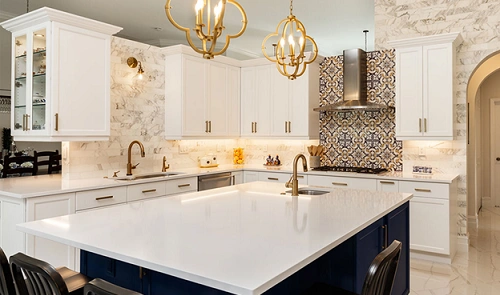
What Factors Determine the Best Kitchen Countertop?
The best kitchen countertop is determined by a combination of durability, maintenance needs, resistance to heat and moisture, and how well the material supports everyday cooking and cleaning habits.
- Durability — resistance to scratches, impacts, and heat.
- Moisture and stain resistance — essential for cooking and cleaning areas.
- Maintenance requirements — ease of cleaning, sealing, or upkeep.
- Aesthetic appeal — colour, pattern, finish, and overall integration with kitchen décor.
- Environmental and health considerations — sustainability, hygiene certifications, and indoor safety.
These factors help narrow down suitable options for both compact kitchens and expansive luxury layouts.
Comparing Common Kitchen Countertop Materials
Understanding the differences between common kitchen countertop materials helps homeowners evaluate which options best balance performance, maintenance, and design preferences.
| Material | Durability | Heat Resistance | Scratch Resistance | Maintenance | Visual Flexibility | Lifespan |
| Engineered Surfaces | High uniform strength | Moderate to high | High | Low | Excellent consistency, seamless design | 15‑25 years |
| Granite | High | Very high | Moderate | Sealing required | Natural veining, unique patterns | 20‑30 years |
| Quartz | Very high | High | High | Low | Wide colour palette, uniform | 20‑25 years |
| Solid Surface | Moderate | Moderate | Moderate | Easy cleaning | Seamless joins, flexible shapes | 10‑15 years |
| Laminate | Low to moderate | Low | Low | Easy cleaning, avoid heat | Limited patterns | 5‑10 years |
| Wood | Moderate | Low | Low | Requires sealing and care | Warm, natural texture | 10‑20 years |
| Ceramic | High | High | Moderate | Grout maintenance | Patterned tiles, visual variety | 15‑20 years |
This comparison shows that engineered surfaces, granite, and quartz provide strong durability with low maintenance, making them well suited for busy modern kitchens. Wood and laminate add warmth but need more care, while ceramic offers design flexibility with certain practical compromises.
How Lifestyle Impacts Material Choice?
Choosing the right material often depends on household usage patterns. Families with young children or heavy cooking routines benefit from low‑maintenance, durable surfaces like engineered surfaces, granite, or quartz. Compact kitchens benefit from lighter-coloured, seamless slabs that make the space feel open. Luxury kitchens with islands or open layouts may prioritize visual appeal alongside performance, opting for materials that maintain uniformity and hygiene over large surfaces.
Understanding Performance and Longevity
Durability, moisture resistance, and ease of cleaning are interconnected. Materials like engineered surfaces offer low porosity, reducing staining and bacterial growth, which is critical in high-use areas. Natural stone can offer excellent heat resistance but may require periodic sealing to maintain performance. Wood adds warmth but is prone to dents and water damage if not maintained. Recognizing these performance characteristics ensures the countertop performs reliably over time without compromising hygiene or visual appeal.
How Engineered Surfaces Integrate Technology and Design?
Advanced surface technologies combine natural minerals, resins, and pigments to create slabs with controlled and reliable performance. Their non-porous structure, resistance to scratches and heat, and ability to handle heavy daily use make them well suited for modern kitchens. Consistent patterns allow seamless installation, larger slab formats, and integrated design features such as waterfall edges and continuous backsplashes. Brands like Neotra enhance these advantages with low-maintenance surfaces that offer anti-bacterial properties along with strong resistance to chemicals and stains, supporting both everyday practicality and refined design.
Matching Materials to Maintenance Expectations
Maintenance requirements vary by material. Engineered surfaces, quartz, and solid surface countertops typically need only regular wiping with mild cleaners. Granite requires periodic sealing, wood requires conditioning and protection against moisture, and ceramic tiles require grout maintenance. Selecting a material compatible with your maintenance preferences ensures the kitchen remains clean, hygienic, and visually appealing with minimal effort.
Aesthetic Considerations and Design Flexibility
Visual continuity and integration with kitchen decor are key. Engineered surfaces provide consistent colour and veining across slabs, simplifying layout planning and creating seamless finishes. Granite and quartz offer natural beauty but can vary from slab to slab. Wood and laminate introduce warmth and texture, while ceramic allows pattern play and customization. By understanding these characteristics, homeowners can select kitchen countertop materials that balance style with practical performance.
Sustainability and Environmental Impact
Sustainability has become an important consideration for today’s homeowners. Surface materials developed in line with IGBC-aligned practices help reduce material waste, while NSF standards support safe, hygienic use in food-preparation areas. In comparison, natural stone and wood often have a higher environmental impact due to quarrying, processing, and long-distance transportation. Selecting materials that balance performance, visual appeal, and environmentally responsible production supports a more thoughtful, sustainable kitchen design.
Budget and Long-Term Value
Initial costs and long-term investment differ by material. Engineered surfaces may have higher upfront costs but offer predictable performance, low maintenance, and longevity, reducing lifecycle expenses. Natural stone or quartz can be expensive initially, with granite requiring sealing over time. Wood and laminate often have lower upfront costs, but may require replacement or repair sooner. Evaluating both the initial budget and the long-term value ensures the countertop aligns with financial and practical expectations.
Selecting the Ideal Kitchen Countertop Material
When choosing kitchen countertop materials, consider:
- Household lifestyle and daily usage intensity
- Desired aesthetic and kitchen style
- Maintenance willingness and hygiene expectations
- Durability against heat, moisture, and impact
- Environmental sustainability and certifications
For compact kitchens, seamless, low-maintenance engineered surfaces maximize space and hygiene. In luxury kitchens, natural stone or engineered slabs with visual continuity allow focal points like islands or feature counters while maintaining performance. A practical balance ensures surfaces perform reliably while supporting style, convenience, and longevity.
Conclusion
Selecting kitchen countertop materials involves balancing aesthetics, durability, hygiene, and lifestyle suitability. Engineered surfaces offer modern homeowners reliable, low-maintenance, and environmentally responsible solutions for kitchens, bathrooms, and living areas. Traditional materials provide character and natural beauty but may require more maintenance and careful handling. By evaluating daily usage, maintenance expectations, design integration, and sustainability considerations, homeowners can choose materials that deliver functional efficiency, long-term value, and visual harmony across the home.