 By Hemant Sharma
 St. Ignatius of Loyola is one of the most influential spiritual figures in Christian history. He didn’t begin life as a monk or priest. In fact, his early years were shaped by ambition, warfare, and dreams of personal glory. What makes Ignatius remarkable is not just his faith—but the dramatic transformation that reshaped his life and, eventually, the global Church.
His ideas changed how spirituality, education, and discipline were understood. These ten facts explain who St. Ignatius of Loyola really was and why his legacy still matters today.
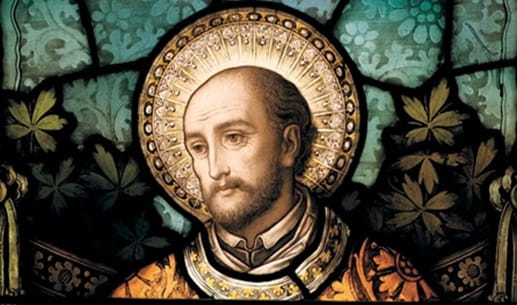
1. He Was Originally a Soldier, Not a Saint
Ignatius was born in 1491 in Spain and trained as a soldier.
He loved military life, honor, fine clothes, and personal fame. His early ambitions had nothing to do with religion. He wanted recognition, not holiness.
His spiritual journey began only after his worldly dreams collapsed.
2. A Cannonball Changed His Life Forever
Ignatius’s life changed during a battle in 1521.
A cannonball shattered his leg, ending his military career. Forced to lie in bed for months, he had nothing to read except religious books—mainly about Jesus and the saints.
This long recovery became a turning point. His inner world changed before his body healed.
3. He Underwent a Deep Inner Conversion
While recovering, Ignatius noticed something unusual.
Dreams of fame left him empty, but thoughts of serving God gave him deep peace. This observation became the foundation of his spiritual insight: not all desires lead to life.
This idea later shaped his entire spiritual method.
4. He Lived as a Beggar and Pilgrim
After recovery, Ignatius gave up his former life completely.
He traveled as a pilgrim, lived in poverty, begged for food, and spent long hours in prayer. For a time, people thought he was mentally unstable.
But this radical simplicity helped him detach from ego and ambition.
5. The Spiritual Exercises Came from His Own Experience
Ignatius did not write theory—he wrote from lived experience.
His famous book, The Spiritual Exercises, grew out of years of prayer, struggle, self-examination, and reflection. It is designed not to inform, but to transform the person practicing it.
Even today, it is used worldwide by priests, laypeople, and leaders.
6. He Studied Seriously as an Adult
Ignatius realized zeal alone was not enough.
In his 30s, he returned to school to study grammar, philosophy, and theology—often alongside much younger students. This required humility and patience.
His belief was simple: faith and intellect must work together.
7. He Founded the Jesuits
Ignatius founded the Society of Jesus, commonly known as the Jesuits.
This group emphasized discipline, education, obedience, and global mission. Unlike many religious orders, Jesuits did not live isolated in monasteries.
They were meant to go anywhere, do anything, for the greater good.
8. Jesuits Became Leaders in Education
Under Ignatius’s vision, education became a mission.
Jesuits established schools, colleges, and universities across the world. Many of today’s top educational institutions were shaped by Ignatian principles.
Education was seen as a way to serve both God and society.
9. He Emphasized “Finding God in All Things”
Ignatius taught that spirituality is not limited to churches.
Work, study, relationships, and daily decisions can all become paths to God. This practical spirituality made his teachings accessible to ordinary people.
Faith, for Ignatius, was meant to be lived—not escaped into.
10. He Died Quietly—but Left a Global Legacy
St. Ignatius died in 1556, quietly and without drama.
At his death, the Jesuits were already spreading across continents. Today, his influence continues in spirituality, education, leadership training, and social service worldwide.
His transformation from soldier to saint became a blueprint for inner change.
Conclusion
St. Ignatius of Loyola’s life proves that greatness doesn’t begin with perfection. It begins with honesty. He didn’t become holy by escaping the world—but by understanding his own desires and learning to choose wisely.
His legacy is not about extreme acts, but about discernment—learning what leads to peace, purpose, and truth. That is why, centuries later, his ideas still guide leaders, seekers, and ordinary people trying to live with clarity.
Ignatius didn’t just change his life. He changed how millions learn to look inward—and act outward with meaning.