 By Hemant Sharma
 Tirupati Balaji Temple is not just a place of worship—it is one of the most powerful spiritual centers in the world. Dedicated to Lord Venkateswara, an incarnation of Vishnu, the temple sits atop the Tirumala hills and attracts millions of devotees every year.
Faith, mystery, discipline, and devotion come together here in ways few places can match. These ten facts explain why Tirupati Balaji holds such a special place in the hearts of devotees and why the temple continues to fascinate believers and researchers alike.
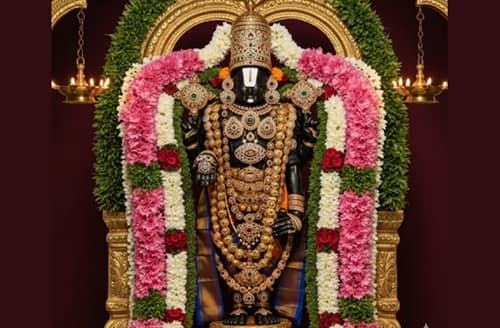
1. Lord Balaji Is Believed to Be Lord Vishnu in Kaliyuga
Tirupati Balaji is worshipped as Lord Venkateswara, a form of Vishnu who appeared in the age of Kaliyuga.
According to belief, Lord Vishnu chose Tirumala as his earthly residence to guide and protect humanity during this difficult age.
This belief is the core reason devotees see Tirupati as a living, active divine presence—not just a symbolic temple.
2. Tirupati Is One of the Richest Temples in the World
The Tirupati temple is among the wealthiest religious institutions globally.
Devotees donate money, gold, land, and jewelry as offerings. These donations are voluntary and driven purely by faith, gratitude, and fulfillment of vows.
Despite its wealth, the temple runs massive charitable activities, including free meals, hospitals, education, and pilgrim services.
3. Devotees Offer Their Hair as a Sacred Sacrifice
One of the most unique practices at Tirupati is tonsuring—offering hair to the deity.
Devotees shave their heads as a sign of humility, surrender, and gratitude. The hair is later auctioned and the proceeds are used for temple welfare and charity.
This practice symbolizes ego removal and complete devotion.
4. The Idol of Balaji Has Unusual Physical Properties
The idol of Lord Venkateswara is considered mysterious.
Devotees and some observers claim that the idol feels warm to the touch, even though the temple environment is cool. The idol is also said to sweat, requiring regular wiping.
Additionally, the idol always appears moist, despite being made of stone. These features have no universally accepted scientific explanation.
5. Tirupati Laddu Has a Geographical Indication (GI) Tag
Tirupati Laddu is world-famous.
It is the only temple prasadam in India to receive a GI tag, protecting its unique identity and preparation method.
Millions of laddus are prepared annually, following strict religious procedures. For devotees, it is not just food—it is divine blessing.
6. The Temple Follows Extremely Strict Ritual Discipline
Every ritual at Tirupati follows ancient Vaikhanasa Agama traditions.
From how the deity is woken up to how offerings are made, every step is timed, regulated, and unchanged for centuries.
This discipline is one reason devotees believe the divine presence remains powerful and uninterrupted.
7. Tirumala Temple Is Older Than Most Written Records
The temple’s origins date back over 1,000 years, though legends trace it much further.
Various dynasties—including the Pallavas, Cholas, Pandyas, and Vijayanagara kings—contributed to its expansion and protection.
Inscriptions found in the temple complex reveal continuous worship across centuries.
8. Devotees Walk Miles Barefoot to Reach the Temple
Many pilgrims choose to climb the Tirumala hills on foot, barefoot.
The walk is seen as an act of devotion, discipline, and purification. Some pilgrims chant continuously during the journey.
This physical effort strengthens emotional surrender and deepens the spiritual experience.
9. The Temple Feeds Millions for Free
Tirupati runs one of the world’s largest free food distribution programs.
The Annadanam scheme provides free meals to pilgrims every day, regardless of caste, religion, or status.
Food is treated as sacred service, reinforcing the belief that serving devotees is serving God himself.
10. Tirupati Balaji Is Considered a “Wish-Fulfilling” Deity
Devotees believe Lord Balaji listens closely to prayers.
People often visit Tirupati after wishes are fulfilled—not to ask, but to thank. This cycle of prayer and gratitude fuels the temple’s spiritual energy.
Faith here is deeply personal. For many, Tirupati is where hope feels heard.
Conclusion
Tirupati Balaji is not just a temple—it is an experience shaped by belief, discipline, mystery, and service. It stands at the intersection of ancient tradition and living faith, drawing people from all backgrounds into a shared spiritual moment.
Whether one sees Tirupati through devotion, history, or curiosity, its influence is undeniable. For millions, Lord Venkateswara is not distant or symbolic—he is present, responsive, and deeply personal.
That enduring belief is what keeps Tirupati alive, powerful, and sacred—century after century.