 By Hemant Sharma
 Abraham is one of the most important figures in the Bible—and in world history. He is not only central to the Hebrew Bible but is also deeply respected in Christianity and Islam. Abraham is often called the “father of faith” because his life story is built around trust in God, even when the future made no sense.
What makes Abraham fascinating is that he was not born a prophet, priest, or king. He was an ordinary man asked to do extraordinary things. These ten interesting facts reveal why Abraham’s story continues to shape faith, identity, and belief across religions.
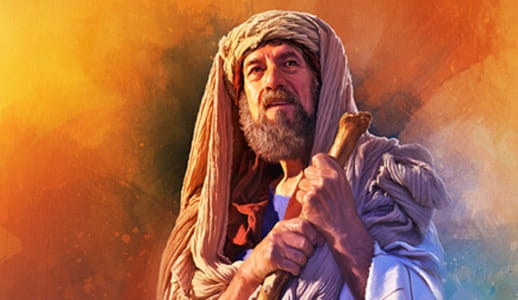
1. Abraham Was Not Born with the Name “Abraham”
Abraham’s original name was Abram, which means “exalted father.”
Later, God changed his name to Abraham, meaning “father of many nations.” This name change was not cosmetic—it symbolized a complete transformation of identity and destiny.
In the Bible, name changes often mark divine purpose, and Abraham’s new name reflected a promise that went far beyond his lifetime.
2. He Left His Homeland Without Knowing the Destination
God asked Abraham to leave his home in Ur of the Chaldeans.
What’s remarkable is that Abraham was not given a clear map or final destination. He was told to go to a land that God would show him later.
Psychologically and spiritually, this made Abraham a pioneer of faith—trusting guidance without certainty, direction without details.
3. Abraham Is Considered the Father of Monotheism
Abraham lived in a world filled with idol worship and multiple gods.
Yet he chose to believe in one God, unseen and unrepresented by idols. This belief laid the foundation for monotheism as we know it today.
His faith influenced Judaism, Christianity, and Islam—making him one of the most influential humans in spiritual history.
4. God’s Promise to Abraham Was Astronomical
God promised Abraham descendants as numerous as the stars.
At the time, Abraham had no children and was already old. The promise seemed biologically impossible, yet it became central to his faith journey.
The imagery of stars symbolized not just number, but permanence and divine scale.
5. Abraham’s Wife Sarah Also Had a Name Change
Sarah was originally called Sarai.
Her name change accompanied Abraham’s, signaling that the promise involved both of them—not Abraham alone. Despite her old age, Sarah became the mother of Isaac.
This highlights an often-overlooked truth: the covenant story includes women as active participants, not just background figures.
6. Abraham Laughed at God’s Promise
When Abraham first heard he would have a son in old age, he laughed.
This moment shows Abraham’s humanity. Faith did not erase doubt or disbelief. Instead, faith grew through them.
Interestingly, Isaac’s name literally means “he laughs,” turning doubt into fulfillment.
7. Abraham Is Known for Radical Hospitality
Abraham is famous for welcoming strangers.
In one story, he hurried to serve food to three unknown visitors. These visitors later turned out to be divine messengers.
This episode made Abraham a model of hospitality—teaching that kindness to strangers can have eternal significance.
8. The Binding of Isaac Is One of the Bible’s Most Difficult Stories
God tested Abraham by asking him to sacrifice his son Isaac.
This story is emotionally intense and often debated. At the final moment, God stopped Abraham and provided a ram instead.
The episode emphasizes trust, obedience, and the belief that God does not ultimately desire human sacrifice—setting a moral boundary in biblical theology.
9. Abraham Met a Mysterious Priest-King
Abraham encountered Melchizedek, a priest-king of Salem.
This figure appears briefly but leaves a deep theological impact. Abraham offered him a tithe, acknowledging spiritual authority.
Melchizedek later becomes an important symbol in biblical theology, especially in discussions of priesthood.
10. Abraham Is Respected Across Three Major Religions
Few figures unite religions the way Abraham does.
He is revered in:
- Judaism as the patriarch
- Christianity as the model of faith
- Islam as Ibrahim, a prophet and ancestor
This shared respect makes Abraham a rare bridge figure in religious history.
Conclusion
Abraham’s story is not about perfection—it’s about trust. He doubted, questioned, feared, and made mistakes. Yet he kept moving forward. His faith was not blind obedience, but a journey shaped by listening, choosing, and growing.
What makes Abraham extraordinary is not miracles or power, but willingness. He stepped into the unknown, believed promises that defied logic, and trusted a God he could not see.
That is why Abraham’s life still speaks today. He represents a simple but powerful truth: faith does not begin with certainty—it begins with the courage to move forward anyway.