 By Hemant Sharma
 Bhutan is not a country that tries to impress the world loudly. It doesn’t chase headlines, skyscrapers, or speed. Instead, it quietly follows its own path—one shaped by mountains, monasteries, tradition, and a deep sense of balance. Tucked away in the eastern Himalayas between India and China, Bhutan feels like a place where time slows down on purpose.
What makes Bhutan truly fascinating is not just its scenery, but its mindset. This is a nation that measures success differently, protects its culture fiercely, and treats nature as sacred rather than exploitable. In a modern world driven by profit and pace, Bhutan stands out by choosing meaning over momentum. These ten facts reveal why Bhutan is one of the most unique countries on Earth.
1. Bhutan Measures Success Through Happiness, Not Money
Bhutan is famous for introducing the idea of Gross National Happiness (GNH). Instead of focusing only on economic growth, Bhutan measures progress through well-being, mental health, culture, environment, and good governance.
This philosophy guides national policies. Development projects are evaluated not just for profit, but for their impact on people’s happiness and harmony. While Bhutan is not free from challenges, its decision to prioritize happiness over wealth has inspired global discussions about alternative development models.
2. Bhutan Is One of the World’s Most Environmentally Protected Countries
More than 70% of Bhutan is covered in forests, and the country is constitutionally required to maintain this level. Bhutan absorbs more carbon dioxide than it produces, making it one of the few carbon-negative countries in the world.
Plastic use is restricted, wildlife is protected, and large-scale deforestation is avoided. Rivers remain clean, air quality is high, and biodiversity thrives. For Bhutan, protecting nature is not a trend—it is a responsibility passed down through generations.
3. Bhutan Has No Traffic Lights
In the capital city, Thimphu, there are no traffic lights. Instead, traffic is managed by police officers standing at intersections, directing vehicles with graceful hand movements.
An attempt to install traffic lights was once made, but locals felt it disrupted the city’s calm rhythm. The lights were removed. This small detail says a lot about Bhutan’s priorities—human presence over automation, order without urgency.
4. Traditional Clothing Is Mandatory in Public Places
Bhutan is one of the few countries where citizens are required to wear traditional dress in government offices, schools, and formal settings. Men wear the gho, and women wear the kira.
This rule is not about control—it is about cultural preservation. In a world where local traditions are quickly replaced by global fashion, Bhutan ensures its identity remains visible and respected in daily life.
5. Bhutan Has a Deep Spiritual Foundation
Buddhism is not just a religion in Bhutan—it is a way of life. Monasteries, prayer flags, wheels, and rituals are part of everyday scenery.
One of the most iconic sites is Tiger’s Nest Monastery, perched dramatically on a cliff. Spiritual practice influences education, leadership, and personal conduct. Compassion, mindfulness, and balance are valued more than competition or accumulation.
6. Television and Internet Arrived Very Late
Bhutan allowed television and internet access only in 1999, making it one of the last countries to do so.
The government wanted to prepare society before opening the doors to global media. Even today, Bhutan carefully balances modern technology with traditional values. This cautious approach helped reduce cultural shock and preserve social cohesion.
7. Bhutan Has Never Been Colonized
Unlike many nations, Bhutan was never colonized by foreign powers. Its rugged geography, diplomatic skill, and isolation helped it maintain independence.
This uninterrupted sovereignty allowed Bhutan to develop its political and cultural systems organically. Many of its traditions, laws, and social structures evolved without external force.
8. Education and Healthcare Are Free
The Bhutanese government provides free education and healthcare to its citizens. Schools focus not only on academics, but also on ethics, environmental awareness, and cultural values.
Healthcare reaches even remote mountain villages through clinics and outreach programs. This focus on basic human needs reflects Bhutan’s commitment to well-being over profit.
9. Tourism Is Carefully Controlled
Bhutan does not encourage mass tourism. Visitors must follow a high-value, low-impact tourism policy, paying a daily fee that supports local development and conservation.
This system limits overcrowding, protects fragile environments, and ensures tourism benefits local communities rather than damaging them. As a result, Bhutan remains peaceful, clean, and culturally intact.
10. Bhutanese Architecture Follows Strict Traditional Rules
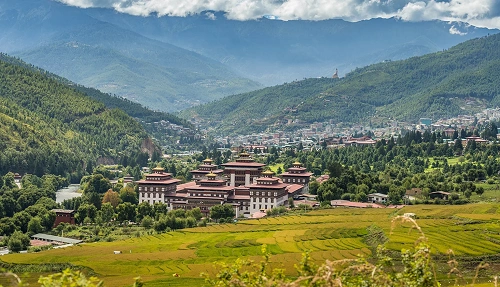
Buildings in Bhutan must follow traditional architectural styles. Concrete structures are allowed, but they must look traditional from the outside.
This creates visual harmony across towns and villages. No glass skyscrapers break the skyline. Even modern buildings blend naturally with the landscape, preserving Bhutan’s unique aesthetic identity.
Conclusion
Bhutan is not perfect, and it does not claim to be. But it offers something rare in today’s world—a reminder that progress does not have to mean losing oneself. Through conscious choices, Bhutan has protected its culture, environment, and values while slowly embracing modern life.
In choosing happiness over speed, balance over excess, and nature over noise, Bhutan shows that another way of living is possible. Quiet, steady, and deeply rooted, Bhutan stands as a lesson the modern world still needs to learn.