 By Hemant Sharma
 Karnataka is one of those places that quietly holds everything—ancient history, cutting-edge technology, dense forests, long coastlines, classical art, and modern cities. It doesn’t rely on one identity. Instead, it balances many worlds at once.
From stone temples older than a thousand years to glass towers shaping India’s digital future, Karnataka shows how tradition and progress can coexist without canceling each other out. These ten interesting facts reveal why Karnataka is not just a state on the map, but a living archive of India’s past and future.
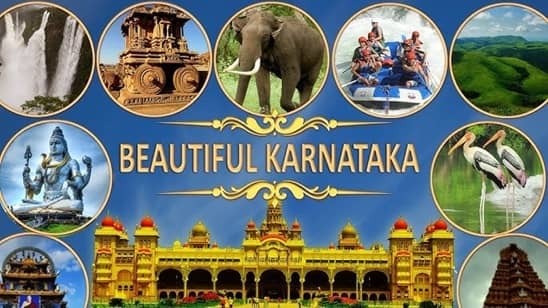
1. Karnataka Was Home to One of India’s Greatest Empires
Karnataka once stood at the center of immense power.
The Vijayanagara Empire, one of the richest and strongest empires in Indian history, ruled large parts of South India from here. Its capital, Hampi, was once larger and wealthier than many European cities of its time.
Today, Hampi’s ruins—temples, bazaars, and massive stone structures—are silent, but they speak loudly of Karnataka’s historical importance.
2. Karnataka Has One of the Oldest Living Languages
Kannada is one of the world’s ancient languages still in use.
It has a written history of over 1,500 years, with inscriptions, literature, and poetry dating back to early centuries. Kannada is not just a spoken language—it has a deep literary tradition with classical status.
From ancient epics to modern novels, the language continues to evolve while staying rooted in history.
3. Bengaluru Is India’s Technology Capital
Bengaluru is often called the Silicon Valley of India.
It is home to thousands of tech companies, startups, research centers, and global IT firms. The city played a major role in shaping India’s software and startup revolution.
What makes this interesting is the contrast—tree-lined streets, old neighborhoods, and centuries-old temples exist alongside tech parks and innovation hubs.
4. Karnataka Has Every Major Landscape
Few states offer such geographic variety.
Karnataka has beaches along the Arabian Sea, dense forests in the Western Ghats, dry plateaus in the interior, fertile river basins, and misty hill regions. You can go from tropical coastline to cool hills within hours.
This diversity supports rich wildlife, agriculture, and tourism—and makes Karnataka environmentally significant.
5. The Western Ghats Are a Global Biodiversity Hotspot
A large portion of the Western Ghats runs through Karnataka.
This mountain range is one of the world’s most important biodiversity hotspots. It hosts rare plants, animals, birds, and insects found nowhere else on Earth.
These forests play a crucial role in rainfall patterns, water supply, and climate balance across South India.
6. Karnataka Has the Second-Highest Number of Protected Monuments in India
History is everywhere in Karnataka.
The state has thousands of protected monuments, including temples, forts, stepwells, palaces, and inscriptions. Dynasties like the Chalukyas, Hoysalas, Kadambas, and Wodeyars left behind architectural masterpieces.
The intricate stone temples of Belur and Halebidu show engineering and artistry far ahead of their time.
7. Mysore Palace Is One of India’s Most Visited Monuments
Mysore Palace is not just beautiful—it’s iconic.
During festivals, especially Dussehra, the palace is illuminated with thousands of lights, creating a sight that attracts millions of visitors.
The palace reflects Karnataka’s royal heritage and the cultural importance of Mysuru as a center of art, music, and tradition.
8. Karnataka Is a Leader in Coffee Production
India’s coffee culture began in Karnataka.
The state produces the largest share of Indian coffee, especially in regions like Coorg and Chikmagalur. The climate, altitude, and soil make these areas ideal for high-quality coffee beans.
Coffee estates here are not just farms—they are ecosystems with shade trees, birds, and wildlife living alongside cultivation.
9. Jog Falls Is One of India’s Tallest Waterfalls
Jog Falls is among the tallest waterfalls in India.
Fed by the Sharavathi River, the falls transform dramatically during monsoon season, turning into a massive curtain of roaring water.
It’s a reminder of Karnataka’s raw natural power—quiet for much of the year, overwhelming when the rains arrive.
10. Karnataka Has Shaped Indian Music and Arts
Karnataka is a major center of Carnatic music, classical dance, and folk traditions.
Many legendary musicians, composers, and artists emerged from the region. Even today, music, dance, theater, and storytelling remain deeply rooted in everyday cultural life.
Art here is not confined to stages—it lives in temples, festivals, streets, and homes.
Conclusion
Karnataka is not defined by one identity—and that’s its strength. It is ancient and modern, natural and industrial, spiritual and scientific, all at once. Few places manage this balance without losing their core.
From forgotten empires to global technology hubs, from rain-soaked forests to sunlit plateaus, Karnataka tells a long story of adaptation and continuity. To understand Karnataka is to understand how India itself survives—by evolving without forgetting where it came from.
Every visit reveals a different layer. And that’s what makes Karnataka endlessly interesting.