 By Hemant Sharma
 Turtles look calm, slow, and almost timeless—and that’s not an illusion. They are among the oldest living creatures on Earth, carrying a design that has barely changed for millions of years. Whether gliding through oceans, basking on riverbanks, or moving patiently across land, turtles live by a rhythm very different from ours.
Behind their quiet presence lies a world of fascinating biology, survival strategies, and unexpected abilities. These ten interesting facts show why turtles are not just cute or ancient—but truly extraordinary.
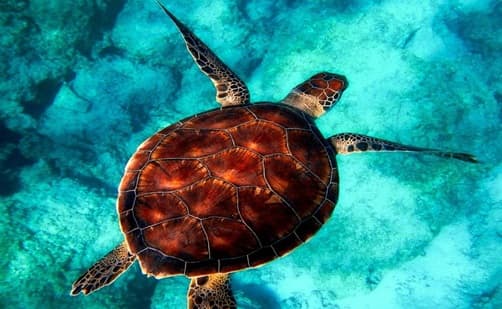
1. Turtles Are Older Than Dinosaurs
Turtles have existed for over 220 million years.
They appeared long before dinosaurs and survived multiple mass extinctions that wiped out countless species. While dinosaurs disappeared, turtles adapted and endured.
Their basic body plan—especially the shell—proved so effective that evolution barely needed to change it. Turtles are living proof that sometimes, getting it right early is the key to survival.
2. A Turtle’s Shell Is Part of Its Skeleton
A turtle’s shell is not something it can leave behind.
Unlike cartoon images, turtles cannot come out of their shells. The shell is fused to their spine and rib cage, making it a permanent part of their body.
This means the shell is alive. It has nerves and blood vessels, and turtles can feel touch through it. The shell is protection—but it’s also part of who they are.
3. Turtles Can Live for a Very Long Time
Many turtle species are incredibly long-lived.
Some turtles regularly live 50 to 100 years, and a few are known to live much longer. Their slow metabolism, protected bodies, and calm lifestyle contribute to their long lifespan.
In many cultures, turtles symbolize longevity and wisdom for this exact reason—they live slow, steady, and long lives.
4. Turtles Can Breathe Through Their Butts (Sort Of)
This sounds strange, but it’s partly true.
Some freshwater turtles can absorb oxygen through special tissues near their cloaca (an opening used for waste and reproduction). This allows them to stay underwater for long periods, especially during cold months.
This adaptation helps turtles survive winter underwater when surfacing for air would be difficult or dangerous.
5. Temperature Decides a Turtle’s Gender
Turtle gender is not determined by chromosomes like in humans.
Instead, it depends on the temperature of the nest where eggs incubate. Warmer temperatures usually produce females, while cooler temperatures produce males.
This makes turtles especially vulnerable to climate change. Rising temperatures can disturb gender balance, threatening future populations.
6. Sea Turtles Travel Thousands of Kilometers
Sea turtles are incredible navigators.
They migrate across entire oceans, often returning to the same beach where they were born to lay eggs decades later. Scientists believe turtles use Earth’s magnetic field to guide them.
This natural navigation system is so precise that it still amazes researchers today.
7. Turtles Don’t Have Teeth
Turtles have no teeth at all.
Instead, they use sharp, beak-like mouths to cut, tear, or crush food. Depending on the species, this beak can be strong enough to break shells or tough plants.
Diet varies widely—some turtles are herbivores, others carnivores, and many are omnivores. Their beaks are perfectly shaped for their lifestyle.
8. Some Turtles Can Survive Without Food for Months
Turtles are masters of energy conservation.
During cold weather or tough conditions, turtles can slow their metabolism dramatically. Some species can survive months without eating, using stored energy efficiently.
This ability allows them to survive winters, droughts, and periods of food scarcity that would kill many other animals.
9. Turtles Play an Important Role in Ecosystems
Turtles are not just passive survivors—they are ecosystem helpers.
They control jellyfish populations, clean up dead material, spread plant seeds, and maintain healthy aquatic environments.
When turtle populations decline, entire ecosystems can suffer. Their slow disappearance often signals deeper environmental problems.
10. Turtles Face Serious Threats Today
Despite surviving millions of years, turtles are now in danger.
Habitat destruction, plastic pollution, fishing nets, illegal trade, and climate change threaten many species. Some turtles mistake plastic bags for jellyfish and die as a result.
Ironically, the greatest threat turtles face is not nature—but human activity. Creatures that survived ice ages now struggle to survive modern life.
Conclusion
Turtles are not flashy animals. They don’t roar, run fast, or dominate headlines. Yet they represent one of nature’s greatest success stories. Their calm movement hides extraordinary adaptations, patience, and resilience built over millions of years.
They remind us that survival doesn’t always belong to the fastest or strongest—but to those who endure, adapt, and stay balanced. Turtles have shared this planet with us far longer than we’ve been here. Whether they continue to do so depends largely on how carefully we choose to protect them.
In a world rushing forward, turtles quietly teach a powerful lesson: slow can still be strong—and ancient does not mean outdated.