 By Hemant Sharma
 Germany is often associated with precision, discipline, and engineering excellence. Cars, clocks, classical music, and efficiency usually come to mind first. But Germany is far more layered than its stereotypes. It is a country shaped by ancient tribes, powerful empires, devastating wars, deep philosophical thinking, and constant reinvention.
Modern Germany blends old-world traditions with cutting-edge innovation. Medieval towns sit beside futuristic cities. Forest myths coexist with advanced science. To truly understand Germany, you need to look beyond headlines and clichés. These ten interesting facts reveal why Germany is one of the most influential and fascinating countries in the world.
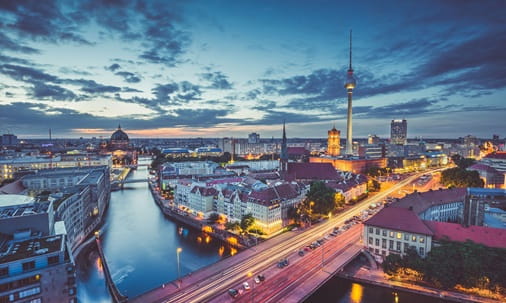
1. Germany Is One of the World’s Oldest Cultural Regions
Germany as a modern nation is relatively young, but German lands are ancient.
For thousands of years, this region has been home to Celtic tribes, Roman settlements, Germanic kingdoms, and medieval empires. Long before Germany unified in 1871, its lands were divided into hundreds of independent states, duchies, and kingdoms.
This long history explains Germany’s strong regional identities. Bavaria, Saxony, and the Rhineland still feel culturally distinct. Germany isn’t one story—it’s many stories layered on top of each other.
2. Germany Has Over 20,000 Castles
Germany is one of the most castle-rich countries on Earth.
There are more than 20,000 castles, palaces, and fortresses scattered across the country. Some are perfectly preserved, others lie in ruins on hilltops and riverbanks. Many were built during the Middle Ages to control trade routes and protect territories.
The famous fairy-tale castles inspired literature, art, and even modern animation. They reflect a time when power was measured in stone walls, towers, and strategic locations.
3. Germany Is the Birthplace of the Printing Revolution
The modern printing press was invented in Germany.
Johannes Gutenberg’s invention in the 15th century transformed the world. For the first time, books could be produced quickly and cheaply. Knowledge spread beyond elites, literacy expanded, and ideas traveled faster than ever before.
This invention helped trigger the Renaissance, the Scientific Revolution, and religious reform movements. In many ways, the modern information age began in Germany—centuries before the internet.
4. Germany Gave the World Classical Music Giants
Germany has played a massive role in shaping Western music.
Some of the most influential composers in history were born or worked in German-speaking regions. Their works defined symphonies, operas, and musical theory that still shape music today.
Music in Germany is not just entertainment—it’s part of education and identity. Even today, the country has hundreds of orchestras, opera houses, and music schools supported by public funding.
5. Germany Is Home to the World’s First Modern University System
Germany helped define what a modern university looks like.
The idea that universities should focus on research, academic freedom, and scientific inquiry was pioneered here. This model later influenced higher education systems across Europe, the United States, and beyond.
Germany’s emphasis on education, engineering, and applied science explains why it remains a global leader in technology, medicine, and research.
6. The Autobahn Has No General Speed Limit
Germany’s Autobahn highway system is famous worldwide.
Large sections of it have no mandatory speed limit. Drivers are legally allowed to drive as fast as conditions safely allow. Despite this, Autobahns are statistically safer than many highways in countries with strict speed limits.
This works because German driver training is rigorous, road maintenance is excellent, and traffic rules are strictly enforced. Freedom on the road comes with responsibility.
7. Germany Is a Global Engineering Powerhouse
Germany is one of the world’s strongest manufacturing nations.
It is known for precision engineering, especially in automobiles, machinery, and industrial equipment. Many “hidden champion” companies—small but globally dominant firms—are based in Germany.
This industrial strength comes from a deep respect for craftsmanship, vocational training, and long-term planning rather than quick profits.
8. Recycling and Environmental Rules Are Extremely Strict
Germany takes environmental responsibility very seriously.
The country has one of the most advanced recycling systems in the world. Citizens separate waste into multiple categories, and bottles often come with a deposit system that encourages reuse.
Environmental awareness is taught from a young age. Sustainability is not seen as optional—it’s a civic duty. This mindset has made Germany a leader in renewable energy and green policies.
9. Germany Was Divided—and Reunited—Within One Lifetime
For nearly half a century, Germany was split into two countries.
After World War II, East Germany and West Germany developed under completely different political and economic systems. The division physically cut through cities and families, most famously in Berlin.
The fall of the Berlin Wall in 1989 became a global symbol of freedom and unity. Reunification was peaceful but complex, and its effects are still shaping Germany today.
10. Germany Has a Deep Relationship With Philosophy
Germany has produced some of the world’s most influential philosophers.
Ideas about reason, ethics, freedom, and human nature developed here shaped modern political systems, psychology, and science. German philosophy often asks difficult questions rather than offering simple answers.
This tradition of deep thinking influenced literature, law, education, and even how Germans approach everyday decisions—with seriousness and reflection.
Conclusion
Germany is a country built on layers of thought, history, and discipline. It has known greatness and destruction, division and reunification, tradition and reinvention. What makes Germany fascinating is not just what it achieved, but how deeply it reflects on those achievements.
Behind the efficiency and structure lies a culture that values ideas, learning, responsibility, and long-term thinking. Germany doesn’t rush to impress. It builds slowly, carefully, and with purpose. And that quiet strength is exactly why its influence reaches far beyond its borders.