 By Hemant Sharma
 Ahmedabad is a city that doesn’t reveal itself all at once. At first glance, it looks busy, loud, and fast-moving. But look a little deeper, and you’ll find layers of history, culture, innovation, and resilience. This is a city where ancient traditions exist alongside modern industries, where narrow old streets meet wide riverfront roads, and where stories from centuries ago still shape daily life.
Founded on the banks of the Sabarmati River, Ahmedabad has been a center of trade, thought, and movement for a very long time. It has witnessed empires, freedom struggles, industrial growth, and cultural revolutions. To understand Ahmedabad is to understand how India balances its past with its future.
Before going further, here are 10 fascinating facts about Ahmedabad that may surprise many people.
1. Ahmedabad Is a UNESCO World Heritage City
Ahmedabad became India’s first city to be declared a UNESCO World Heritage City in 2017. This recognition was given mainly because of its historic old city, which reflects a unique blend of Hindu, Islamic, and Jain architecture.
The city’s traditional neighborhoods, known as pols, showcase community living, shared spaces, and intricate wooden craftsmanship. These areas are not museums—they are living spaces where people still follow centuries-old lifestyles.
2. The City Was Founded Over 600 Years Ago
Ahmedabad was founded in 1411 by Sultan Ahmad Shah. According to legend, he saw a hare chasing a dog near the Sabarmati River and took it as a sign of bravery and strength. Inspired, he chose the site to build a new capital.
Over time, the city grew into a major center for trade and culture. Despite centuries of change, its original spirit of enterprise and confidence remains visible even today.
3. Ahmedabad Played a Key Role in India’s Freedom Struggle
Ahmedabad holds a special place in India’s independence movement. The Sabarmati Ashram was the home of Mahatma Gandhi for many years and served as the starting point of the famous Dandi March.
From here, Gandhi shaped ideas of non-violence, simplicity, and self-reliance. The city became a strong base for political awareness and social reform during British rule.
4. It Was Once Called the “Manchester of India”
During the late 19th and early 20th centuries, Ahmedabad emerged as a major textile hub. Its booming cotton mills earned it the nickname “Manchester of India.”
The textile industry transformed the city’s economy and workforce. Even today, textiles remain an important part of Ahmedabad’s identity, influencing fashion, trade, and local livelihoods.
5. Ahmedabad Is Famous for Its Food Culture
Food in Ahmedabad reflects its people—simple, flavorful, and deeply rooted in tradition. The city is especially known for its vegetarian cuisine, including dishes like dhokla, fafda, khaman, and handvo.
What makes Ahmedabad special is its strong street food culture. From early morning snacks to late-night bites, food here is not just about taste, but about routine, community, and comfort.
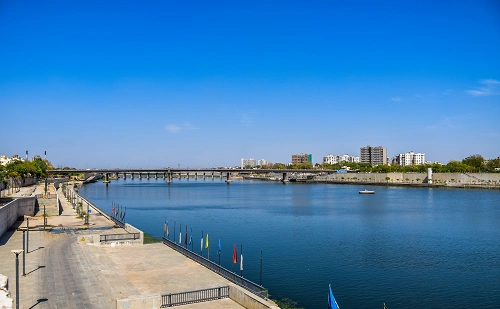
6. The Sabarmati Riverfront Changed the City’s Face
The Sabarmati River has always been central to Ahmedabad, but the riverfront development transformed how people interact with it. The project created public spaces, walkways, gardens, and cultural zones along the riverbanks.
It gave the city breathing space and brought people closer to nature within an urban setting. Today, the riverfront is one of Ahmedabad’s most recognizable landmarks.
7. The City Has a Strong Tradition of Business and Trade
Ahmedabad has long been known for its entrepreneurial spirit. Many major Indian business houses trace their roots to the city. Trading, manufacturing, and innovation are deeply woven into local culture.
This mindset is visible everywhere—from large industrial estates to small family-run shops. Business here is not just about profit; it is often built on trust and long-term relationships.
8. Ahmedabad Is a Center for Education and Research
The city is home to some of India’s most respected educational institutions, including institutes focused on management, design, science, and technology.
Students from across the country come to Ahmedabad to study, bringing diversity and fresh ideas. Education has always been valued here, continuing a tradition of learning that dates back centuries.
9. Architecture in Ahmedabad Tells Many Stories
Ahmedabad’s architecture is a mix of old and new. Historic mosques with stone latticework stand alongside modern buildings designed by world-renowned architects.
This contrast reflects the city’s personality—deep respect for tradition, combined with openness to innovation. Buildings here are not just structures; they are storytellers.
10. Ahmedabad Balances Tradition and Modern Life
Despite rapid development, Ahmedabad has held on to its cultural roots. Festivals like Navratri are celebrated with unmatched energy, while daily life still follows customs passed down through generations.
The city shows that progress does not require forgetting the past. Instead, Ahmedabad proves that tradition and modern life can grow together.
Final Thought
Ahmedabad is not a city you rush through. It asks you to slow down, observe, and listen. Every street has a memory. Every building has a story. From freedom movements to food plates, from old pols to modern campuses, Ahmedabad carries its history forward with quiet confidence.
Once you understand it, Ahmedabad stops being just a city—and becomes an experience.