 By Hemant Sharma
 The Ramayana is not just a religious text or a heroic story—it is a guide to understanding life, duty, relationships, power, sacrifice, and morality. Written thousands of years ago, the Ramayana continues to shape how millions of people think about right and wrong, leadership, love, and responsibility.
What makes the Ramayana timeless is its realism. Its characters are not perfect. They struggle, doubt, suffer, and make painful choices. The epic does not promise easy happiness—it shows the cost of doing what is right. That is why the Ramayana remains relevant across generations, cultures, and even countries. Let’s check out the top 10 fascinating facts about the Ramayana and explore why this epic is far more than a myth.
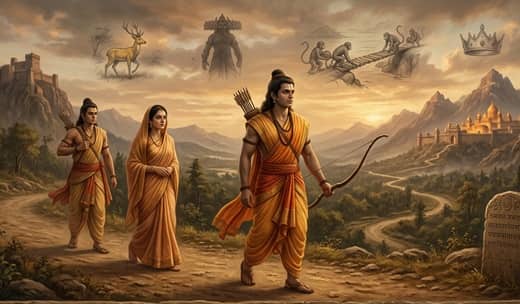
1. The Ramayana Is One of the Oldest Epics in the World
The Ramayana was composed more than two thousand years ago, making it one of the oldest surviving epics known to humanity.
Traditionally attributed to Maharishi Valmiki, the epic was first passed down orally before being written. This oral tradition allowed the story to reach villages, forests, and royal courts alike. The survival of the Ramayana over centuries proves the power of storytelling rooted in values rather than spectacle.
2. Valmiki Is Known as the First Poet (Adi Kavi)
Maharishi Valmiki is revered as the Adi Kavi, meaning the first poet.
According to tradition, the first shloka of the Ramayana emerged spontaneously from Valmiki’s grief when he witnessed a hunter kill a bird. This moment transformed emotion into poetry. The Ramayana was born not from imagination alone, but from compassion. It shows how deep feeling can give rise to timeless art.
3. Lord Rama Is Portrayed as an Ideal Human, Not Just a God
Unlike many divine figures, Lord Rama is shown primarily as an ideal human being (Maryada Purushottam).
He experiences sorrow, confusion, and inner conflict. Rama obeys his father’s command even when it costs him his kingdom. He accepts exile without anger. These choices highlight restraint, discipline, and responsibility rather than supernatural power. Rama’s greatness lies in self-control, not dominance.
4. The Ramayana Emphasizes Dharma Over Personal Happiness
At its core, the Ramayana is about dharma—righteous duty.
Every major character faces moral dilemmas. Rama sacrifices comfort for duty. Sita endures hardship to protect honor. Lakshmana gives up his entire life to serve his brother. Even antagonists like Ravana are driven by choices rooted in ego and desire. The epic shows that dharma is often painful, but necessary for balance.
5. Sita Is One of the Strongest Characters in the Epic
Sita is often misunderstood as passive, but she is one of the strongest moral forces in the Ramayana.
She chooses exile voluntarily, survives captivity with dignity, and refuses to compromise her values even under threat. Her strength lies in endurance, clarity, and inner firmness. Sita’s silence is not weakness—it is unwavering self-respect.
6. Ravana Is Not a One-Dimensional Villain
Ravana, the king of Lanka, is not portrayed as purely evil.
He is a brilliant scholar, a devoted worshipper of Shiva, and a powerful ruler. His downfall comes from unchecked ego and desire. The Ramayana shows that intelligence without humility leads to destruction. Ravana’s tragedy lies in knowing right from wrong—and choosing wrong anyway.
7. Hanuman Represents Devotion Without Ego
Hanuman is one of the most beloved characters in the Ramayana because he represents selfless devotion.
Despite possessing immense strength and intelligence, Hanuman never claims credit. He serves Rama without expectation. His leap across the ocean, discovery of Sita, and carrying of the Sanjeevani mountain show that true power comes from humility and purpose.
8. The Ramayana Exists in Many Versions Across Asia
The Ramayana is not limited to India. Versions of the epic exist across Southeast Asia, including Thailand, Indonesia, Cambodia, and Malaysia.
Each culture adapted the story to its own traditions while preserving core values. This wide spread shows that the Ramayana speaks to universal human experiences—love, loyalty, justice, and sacrifice—beyond geography or religion.
9. The War in the Ramayana Is Shown as Tragic, Not Glorious
Unlike stories that glorify war, the Ramayana treats battle as necessary but tragic.
The war against Lanka is fought to restore justice, not to conquer territory. Loss is felt on both sides. Victory does not bring celebration—it brings responsibility. The epic reminds readers that war always carries consequences, even when fought for the right cause.
10. The Ending of the Ramayana Is Deeply Human and Uncomfortable
The Ramayana does not end with simple happiness.
After returning to Ayodhya, Rama becomes king, but doubts and social pressures force difficult decisions. Sita’s final departure from the world is emotionally unsettling. This ending teaches a powerful truth: leadership and duty often demand personal sacrifice. Life does not always reward virtue with comfort.
Conclusion
The Ramayana is not a tale meant to comfort—it is a story meant to teach. It asks difficult questions about duty, love, power, and morality. It shows that doing the right thing is rarely easy, and that strength often means letting go rather than holding on.
Thousands of years later, the Ramayana still speaks because human struggles have not changed. Ego still tempts, duty still hurts, love still demands sacrifice, and truth still costs something. That is why the Ramayana is not just remembered—it is lived, questioned, and rediscovered again and again.