 By Hemant Sharma
 Rajasthan is a land that feels larger than life. Vast deserts, towering forts, colorful clothes, and deep traditions come together to create a state unlike any other in India. Every city here tells a story of bravery, pride, sacrifice, and royal legacy. Rajasthan is not just a place you visit—it’s a place you experience with all your senses.
For centuries, Rajasthan stood at the crossroads of trade routes, invasions, and kingdoms. Its harsh climate shaped tough warriors and resilient communities. Even today, the spirit of Rajasthan lives on in its festivals, architecture, music, and daily life. Here are the top 10 interesting facts about Rajasthan.
1. Rajasthan Is India’s Largest State by Area
Rajasthan is the largest state in India in terms of geographical area. It covers more land than many countries in the world.
Because of its size, Rajasthan has an incredible variety of landscapes. From the Thar Desert to green hills, rocky plateaus, lakes, and forests, the state is far more diverse than people expect. Distance and scale play a huge role in shaping its culture and lifestyle.
2. The Thar Desert Covers a Major Part of the State
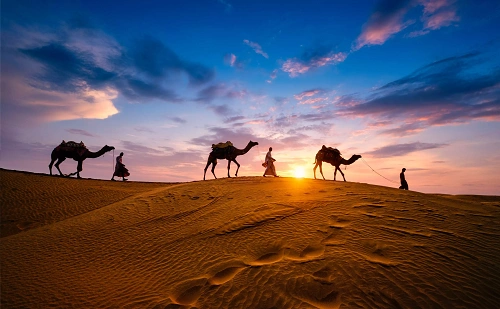
The Thar Desert, also known as the Great Indian Desert, occupies a large portion of western Rajasthan.
Life in the desert is not easy, yet people here have adapted brilliantly. Traditional houses, clothing, food habits, and water conservation methods are all designed to survive extreme heat. The desert is not empty—it is full of life, stories, and traditions passed down for generations.
3. Rajasthan Has More Forts Than Any Other Indian State
Rajasthan is often called the land of forts, and for good reason. It has some of the most impressive forts in India, many of them built on hills or rocky cliffs.
Forts like Mehrangarh, Amer, Chittorgarh, and Jaisalmer are not just military structures. They were complete cities with palaces, temples, water systems, and markets. These forts reflect the strategic brilliance and architectural skills of Rajput rulers.
4. Rajputs Were Known for Their Warrior Code
Rajasthan was ruled by Rajput clans who followed a strict warrior code based on honor, loyalty, and courage.
Battles were not fought only for land but for pride and principles. Stories of sacrifice, bravery, and resistance are deeply embedded in Rajasthan’s folklore. This warrior spirit still influences social values and traditions in the state today.
5. Jaipur Is India’s First Planned City
Jaipur, the capital of Rajasthan, was one of the first planned cities in India. Built in the 18th century, it followed a structured layout with wide roads and organized blocks.
The city was painted pink to welcome a royal guest, earning it the title “Pink City.” Jaipur’s planning was far ahead of its time and remains admired by urban planners even today.
6. Rajasthan Has a Rich Folk Music and Dance Tradition
Music and dance are part of everyday life in Rajasthan. Folk songs tell stories of love, war, devotion, and daily struggles.
Dance forms like Ghoomar and Kalbelia are known worldwide for their grace and energy. These performances are not just entertainment—they are living records of history and emotion, passed orally from one generation to the next.
7. Water Conservation Was Mastered Centuries Ago
Water is scarce in much of Rajasthan, but traditional systems made life possible long before modern technology.
Stepwells, tanks, and rainwater harvesting structures were carefully designed to store every drop. These systems show how deeply people understood their environment. Even today, these ancient techniques offer lessons in sustainable living.
8. Rajasthan’s Clothing Is Designed for Climate
The colorful clothes of Rajasthan are not just for beauty—they serve practical purposes.
Loose fabrics allow airflow, while bright colors reflect sunlight and express cultural identity. Turbans protect from heat and dust and can even be used as ropes or pillows. Clothing here is a perfect example of function meeting tradition.
9. Rajasthan Is Famous for Its Royal Cuisine
Rajasthani food developed under challenging conditions. With limited water and fresh produce, dishes were designed to last long and provide energy.
Foods like dal baati churma, gatte ki sabzi, and ker sangri are rich, spicy, and filling. Royal kitchens refined these dishes, turning necessity into flavor-packed cuisine enjoyed across India today.
10. Rajasthan Preserves Tradition Even in Modern Times
Despite modernization, Rajasthan has held tightly to its cultural roots. Festivals, rituals, and family traditions remain strong.
Whether it’s a village fair or a city celebration, traditions are followed with pride. Rajasthan shows that progress doesn’t require forgetting the past—it can grow alongside it.
Final Thought
Rajasthan is not just about deserts and palaces. It is about resilience in harsh conditions, dignity in struggle, and beauty born from simplicity. Every fort, song, and custom carries echoes of a proud past that still shapes the present.
To understand Rajasthan is to understand courage, adaptation, and cultural depth. It is a state that doesn’t fade with time—it only grows stronger in memory and meaning.