 By Hemant Sharma
 Shadows are everywhere, yet we rarely stop to notice them. They follow us quietly on sunny roads, stretch across walls at sunset, and disappear the moment light changes. Shadows feel simple, almost boring—but they are not. Behind every shadow is a mix of science, perception, history, and even emotion. From ancient beliefs to modern illusions, shadows have always fascinated humans. Here are some truly interesting facts about shadows that will make you look twice the next time one appears beside you.
1. A shadow is not a thing
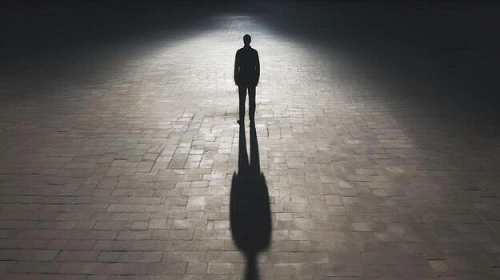
One of the most surprising facts is that a shadow is not an object. It is simply the absence of light. When something blocks light, the area behind it receives less or no light, creating a shadow. You cannot touch a shadow, store it, or catch it. It exists only because light exists.
2. Shadows always copy shape, but not size
A shadow copies the outline of an object, but its size can change dramatically. A small object can cast a huge shadow if the light source is close. That is why shadows look long in the morning and evening when the Sun is low, and short at noon when it is directly overhead.
3. Shadows change direction throughout the day
As the Sun moves across the sky, shadows slowly rotate around objects. In the morning, shadows stretch toward the west. At noon, they shrink. In the evening, they stretch toward the east. Ancient people used this movement to measure time long before clocks existed.
4. Ancient people feared shadows
In many old cultures, shadows were linked to the soul. Some believed that harming a person’s shadow could harm the person. Others thought shadows were signs of spirits or invisible beings. This fear came from not understanding how light worked, making shadows feel mysterious and alive.
5. Your shadow is longest when the Sun is weakest
At sunrise and sunset, the Sun’s light hits Earth at a low angle. This creates very long shadows that can stretch for many times your height. At these times, shadows look dramatic and sometimes even frightening, which is why many artists and photographers love golden hour lighting.
6. Shadows are not always black
Most people think shadows are black, but they are not. Shadows are often shades of blue, gray, or even colored. This happens because light bounces off surrounding surfaces and fills the shadow with reflected light. Under a blue sky, shadows often look bluish.
7. Multiple light sources create multiple shadows
If more than one light source is present, an object can cast more than one shadow. Each shadow points away from its own light source. This is common on stages, streets at night, or rooms with several lamps. The effect can look strange and confusing.
8. Shadows can be soft or sharp
The edges of a shadow depend on the size of the light source. A small, strong light creates sharp-edged shadows. A large or diffused light creates soft, blurry shadows. This is why sunlight creates sharp shadows on clear days and soft shadows on cloudy days.
9. Animals use shadows too
Some animals use shadows to their advantage. Birds can detect predators by watching moving shadows on the ground. Certain insects rely on shadow patterns to find shelter or avoid danger. Shadows silently influence survival in the natural world.
10. Shadows helped invent photography and cinema
The idea of capturing shadows led to early experiments with cameras and projectors. Shadow puppetry existed long before movies. Humans learned that controlled light and shadows could tell stories, leading eventually to photography, film, and animation.
11. Shadows can trick your brain
Shadows often create optical illusions. Your brain tries to guess depth and shape based on light and shadow. Artists use this to make flat drawings look three-dimensional. Sometimes, shadows can make objects appear floating, bent, or larger than they really are.
12. There are shadows even in space
Shadows exist anywhere there is light and an object to block it—even in space. Astronauts see extremely dark shadows on the Moon because there is no atmosphere to scatter light. These shadows can hide deep craters and are much darker than shadows on Earth.
13. Shadows move faster than you think
A shadow itself does not move physically, but the point where light is blocked changes quickly. In theory, the tip of a shadow can move faster than the speed of sound. This does not break any laws of physics because no object or information is actually traveling that fast.
14. Shadows can show Earth’s shape
During lunar eclipses, Earth casts its shadow on the Moon. That shadow is always round. Ancient scholars used this fact to understand that Earth is spherical, long before satellites or space travel existed.
15. Kids learn through shadows
Children often play with shadows without realizing they are learning science. Making hand shapes, chasing shadows, or noticing how they change teaches basic ideas about light, movement, and cause-and-effect. Shadows are one of the first science lessons of childhood.
16. Shadows disappear at the right moment
There are rare moments when shadows nearly vanish. Near the equator, on certain days, the Sun can be directly overhead at noon. At that moment, vertical objects cast almost no shadow. This event has amazed people for centuries.
17. Artists rely heavily on shadows
Without shadows, art looks flat and lifeless. Painters use shading to show form, depth, and emotion. Even simple pencil sketches depend on shadows to feel real. Light creates the subject, but shadow gives it meaning.
18. Shadows can feel emotional
Shadows often create mood. Long shadows can feel calm, lonely, or mysterious. Sharp shadows can feel tense or dramatic. Filmmakers use shadows deliberately to create fear, suspense, or intimacy. Shadows speak without words.
19. Every shadow is temporary
No shadow lasts forever. Change the light, move the object, or wait a few minutes, and the shadow disappears or shifts. This makes shadows a quiet reminder of time passing and change—always present, never fixed.
Final thoughts
Shadows may seem ordinary, but they carry deep science, history, and symbolism. They show us how light behaves, how our brains interpret reality, and how humans have tried to understand the world for thousands of years. The next time you notice a shadow stretching across the ground or dancing on a wall, pause for a moment. That simple dark shape is telling a story written entirely in light.