 By Hemant Sharma
 Bihar is one of those places that people often talk about, but rarely pause to truly understand. For some, it is reduced to jokes or headlines. For others, it is just another state on the map. But Bihar is far more than that. It is one of the oldest cultural regions in the world, a land that shaped ideas, beliefs, and systems long before many modern nations even existed.
From ancient universities to powerful empires, from spiritual movements to democratic traditions, Bihar has quietly influenced the course of history. Its story is deep, layered, and still very much alive. Let’s take a look at the top 10 facts about Bihar that many people don’t know.
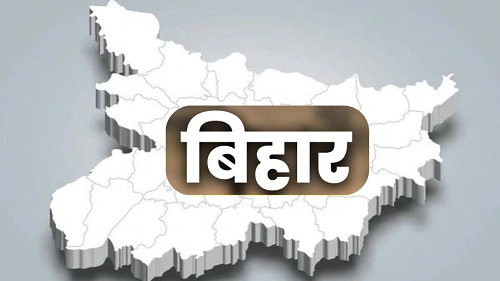
1. Bihar Is the Birthplace of Buddhism and Jainism
Bihar holds a rare position in world history. Two major world religions—Buddhism and Jainism—are deeply rooted here. Lord Buddha attained enlightenment in Bodh Gaya, while Lord Mahavira, the founder of Jainism, was born in Vaishali.
These were not small local events. They shaped spiritual thinking across Asia. Even today, millions of followers from countries like Japan, China, Thailand, and Sri Lanka visit Bihar to walk the same paths once walked by these great teachers. Few places on Earth carry such spiritual weight.
2. The World’s First Residential University Was Here
Nalanda University, located in ancient Magadha, is widely regarded as the world’s first residential university. It existed more than 1,500 years ago and attracted students from across Asia.
Subjects taught there included medicine, mathematics, astronomy, philosophy, logic, and languages. Thousands of students lived and studied on campus. Its library was legendary, said to be so large that it burned for months when destroyed. Long before modern education systems, Bihar had already mastered organized learning.
3. Bihar Gave the World an Early Form of Democracy
When people talk about democracy, they often look to ancient Greece. But Bihar was practicing collective governance even earlier. The Vajji confederacy, with its capital at Vaishali, followed a republican system where leaders were chosen through assemblies.
Decisions were made through discussion rather than absolute rule. This system existed around the 6th century BCE. It proves that the idea of people’s participation in governance was alive in Bihar long before it became a global concept.
4. Chhath Puja Is One of the Most Disciplined Festivals
Chhath Puja is not just a festival; it is a way of life. Dedicated to the Sun God, it involves strict rituals, fasting, and deep respect for nature. Devotees offer prayers to the rising and setting sun at rivers and water bodies.
What makes Chhath unique is its simplicity. There are no idols, no loud celebrations, and no wasteful decorations. Everything is biodegradable. In a modern world struggling with environmental balance, Chhath Puja stands as a powerful example of eco-friendly tradition.
5. Bihar Was the Heart of Mighty Empires
The ancient region of Magadha, which lies in present-day Bihar, was once the political center of India. The Maurya Empire, under Emperor Ashoka, ruled most of the Indian subcontinent from here.
Later, the Gupta Empire emerged, marking a golden age in science, art, mathematics, and literature. Concepts like zero, advanced astronomy, and classical Indian art flourished during this period. Bihar was not just participating in history—it was leading it.
6. The River Ganga Shapes Bihar’s Identity
The Ganga is more than a river in Bihar. It defines life itself. Agriculture, trade, festivals, and daily routines all revolve around it. Cities like Patna grew and thrived along its banks.
The river brings fertility but also floods, teaching the people resilience and patience. Bihar’s culture reflects this balance—hope during abundance and strength during hardship. The relationship between Bihar and the Ganga is emotional, spiritual, and practical all at once.
7. Patna Is One of the Oldest Living Cities
Patna, earlier known as Pataliputra, is among the oldest continuously inhabited cities in the world. It has existed for over 2,500 years and served as the capital for several major empires.
Scholars, traders, and travelers from distant lands once walked its streets. While modern Patna looks busy and crowded, beneath it lies an ancient city that has witnessed centuries of change without losing its soul.
8. Bihar’s Languages Travelled Across the World
Languages like Bhojpuri and Maithili are not limited to Bihar or India. During colonial times, people from Bihar migrated to places like Mauritius, Fiji, Suriname, and the Caribbean.
They carried their language, songs, and traditions with them. Even today, Bhojpuri music and Maithili literature have audiences far beyond India. Bihar’s voice travels wherever its people go.
9. Bihar Has a Deep Respect for Education
Despite economic challenges, Bihar has always valued learning. From ancient centers like Nalanda to modern competitive exams, education remains a priority for many families.
Bihar consistently produces scholars, civil servants, engineers, and thinkers who excel across the country. This hunger for knowledge is not new. It is part of Bihar’s cultural DNA, passed down through generations.
10. Bihar’s Simplicity Is Its Real Strength
Bihar is not flashy. Its food is simple. Its people value relationships, hard work, and honesty. This simplicity is often misunderstood, but it has helped the state survive centuries of change.
Bihar has faced invasions, natural disasters, and political shifts, yet its cultural roots remain strong. That quiet endurance is its true power.
Final Thoughts
Bihar cannot be understood through stereotypes or quick judgments. It is a land of deep history, strong values, and lasting influence. To know Bihar is to understand the roots of Indian civilization itself.
Once you look beyond the surface, Bihar stops being just a place—and becomes a story worth knowing.