 By Hemant Sharma
 Europe may be one of the smallest continents, but it has lived many lives. Empires rose and fell here. Revolutions changed the way people think. Art, science, democracy, and modern cities all carry deep European roots. Yet Europe is not frozen in history—it is lively, diverse, and often full of delightful surprises.
What makes Europe especially fun to learn about is how much variety exists in such a compact space. In just a few hours, you can travel between countries with completely different languages, food habits, architecture, and lifestyles. From quirky traditions to geographical oddities, these ten fun facts show Europe’s lighter, fascinating side.
1. Europe Is Technically Not a Separate Continent
Here’s a fun twist—Europe is not a continent in the strict geographical sense. It is actually part of a larger landmass called Eurasia, which it shares with Asia.
Europe is considered a continent mainly because of history, culture, and politics rather than clear natural boundaries. Mountains like the Urals and rivers were chosen as dividing lines by humans, not nature. So Europe exists as much in the human mind as it does on the map.
2. Europe Has More Countries Than You Think
Europe contains around 44 countries, depending on definitions. Some of them are extremely small.
Vatican City, located inside Rome, is the smallest country in the world. Monaco is so small you can walk across it in under an hour. Despite their size, these microstates have their own governments, flags, and unique identities.
3. Dozens of Languages Exist in a Small Area
Europe is a language lover’s paradise. Over 200 languages are spoken across the continent.
In some regions, people switch languages naturally depending on who they’re speaking to. It’s common for Europeans to speak two or three languages fluently. This linguistic richness comes from centuries of migration, trade, and shifting borders.
4. Europe Has Some of the World’s Oldest Cities
Some European cities have been continuously inhabited for thousands of years. Athens, Rome, and Plovdiv existed long before many modern countries were formed.
You can walk past a Roman road, a medieval church, and a modern café—all on the same street. In Europe, history isn’t locked in museums. It’s part of daily life.
5. Europe Invented the Modern Weekend
The idea of a two-day weekend spread widely from Europe during industrial and labor movements.
As workers demanded better conditions, rest days became a social norm. Today, weekends feel natural—but they were once a radical idea. Europe helped redefine the balance between work and personal life.
6. Europe Has Borders That Don’t Feel Like Borders
In much of Europe, especially within the Schengen Area, you can travel between countries without passport checks.
You might have breakfast in France, lunch in Belgium, and dinner in the Netherlands—all without stopping at a border. This freedom of movement makes Europe feel like a shared cultural space rather than a collection of isolated nations.
7. Europe Is Home to the World’s Most Visited Places
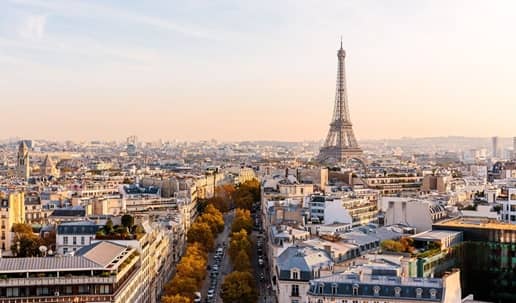
Some of the most visited tourist destinations on Earth are in Europe. Cities like Paris, Rome, and Barcelona attract millions every year.
But what’s fun is that even small towns can feel magical. A quiet village in Austria or Portugal may look like a postcard, with cobblestone streets and colorful houses untouched by time.
8. European Food Changes Every Few Kilometers
Food habits in Europe change rapidly with geography. Cross one border and recipes, spices, and eating styles shift completely.
From Italian pasta to Spanish tapas, from French cheese to German bread, Europe’s food culture is incredibly diverse. In many places, meals are slow, social, and treated as a daily celebration rather than a routine.
9. Europe Has Some Very Strange Local Traditions
Europe loves traditions—some of them quite unusual. In certain towns, people throw tomatoes, chase cheese wheels downhill, or celebrate festivals that look completely chaotic.
These traditions often started centuries ago and continue simply because people enjoy them. They show that Europe values joy, community, and history—even when things get a little weird.
10. Europe Has Shaped How the World Thinks
Modern ideas like democracy, scientific methods, universities, and human rights were deeply shaped in Europe.
While Europe doesn’t always live up to these ideals perfectly, its influence on global thinking is undeniable. Even today, debates about freedom, equality, and law trace their roots back to European history.
Conclusion
Europe is a continent where fun and seriousness walk together. It can feel ancient and modern at the same time, structured yet playful, traditional yet constantly changing.
From invisible borders and tiny countries to deep history and everyday pleasures, Europe shows that diversity doesn’t need distance. Sometimes, the most interesting contrasts exist right next door.