 By Hemant Sharma
 The Mahabharata is not just an epic—it is a mirror held up to human life. It talks about power, ego, duty, love, jealousy, sacrifice, and moral confusion with a depth that still feels modern. Written thousands of years ago, the Mahabharata does not give easy answers. Instead, it asks difficult questions and allows readers to struggle with them.
Unlike stories where heroes are perfect and villains are pure evil, the Mahabharata lives in grey areas. Every character makes mistakes. Every decision has consequences. That is why the epic never feels outdated. These ten facts help uncover why the Mahabharata remains one of the greatest and most complex stories ever told.
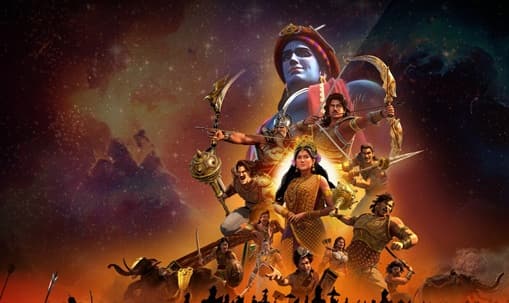
1. The Mahabharata Is the Longest Epic Ever Written
The Mahabharata is the longest epic poem in the world, far longer than the Iliad and the Odyssey combined. It contains over 100,000 shlokas and millions of words, depending on versions and translations.
This massive size allows the story to explore not just one battle or one hero, but entire generations. Kings, warriors, sages, queens, servants, and even ordinary people all get a voice. The epic feels less like a book and more like a complete civilization captured in words.
2. It Took Centuries to Reach Its Final Form
The Mahabharata was not written in one sitting. It evolved over centuries through oral storytelling before being written down. Sages, poets, and scholars added layers, stories, and philosophical ideas over time.
Because of this, the epic contains many viewpoints and contradictions. But instead of weakening the story, this makes it richer. Life itself is inconsistent, and the Mahabharata reflects that reality honestly.
3. The Real Hero Is Dharma, Not a Person
There is no single hero in the Mahabharata. The true central theme is dharma—duty, righteousness, and moral responsibility.
Characters constantly struggle to understand what the right action is. What is dharma for a king may not be dharma for a warrior or a mother. The epic shows that doing the right thing is rarely simple and often painful.
4. Krishna Never Forces His Will
Although Krishna is divine, he never removes human free will. Even in the battlefield of Kurukshetra, he does not command Arjuna—he explains, advises, and leaves the decision to him.
This is one of the most powerful ideas in the Mahabharata. Divine guidance exists, but responsibility remains human. Choices cannot be escaped, even with God standing beside you.
5. The Bhagavad Gita Is Part of the Mahabharata
The Bhagavad Gita, one of the most influential philosophical texts in the world, appears as a small section within the Mahabharata.
Spoken during a moment of extreme moral crisis, the Gita discusses action, detachment, devotion, and self-knowledge. Its setting on a battlefield is important—it teaches that spiritual wisdom is meant for real life, not isolation.
6. Draupadi’s Question Still Has No Easy Answer
After Draupadi is humiliated in the royal court, she asks a single question: Was Yudhishthira still free when he gambled me away?
No one answers her clearly. Elders, warriors, and kings remain silent. This moment exposes the failure of society, law, and morality. Even today, that unanswered question challenges readers to think about justice and power.
7. The War Was Fought to Restore Balance, Not Glory
The Kurukshetra war is not portrayed as heroic or glorious. It is shown as tragic, unavoidable, and devastating.
By the end, both sides lose almost everything. Victors mourn as much as the defeated. The epic makes it clear: war may restore balance, but it always destroys innocence.
8. Women in the Mahabharata Are Strong and Complex
Women in the Mahabharata are not passive characters. Draupadi, Kunti, Gandhari, and others influence the course of events deeply.
Gandhari’s blindfold is a powerful symbol of protest. Kunti’s choices shape dynasties. Draupadi’s anger fuels justice. Their emotions are not weaknesses—they are moral forces.
9. Even the Villains Are Not Purely Evil
Duryodhana is often seen as the villain, yet the Mahabharata shows his loyalty, generosity, and pain. Karna, who fights on the “wrong” side, is one of the most tragic figures in the epic.
This complexity makes the story uncomfortable—but honest. It reminds us that people are shaped by circumstances, not born as heroes or villains.
10. The Ending Is Quiet, Not Triumphant
After the war, there is no celebration. Yudhishthira is filled with guilt. Krishna departs quietly. The Pandavas eventually renounce the world and walk toward the Himalayas.
The epic ends not with victory, but with reflection. Power fades. Relationships end. Only actions and their consequences remain. This ending reinforces one final lesson—nothing material is permanent.
Conclusion
The Mahabharata is not a story meant to be admired from a distance. It is meant to be questioned, argued with, and revisited throughout life. Each time you read it, a different character feels right—and another feels wrong.
That is its greatest strength. The Mahabharata does not tell you what to think. It teaches you how to think. And that is why, thousands of years later, it still speaks—quietly, powerfully, and truthfully—to the human condition.