 By Hemant Sharma
 Indian currency is something we use every day without much thought. Notes pass from hand to hand, coins disappear into pockets, and digital payments now replace cash in many places. Yet behind every rupee lies a long history, careful design, and powerful institutions working quietly to keep the system running.
Indian currency is more than a medium of exchange. It reflects India’s economy, culture, security needs, and even political philosophy. From ancient punch-marked coins to modern banknotes with advanced security features, the journey of Indian money is deeply fascinating. These ten facts explain what makes Indian currency unique and important.
1. The Indian Rupee Is One of the World’s Oldest Currencies
The idea of the rupee is ancient.
The word “rupee” comes from the Sanskrit word rūpya, meaning silver or stamped metal. Coins resembling the rupee were used in India as early as the 6th century BCE. Over centuries, the rupee evolved through different dynasties, empires, and colonial rule.
Few currencies in the world can trace their conceptual origin back so far. Modern Indian currency carries this long legacy forward.
2. The Reserve Bank of India Controls Currency Issuance
The authority behind Indian currency is the Reserve Bank of India.
Established in 1935, the RBI is responsible for issuing banknotes, managing money supply, and maintaining financial stability. Every Indian banknote carries the signature of the RBI Governor, symbolizing trust backed by the central bank.
Interestingly, one-rupee notes are issued by the Government of India, not the RBI—making them unique in the currency system.
3. Indian Banknotes Are Printed in Multiple Locations
Indian currency notes are not printed in one place.
They are produced at several high-security presses across the country. This decentralization ensures safety, efficiency, and continuity even during emergencies.
Each note has small identifying marks that indicate where it was printed. These details are subtle, but they help authorities track and manage currency circulation effectively.
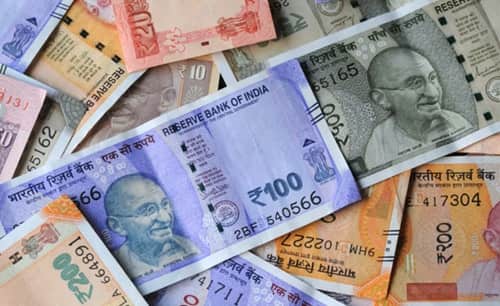
4. Mahatma Gandhi Appears on All Modern Banknotes
Every currently circulating Indian banknote features Mahatma Gandhi.
This series, called the Mahatma Gandhi Series, was introduced in the 1990s. Gandhi was chosen because he represents truth, non-violence, and national unity—values meant to inspire trust in the currency.
Earlier notes featured various designs and personalities, but Gandhi remains the single constant face across denominations today.
5. The Rupee Symbol Is a Modern Creation
The familiar ₹ symbol is relatively new.
It was officially adopted in 2010 and designed to blend the Devanagari letter “र” with the Roman letter “R.” The two horizontal lines symbolize the Indian flag and equality.
Before this, the rupee had no unique international symbol. Today, ₹ gives Indian currency a distinct global identity, much like $ or €.
6. Indian Currency Notes Use Advanced Security Features
Indian banknotes include several security elements to prevent counterfeiting.
These include watermarks, security threads, micro-lettering, color-shifting ink, see-through registers, and raised printing for the visually impaired.
With each new series, security features improve. Currency design is a constant race between technology and counterfeiters—and India invests heavily to stay ahead.
7. Coins Are Made from Different Metals Over Time
Indian coins have changed materials many times.
Earlier coins were made of silver, copper, and bronze. Today, most coins are made from stainless steel or special alloys. This shift was driven by cost, durability, and availability of metals.
Coin sizes and shapes have also changed to help users easily identify denominations by touch and sight.
8. Demonetisation Changed Indian Currency Forever
In 2016, India withdrew ₹500 and ₹1000 notes from circulation overnight.
This move forced a redesign of high-value currency and introduced new ₹500 and ₹2000 notes. While controversial, demonetisation significantly reshaped how Indians view cash, pushing many toward digital payments.
It marked one of the largest currency replacement exercises in history.
9. Indian Currency Is Designed for Accessibility
Indian banknotes are designed to help the visually impaired.
Different denominations vary in size and include tactile identification marks. These features allow users to distinguish notes by touch, making currency more inclusive.
This focus on accessibility reflects an effort to ensure that money remains usable for everyone, not just those with perfect vision.
10. Cash Still Matters in a Digital India
Despite the rise of digital payments, cash remains vital in India.
Millions still rely on physical currency for daily transactions, especially in rural and informal sectors. Indian currency continues to play a crucial role in livelihoods, savings, and small businesses.
Rather than disappearing, cash is evolving—coexisting with digital systems instead of being replaced by them.
Conclusion
Indian currency is not just paper and metal. It is history in motion, backed by trust, law, and collective belief. Every note reflects centuries of trade, struggle, reform, and innovation. Every coin carries the weight of an economy that supports over a billion people.
Understanding Indian currency means understanding how India works—its institutions, values, and balance between tradition and change. The rupee may change its design over time, but its role as the backbone of everyday life remains constant.