 By Hemant Sharma
 Magnets feel almost magical. They pull objects without touching them, stick with surprising strength, and suddenly push away when flipped. As children, many of us played with magnets without understanding what was really happening. Even as adults, magnetism still feels a bit mysterious.
Yet magnets are not magic at all. They are part of fundamental physics that quietly powers modern life. From electric motors and speakers to credit cards and medical machines, magnets work behind the scenes every day. These ten facts explain what magnets really are—and why they are far more fascinating than they first appear.
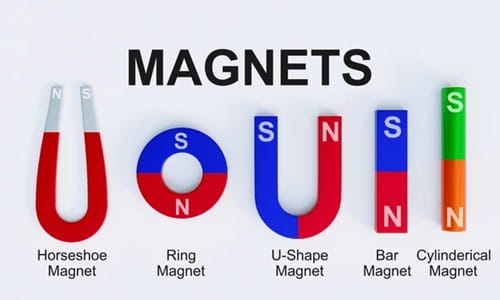
1. Magnets Have Two Poles—and They Always Come Together
Every magnet has two ends called the north pole and the south pole.
No matter how big or small the magnet is, these two poles always exist together. If you cut a magnet in half, you don’t get a single north or south pole. Instead, you get two smaller magnets, each with its own north and south.
Scientists have searched for isolated magnetic poles, called monopoles, for decades. So far, none have been found in nature. Magnetism always comes as a pair.
2. Opposites Attract, Likes Repel
This is the most familiar rule of magnetism.
Opposite poles attract each other—north pulls south. Like poles repel—north pushes north, south pushes south. This push-and-pull behavior is what makes magnets feel alive in your hand.
What’s interesting is that this force works without contact. The magnet creates an invisible magnetic field around it, and other magnets or magnetic materials respond to that field instantly.
3. Not All Metals Are Magnetic
Many people think all metals stick to magnets. That’s not true.
Only certain metals—mainly iron, nickel, cobalt, and some of their alloys—are magnetic. Materials like aluminum, copper, gold, and silver do not stick to magnets.
This happens because magnetism depends on how electrons are arranged inside atoms. In magnetic materials, many tiny atomic magnets align in the same direction, creating a strong overall effect.
4. Earth Itself Is a Giant Magnet
The planet you live on is one massive magnet.
Earth has a magnetic field that stretches far into space. It is created by the movement of molten iron deep inside Earth’s core. This field protects us from harmful solar radiation and guides compass needles toward the magnetic north.
Without Earth’s magnetic field, life on the surface would be exposed to intense cosmic radiation. In a very real sense, magnetism helps make Earth habitable.
5. Magnets Can Lose Their Strength
Magnets are not always permanent.
Heat, physical удар (strong impact), and time can weaken a magnet. When a magnet is heated too much, the internal alignment of its atoms becomes disordered, reducing or destroying its magnetic power.
That’s why strong magnets are carefully protected in industrial and scientific settings. Magnetism depends on order—and disorder breaks it down.
6. Electricity and Magnetism Are Deeply Connected
Magnetism and electricity are two sides of the same force.
When electricity flows through a wire, it creates a magnetic field. When a magnetic field changes near a wire, it can create electricity. This relationship is called electromagnetism.
Because of this connection, magnets play a central role in generators, motors, transformers, and almost every electrical device you use. Modern civilization literally runs on magnetism.
7. Some Magnets Are Strong Enough to Float Objects
Under the right conditions, magnets can make objects float.
This phenomenon is called magnetic levitation. Strong magnetic fields can counteract gravity, allowing objects to hover in mid-air. Maglev trains use this principle to reduce friction and achieve very high speeds.
Even small levitation experiments show how powerful magnetic forces can be when carefully controlled.
8. Living Things Can Sense Magnetism
Some animals can detect Earth’s magnetic field.
Birds, turtles, fish, and even certain insects use magnetism to navigate long distances. This ability, known as magnetoreception, helps them migrate accurately across oceans and continents.
Humans don’t consciously sense magnetic fields, but research suggests our bodies may still respond subtly to them. Nature has been using magnetism long before humans understood it.
9. The Strongest Magnets Are Artificial
The strongest magnets on Earth are not natural.
They are made in laboratories using advanced materials and powerful electric currents. These magnets are used in particle accelerators, MRI machines, and cutting-edge research.
Some of these magnets are so strong that they can rip metal objects from across a room if safety rules are ignored. At extreme levels, magnetism becomes a serious force that must be respected.
10. Magnetism Shapes the Modern World
Magnets are everywhere—even when you don’t see them.
They are inside phones, headphones, laptops, refrigerators, electric vehicles, wind turbines, and medical scanners. Data storage, sound production, motion, and energy conversion all rely on magnetic principles.
Magnets don’t just stick notes to your fridge. They quietly support the structure of modern technology.
Conclusion
Magnets may look simple, but they reveal one of nature’s most powerful forces. They work silently, invisibly, and constantly—shaping everything from Earth’s protection to the devices in your pocket. Their behavior follows strict rules, yet still feels mysterious when you watch objects move without touch.
Understanding magnets helps us understand the hidden structure of the physical world. They remind us that not everything powerful needs to be seen. Some forces work best when they stay invisible—pulling, pushing, and holding the world together in ways we are only beginning to fully appreciate.