 By Hemant Sharma
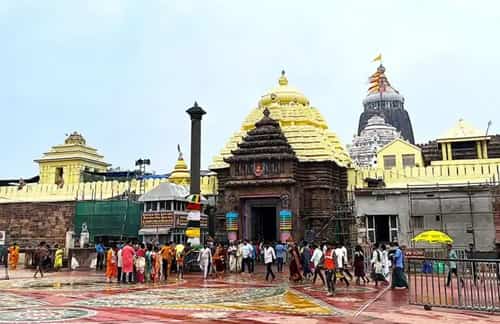
 Jagannath Temple is not just a temple—it is a living mystery of faith, tradition, and devotion that has continued for centuries. Located in Puri, Odisha, it is one of the Char Dham pilgrimage sites and holds immense spiritual importance for millions of devotees. But what truly sets this temple apart is that it does not follow the usual rules seen in other Hindu temples.
From its unique deities and unusual rituals to scientific puzzles that still surprise researchers, the Jagannath Temple stands at the intersection of belief and curiosity. It is a place where devotion outweighs logic, yet logic quietly exists everywhere. These ten facts explore why the Jagannath Temple remains one of the most fascinating religious sites in the world.
1. The Deities Are Made of Wood, Not Stone
Unlike most Hindu temples where idols are carved from stone or metal, the idols of Lord Jagannath, Balabhadra, and Subhadra are made of sacred neem wood.
This makes the temple truly unique. Every 12 to 19 years, the idols are replaced in a special ritual called Nabakalebara, meaning “new body.” The soul essence is transferred from the old idols to the new ones through secret rituals known only to a few priests. This symbolizes the cycle of birth, death, and rebirth—one of the core ideas of Hindu philosophy.
2. The Temple Flag Defies Wind Direction
One of the most talked-about mysteries of the Jagannath Temple is its flag, which always flutters in the opposite direction of the wind.
Whether the wind blows from east or west, the flag atop the temple moves against it. This phenomenon has puzzled scientists and visitors alike. No clear scientific explanation has fully satisfied this mystery, making it one of the most intriguing aspects of the temple.
3. The Temple Chakra Is Visible From Everywhere in Puri
At the top of the temple sits the Nilachakra, a giant wheel made of an alloy of eight metals. What’s strange is that no matter where you stand in Puri, the chakra appears to face you.
Even more fascinating is that the chakra has no visible shadow at any time of day. How this massive structure avoids casting a shadow remains an unanswered question.
4. No Birds or Aircraft Fly Over the Temple
You’ll never see birds flying directly above the Jagannath Temple. Even airplanes avoid passing over it.
Locals believe this is due to divine protection, while others suggest unusual air currents around the temple structure. Whatever the reason, the sky above the temple always appears strangely empty, adding to its mystical atmosphere.
5. Mahaprasad Is Cooked Without Modern Tools
The Mahaprasad of Jagannath Temple is considered extremely sacred. It is cooked using traditional methods in earthen pots stacked one over another.
The most surprising part is that the top pot cooks first, followed by the lower ones—defying normal cooking logic. No gas, electricity, or modern equipment is used. Everything is prepared on firewood in massive quantities, yet the taste remains consistent every single day.
6. Mahaprasad Never Goes to Waste
Thousands of devotees eat at Ananda Bazaar daily, where Mahaprasad is served. The quantity prepared is never measured, yet it never falls short or goes to waste.
Some days, millions eat. Other days, fewer people arrive. Still, the food always matches the number of devotees. This balance has continued for centuries and is believed to happen by divine will.
7. The Shadow of the Main Dome Is Never Seen
At any time of the day, the main dome of the Jagannath Temple does not cast a shadow on the ground.
Architects and scientists have tried to explain this through structural alignment and sunlight angles, but the mystery remains unresolved. For devotees, it is another sign of divine presence.
8. Rath Yatra Is the Largest Chariot Festival in the World
The Rath Yatra of Puri is one of the oldest and largest religious festivals on Earth. During this event, Lord Jagannath, along with his siblings, travels in giant wooden chariots to the Gundicha Temple.
These chariots are rebuilt every year using specific types of wood and traditional techniques. Millions of devotees pull the chariots, believing it brings spiritual liberation. The festival represents that God comes out of the temple to meet the people—not the other way around.
9. The Temple Kitchen Is One of the Largest in the World
The Jagannath Temple kitchen is among the largest temple kitchens on the planet. It prepares dozens of dishes daily, following ancient rules that have not changed for centuries.
Food is first offered to Lord Jagannath, then to Goddess Bimala, and only after that does it become Mahaprasad. This ritual elevates the food to a sacred status beyond ordinary offerings.
10. Jagannath Accepts Devotion Beyond Caste and Status
One of the most powerful messages of the Jagannath Temple is equality. Lord Jagannath is worshipped by people of all castes and backgrounds.
Mahaprasad can be eaten by anyone, regardless of social status—a concept that challenged rigid caste systems centuries ago. This inclusive nature is why Jagannath is often called the Lord of the Universe.
Conclusion
The Jagannath Temple is not just about unanswered questions or architectural wonders. It is about faith that lives, breathes, and evolves. Its rituals change bodies but not belief. Its mysteries invite curiosity but demand humility.
Whether you see the temple through science, spirituality, or history, one truth remains unchanged—Jagannath is not confined within walls. He moves with his people, eats with them, and reminds the world that devotion is greater than form, logic, or time.