 By Hemant Sharma
 Parrots are impossible to ignore. Bright feathers, sharp eyes, curved beaks, and personalities that feel almost human—these birds don’t just exist in nature, they perform in it. From mimicking human speech to solving puzzles, parrots constantly surprise scientists and bird lovers alike.
But parrots are more than “talking birds.” They are intelligent, emotional, social, and sometimes hilariously mischievous. Some live longer than dogs. Some remember people for years. Others form lifelong friendships and mourn losses. The more you learn about parrots, the more they stop feeling like birds and start feeling like characters.
Here are 10 fun and fascinating facts about parrots, explained in detail, that show just how extraordinary these birds really are.
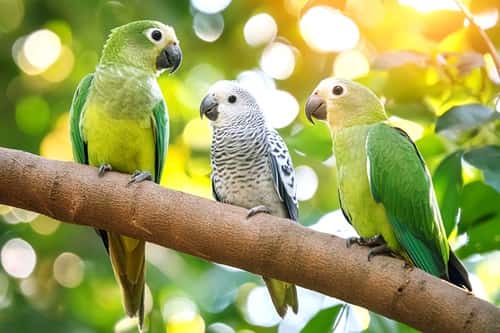
1. Parrots Are Among the Smartest Birds on Earth
Parrots are not just smart for birds—they’re smart by any standard. Studies show that some parrots have intelligence comparable to a young human child.
They can solve logic puzzles, recognize shapes and colors, count objects, and understand cause and effect. Certain parrots can even grasp basic concepts like “same” and “different.” This intelligence helps them survive in the wild, where problem-solving is key to finding food and avoiding danger.
2. Parrots Don’t Just Copy Sounds—They Understand Context
When parrots talk, they’re not always mindlessly repeating sounds. Many parrots use words in the correct situations.
For example, a parrot might say “hello” when someone enters a room or ask for food when it’s hungry. Some parrots even combine words creatively. This ability comes from their strong social instincts—parrots use sound to bond, communicate, and interact.
3. Parrots Can Live Surprisingly Long Lives
Many parrots live far longer than people expect. Some species can live 50 to 80 years, and a few have even crossed 100 years.
This long lifespan means parrots often outlive their owners. It also explains why they develop deep emotional bonds and strong memories. A parrot isn’t a short-term pet—it’s a lifelong companion.
4. Parrots Use Their Beaks Like Hands
A parrot’s beak is not just for eating. It’s a multi-purpose tool.
Parrots use their beaks to climb, hold food, crack nuts, explore objects, and even scratch themselves. In many ways, the beak functions like a third limb. Combined with their clever feet, parrots can manipulate objects with impressive precision.
5. Parrots Have Zygodactyl Feet
Parrots have a unique foot structure called zygodactyl—two toes face forward and two face backward.
This gives them excellent grip and balance. It allows parrots to hang upside down, hold food while eating, and climb branches with ease. This foot design is one reason parrots appear so agile and playful.
6. Parrots Are Extremely Social Creatures
In the wild, parrots almost always live in flocks. Social interaction is essential to their mental health.
They groom each other, communicate constantly, and work together to find food. When kept alone without stimulation, parrots can become depressed or anxious. Their need for companionship is one reason they bond so strongly with humans.
7. Parrots Can Feel Strong Emotions
Parrots experience a wide range of emotions, including joy, boredom, jealousy, fear, and affection.
They can form deep attachments and show clear signs of happiness or sadness. Some parrots grieve when they lose a companion. Others get visibly excited when their favorite person returns. These emotional abilities are closely tied to their intelligence and social nature.
8. Bright Feathers Are Not Just for Beauty
A parrot’s colorful feathers are not random decoration. They serve important purposes.
Bright colors help parrots recognize each other in dense forests. They also play a role in mating and social signaling. Interestingly, many parrots blend in surprisingly well with their environment despite their brightness—green parrots, for example, are hard to spot among leaves.
9. Parrots Love Music—and Some Can Dance
Some parrots respond rhythmically to music. They bob their heads, tap their feet, and move in time with beats.
This ability is rare in animals and suggests parrots can sense rhythm, not just react to noise. Dancing parrots aren’t copying humans—they’re genuinely responding to music in their own way, which makes them even more fascinating.
10. Parrots Remember Faces and Voices for Years
Parrots have excellent long-term memory. They can recognize people they haven’t seen in years and remember voices long after hearing them.
This memory helps them maintain social bonds in the wild, where flocks may separate and reunite. It also explains why parrots can hold grudges—or affection—for a very long time.
Conclusion
Parrots are not just colorful birds that talk. They are thinkers, problem-solvers, emotional beings, and social experts. Their intelligence rivals that of many mammals. Their personalities range from gentle and affectionate to bold and mischievous.
When you watch a parrot closely, you realize something important: intelligence doesn’t belong to humans alone. In feathers and flight, parrots show us another form of mind at work—curious, clever, and endlessly entertaining.