 By Hemant Sharma
 Death is the one certainty every human shares, yet it remains the least understood and most avoided subject. We plan careers, relationships, and futures—but rarely plan conversations about dying. Across cultures and centuries, people have tried to explain it through science, religion, philosophy, and ritual. None of these explanations is complete on its own.
What we do know is this: death shapes how we live. It influences values, priorities, fear, courage, art, and meaning. These ten facts don’t try to solve death. They help you understand it—biologically, culturally, and emotionally—and why thinking about it carefully can deepen life rather than darken it.
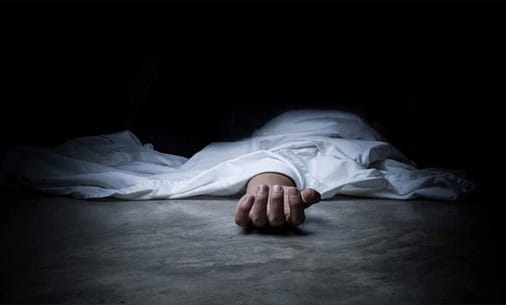
1. Death Is a Process, Not a Single Moment
Death is rarely an instant switch from “alive” to “gone.”
Biologically, it unfolds in stages. Organs fail at different times. The brain loses oxygen, the heart stops, cells begin to shut down, and chemical balances shift. Even after the heart stops, some cells remain active for minutes or longer.
This is why medical professionals define death carefully—using criteria like brain death or irreversible cardiac arrest. Death is not one second on a clock. It is a transition.
2. The Body Begins Changing Immediately
Once death occurs, the body starts to change in predictable ways.
Temperature drops, muscles stiffen, and blood settles due to gravity. These changes aren’t signs of decay at first—they are natural physical responses to the absence of circulation and energy.
Understanding this helps demystify death. The body follows biology, not drama. What looks frightening is often just chemistry and physics doing what they always do.
3. Humans Are the Only Species That Fully Understand Death
Many animals react to loss, but humans uniquely anticipate death.
We know we will die someday. This awareness shapes language, culture, ethics, and fear. It’s why humans bury their dead, write wills, create afterlife beliefs, and ask questions about meaning.
This awareness can cause anxiety—but it also creates compassion, art, philosophy, and the urge to leave something behind.
4. Fear of Death Is Largely Fear of the Unknown
Most people don’t fear the moment of death as much as what comes after—or whether anything comes after at all.
This uncertainty fuels myths, religions, science, and storytelling. Cultures create explanations not just to describe death, but to make it bearable.
Interestingly, people who come closest to death often report less fear afterward. Familiarity, even with the edge of death, tends to soften terror.
5. Near-Death Experiences Share Common Patterns
Across cultures and belief systems, people report similar near-death experiences.
These often include a sense of peace, detachment from the body, altered perception of time, vivid memories, or encounters with light. Science explains some aspects through brain chemistry and oxygen deprivation.
What matters isn’t whether these experiences prove anything beyond life. What matters is how deeply they change people—often reducing fear and increasing empathy.
6. Death Is One of the Biggest Drivers of Human Culture
Entire civilizations are shaped around death.
Graves, pyramids, memorials, rituals, and mourning practices exist everywhere humans have lived. Art, music, poetry, and religion all wrestle with mortality.
Even laws and governments are influenced by death—inheritance, justice, punishment, and war. Much of human organization exists because life is limited.
7. Thinking About Death Can Improve Mental Health
This sounds strange, but it’s true.
Studies show that healthy reflection on death—called “mortality awareness”—can reduce anxiety, sharpen priorities, and increase gratitude. When people accept death as natural, they often live more intentionally.
Avoidance tends to increase fear. Awareness tends to bring clarity. Death doesn’t cheapen life—it defines it.
8. Most People Do Not Die the Way They Fear
Many fear dying in pain, panic, or chaos.
In reality, with proper care, most deaths—especially from illness or old age—are calm. The body naturally releases chemicals that reduce pain and anxiety. Medical care also focuses heavily on comfort.
The dramatic deaths shown in films are rare. Quiet endings are far more common.
9. Death Changes the Living More Than the Dying
For the person who dies, suffering ends.
For those left behind, life changes permanently. Grief reshapes identity, relationships, and time itself. It doesn’t fade in a straight line. It comes in waves.
Yet grief also deepens empathy. People who have lost often understand life more sharply. Death teaches the living how fragile—and valuable—connection really is.
10. No One Has Ever Escaped Death—but Everyone Shapes Its Meaning
Despite all progress, no human has avoided death.
What has changed is how we understand it. Longer lives, better medicine, and deeper knowledge have altered how and when people die—but not the fact that they do.
What remains fully human is choice: how we face death, talk about it, prepare for it, and let it inform how we live.
Conclusion
Death is not the opposite of life. It is part of it. Every breath matters because it ends. Every relationship matters because it won’t last forever. Death does not erase meaning—it creates it.
When we stop treating death as a taboo and start seeing it as a natural boundary, life becomes sharper, more honest, and more urgent. You don’t need to fear death to respect it. And you don’t need to solve it to live well beside it.
In the end, death doesn’t ask us to panic. It asks us to pay attention—to time, to people, to the moments we usually rush past. Life is finite. And that is exactly why it matters.