 By Hemant Sharma
 Outer space is the biggest mystery humans have ever faced. It has no borders, no clear end, and no simple answers. Everything we know—our planet, our Sun, our history—exists inside this vast cosmic ocean. And yet, we have explored only a tiny fraction of it.
Space is beautiful, terrifying, silent, violent, and unimaginably large. It follows laws that often feel counter-intuitive to life on Earth. These ten facts about space reveal just how strange, powerful, and humbling the universe really is—and why the more we learn, the smaller we feel.
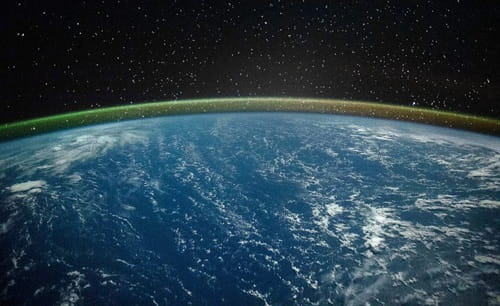
1. Space Is Almost Completely Silent
In movies, space is full of explosions and dramatic sound. In reality, space is nearly perfectly silent. Sound needs a medium like air or water to travel, and space is mostly a vacuum. That means explosions, collisions, and even screaming astronauts make no sound at all.
This silence makes space exploration psychologically challenging. Astronauts operate in an environment where nothing can be heard except internal spacecraft sounds and radio communication. Space isn’t loud—it’s hauntingly quiet.
2. Space Is Bigger Than the Human Mind Can Truly Imagine
The size of space is beyond normal understanding. The observable universe is about 93 billion light-years across. A single light-year is the distance light travels in one year—about 9.46 trillion kilometers. Even traveling at the speed of light, crossing the universe would take longer than human civilization has existed.
And this is just the observable universe. What lies beyond it may be even larger—or infinite. Space doesn’t just stretch far; it stretches beyond comprehension.
3. The Milky Way Is Just One Galaxy Among Billions
Milky Way is home to our solar system.
It contains hundreds of billions of stars, planets, and cosmic objects. For a long time, humans thought our galaxy was the entire universe. Now we know there are hundreds of billions of galaxies, each containing billions of stars.
This means the night sky you see is only a tiny glimpse of reality. Most of the universe is completely invisible to the naked eye.
4. Black Holes Are Real—and Extremely Powerful
Black hole are among the strangest objects in space.
They form when massive stars collapse under their own gravity. The gravity becomes so strong that not even light can escape. Once something crosses a black hole’s boundary, it’s gone forever.
Despite their fearsome reputation, black holes are essential to cosmic balance. Many galaxies—including ours—likely have supermassive black holes at their centers, helping control star movement and structure.
5. Space Is Not Empty
Although space looks empty, it isn’t truly vacant.
It contains gas, dust, radiation, dark matter, and energy fields. Even the emptiest regions have a few atoms scattered across vast distances. There is also constant activity—particles moving, stars forming, and galaxies colliding.
“Empty space” is more like an ultra-thin cosmic soup than true nothingness.
6. Astronauts Grow Taller in Space
In microgravity, the human body changes.
Without gravity compressing the spine, astronauts can grow up to 5 centimeters taller while in space. The spine stretches out, making them temporarily taller until they return to Earth.
However, this comes with discomfort. Muscles weaken, bones lose density, and the body must work hard to readjust after returning to gravity.
7. Time Moves Differently in Space
Time is not the same everywhere.
According to Einstein’s theory of relativity, time slows down in strong gravity and at high speeds. Astronauts on the International Space Station experience time slightly slower than people on Earth.
This difference is tiny, but measurable. In extreme environments—near black holes—time distortion becomes dramatic. Space doesn’t just stretch distance; it bends time itself.
8. Space Is Extremely Cold—and Extremely Hot
Space has no uniform temperature.
In shadow, space can drop to −270°C, close to absolute zero. In direct sunlight, temperatures can rise above 120°C. Without an atmosphere to spread heat, objects in space experience extreme temperature swings.
That’s why spacecraft require advanced insulation and thermal control systems just to survive.
9. Earth Is Constantly Being Hit by Space Debris
Every day, Earth is bombarded by material from space.
Most of it burns up harmlessly in the atmosphere as meteors. Larger impacts are rare, but history shows they can be devastating. One such impact likely wiped out the dinosaurs.
Fortunately, Earth’s atmosphere acts as a protective shield, destroying most threats before they reach the surface.
10. Space May Contain Life—Just Not Like Us
Scientists increasingly believe Earth may not be unique.
Thousands of exoplanets have been discovered, many in zones where liquid water could exist. Some moons in our own solar system may contain oceans beneath ice.
Life elsewhere may not look like humans—or even animals. It could be microbial, chemical, or something entirely unfamiliar. Space may be full of life, just not the kind we expect.
Conclusion
Space is not just a destination—it’s a reminder. A reminder of how small Earth is, how brief human history has been, and how much remains unknown. It challenges our assumptions, stretches our imagination, and forces us to question our place in the universe.
Every star you see is ancient light. Every galaxy is a story billions of years long. And somewhere in that vast darkness, answers may exist to questions we haven’t even learned how to ask yet.
The more we study space, the clearer one truth becomes: the universe does not revolve around us—but we are incredibly lucky to be able to look up and wonder.