 By Hemant Sharma
 Constitution of India is not just a legal document. It is the backbone of the world’s largest democracy and a living guide that shapes how more than a billion people are governed. While most citizens hear about it in textbooks or exams, very few realize how unique, ambitious, and carefully crafted it truly is.
The Indian Constitution was written at a time when the country was newly independent, deeply diverse, and facing enormous challenges. Yet it managed to bring unity without forcing uniformity. These ten amazing facts reveal why the Indian Constitution is considered one of the most remarkable constitutional documents ever written.
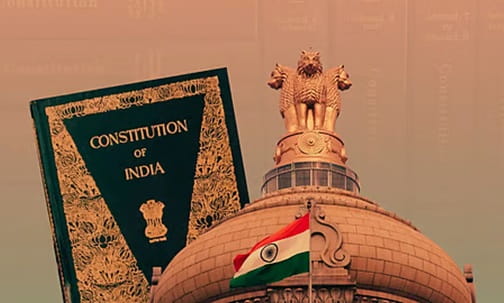
1. The Indian Constitution Is the Longest Written Constitution in the World
The Indian Constitution holds a global record.
It is the longest written constitution of any sovereign country. At the time of its adoption, it contained 395 Articles, 22 Parts, and 8 Schedules. Over the years, amendments have expanded it further.
This length was intentional. India’s founders wanted to address the country’s vast diversity—languages, religions, cultures, and social systems—within one legal framework. Instead of leaving things vague, they chose clarity and detail to prevent confusion and misuse of power.
2. It Took Almost 3 Years to Write
Drafting the Indian Constitution was not rushed.
It took 2 years, 11 months, and 18 days to complete. The Constituent Assembly held 11 sessions and debated almost every line intensely. Each clause was discussed, argued, revised, and refined.
This long process ensured that the Constitution reflected not just political ideas, but social realities. It was not written for a single generation, but for the future of a nation still finding its identity.
3. Dr. B. R. Ambedkar Was the Chief Architect
R. Ambedkar is widely regarded as the chief architect of the Indian Constitution.
As the Chairman of the Drafting Committee, he played a decisive role in shaping its structure and principles. His deep understanding of law, economics, and social justice helped ensure strong safeguards for equality and individual rights.
Ambedkar emphasized constitutional morality—respect for institutions, rules, and democratic values. He believed that political democracy would fail without social democracy, making equality and dignity central to the Constitution.
4. The Constitution Was Handwritten, Not Printed
One of the most fascinating facts is how the Constitution was created physically.
The original copies were handwritten and beautifully calligraphed in both English and Hindi. The calligraphy was done by Prem Behari Narain Raizada, and each page was decorated with artwork inspired by Indian culture.
There was no printing or typing involved in the original version. This artistic effort symbolized respect for the document and treated it as a national treasure, not just a legal manual.
5. It Borrows Ideas from Many Countries
The Indian Constitution is often called a “borrowed Constitution,” but that is actually its strength.
Its makers studied constitutions from across the world and selected ideas that best suited India. Fundamental Rights were inspired by the U.S. Constitution, Directive Principles by Ireland, parliamentary governance by the U.K., and emergency provisions by Germany.
Instead of copying blindly, these ideas were adapted to Indian conditions. The result was a balanced system combining liberty, authority, flexibility, and accountability.
6. It Declares India a Sovereign, Socialist, Secular, Democratic Republic
The Preamble of the Constitution clearly defines India’s identity.
It declares India to be sovereign, socialist, secular, democratic, and a republic. These words are not decorative—they guide governance and lawmaking.
Secularism in India means equal respect for all religions, not hostility toward faith. Socialism emphasizes social and economic justice. Democracy ensures power flows from the people, and republic means the head of state is elected, not hereditary.
7. Fundamental Rights Protect Citizens from the State
One of the Constitution’s strongest features is Fundamental Rights.
These rights protect citizens from arbitrary actions by the state. They include equality before law, freedom of speech, protection of life and liberty, and freedom of religion.
If these rights are violated, citizens can directly approach the courts. This makes rights enforceable, not symbolic. It ensures that the government remains accountable to the people at all times.
8. Directive Principles Aim to Build a Welfare State
Alongside rights, the Constitution includes Directive Principles of State Policy.
These principles guide the government in making laws that promote social welfare, reduce inequality, and ensure dignity for all. They include goals like free education, equal pay, public health, and environmental protection.
Although not legally enforceable, they act as a moral compass. Many progressive laws in India are rooted in these principles.
9. The Constitution Is Flexible Yet Strong
The Indian Constitution strikes a rare balance between rigidity and flexibility.
Some parts can be amended by a simple majority, while others require a special majority and approval of states. This prevents misuse while allowing adaptation over time.
Because of this flexibility, the Constitution has survived political changes, social reforms, and economic transitions without losing its core values.
10. The Constitution Is a Living Document
Perhaps the most amazing fact is that the Indian Constitution is alive.
It evolves through amendments, judicial interpretations, and social change. Courts continuously interpret its principles to meet modern challenges like digital privacy, environmental protection, and gender equality.
Despite being written decades ago, its values remain relevant because they are rooted in justice, liberty, equality, and fraternity—principles that never go out of date.
Conclusion
The Indian Constitution is not just about laws—it’s about vision. It represents a bold attempt to unite extraordinary diversity under shared values. It protects freedom while demanding responsibility. It limits power while empowering people.
In a country as vast and complex as India, the Constitution acts as a quiet force holding everything together. Understanding it is not just for lawyers or students—it is for every citizen who benefits from its protection.
The strength of India’s democracy ultimately depends not just on the words written in the Constitution, but on how deeply its spirit is respected and lived every day.