 By Hemant Sharma
 Bible is one of the most influential books ever written—or rather, ever compiled. It has shaped civilizations, laws, art, language, music, and moral thinking for thousands of years. Even people who have never read it closely often use phrases, ideas, or references that come straight from its pages.
What makes the Bible especially fascinating is that it’s not a single book with one voice. It’s a collection of writings created across centuries, cultures, and historical moments. Behind its spiritual role lie many surprising and lesser-known facts that show how complex and human this sacred text really is.
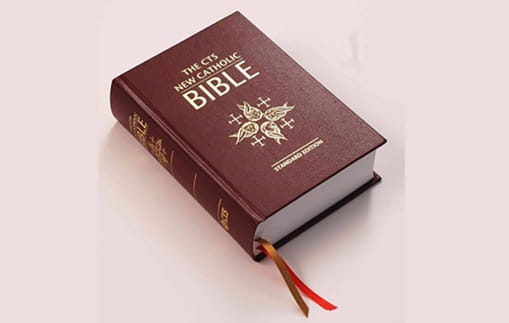
1. The Bible Is Not One Book, But a Library
Many people think of the Bible as a single book, but it’s actually a collection of books.
Depending on the tradition, it contains 66 to 73 books, written by dozens of authors over a period of roughly 1,500 years. These books include history, poetry, law, prophecy, letters, songs, and philosophical reflections.
In simple terms, the Bible is more like a library bound into one volume than a single continuous story. That variety is one reason it continues to be read in so many different ways.
2. The Bible Was Written in Multiple Languages
The Bible did not start in English—or any modern language.
Its original texts were written mainly in Hebrew, Aramaic, and Greek. Hebrew dominates the Old Testament, Greek the New Testament, and small portions appear in Aramaic.
This linguistic diversity reflects the many cultures and regions where the Bible took shape. It also explains why translation has always been a major part of biblical history.
3. The Bible Is the Most Translated Book in the World
No book has been translated more than the Bible.
It has been translated, fully or partially, into over 3,000 languages. This effort spans centuries and involves scholars, missionaries, and linguists working across continents.
For many languages, the Bible was the first major written text ever created. In that sense, the Bible didn’t just spread religion—it helped create written languages and preserve them.
4. The Longest and Shortest Verses Are Very Different
The Bible contains both extremely long and extremely short verses.
The shortest verse is just two words in English: “Jesus wept.” Despite its length, it carries deep emotional weight.
The longest verse, found in the book of Esther, lists a detailed royal decree and is packed with names and titles. This contrast shows how the Bible shifts from quiet emotion to formal documentation.
5. The Bible Was Handwritten for Centuries
For most of history, every Bible was copied by hand.
Before the printing press, scribes spent years carefully copying texts onto parchment or papyrus. Errors were feared, so copying was slow and deliberate. Some scribes even destroyed a page if they made a mistake.
This handwritten tradition makes surviving ancient manuscripts incredibly valuable. Each one offers a glimpse into how the text was preserved and respected.
6. The First Major Printed Book Was the Bible
When printing technology changed the world, the Bible led the way.
The Gutenberg Bible, printed in the 15th century, was the first major book produced using movable type in Europe. This made books more accessible and transformed education, religion, and communication.
In many ways, the modern information age began with the Bible becoming printable rather than hand-copied.
7. The Bible Influenced Everyday Language
Many common phrases come directly from the Bible.
Expressions like “the writing on the wall,” “a drop in the bucket,” “the blind leading the blind,” and “turn the other cheek” all originated in biblical texts.
Even people with no religious background use these phrases daily. The Bible quietly shaped everyday speech across centuries.
8. The Bible Contains Many Writing Styles
The Bible is not written in one tone or format.
Some parts read like legal codes. Others feel like love poetry, personal letters, battle histories, or philosophical debates. There are songs meant to be sung, proverbs meant to be remembered, and parables meant to provoke thought.
This diversity of styles is why different readers connect with different parts of the Bible. There’s something for nearly every temperament.
9. Chapter and Verse Numbers Were Added Later
The original Bible had no chapter or verse numbers.
These were added centuries later to make reference and study easier. While incredibly useful, they sometimes interrupt the natural flow of the text.
Understanding this helps explain why some passages feel more powerful when read continuously rather than in isolated verses.
10. The Bible Is Still One of the Best-Selling Books Every Year
Despite being ancient, the Bible remains incredibly popular.
It consistently ranks among the top-selling books globally every year. It’s read for faith, literature, history, philosophy, and personal reflection.
Few texts survive for thousands of years and remain widely read. That endurance alone makes the Bible remarkable.
Conclusion
The Bible is more than a religious book—it’s a cultural, historical, and linguistic giant. It has been copied by hand, translated into thousands of languages, debated, loved, challenged, and reinterpreted across generations. Few works have influenced humanity so deeply or so widely.
What makes the Bible to explore isn’t just its spiritual message, but its human journey. It reflects fear, hope, doubt, courage, poetry, law, and longing—all wrapped into one collection. Whether read as sacred scripture or historical literature, the Bible remains one of the most fascinating books ever created.