 By Hemant Sharma
 Every morning, millions of vehicles start on Indian roads. Flights take off, factories open, ships move, tractors enter farms, and households depend on LPG, petrol, diesel, ATF, bitumen, lubricants, and petrochemical products in one form or another. Behind this huge movement stands India’s refinery network — a powerful industrial backbone that quietly turns crude oil into the fuels and materials that keep the economy moving.
India is now one of the world’s major refining hubs. As per PPAC’s installed refinery capacity data, India’s total refining capacity stands at about 258.1 MMTPA, with large public-sector, private-sector, and joint-venture refineries spread across Gujarat, Odisha, Haryana, Kerala, Maharashtra, Karnataka, Andhra Pradesh, Punjab, Tamil Nadu, Assam and other regions.
This 2026 list focuses on India’s major oil refineries based on capacity, strategic importance, product contribution, petrochemical integration, and national energy value.
1. Reliance Jamnagar Refinery, Gujarat
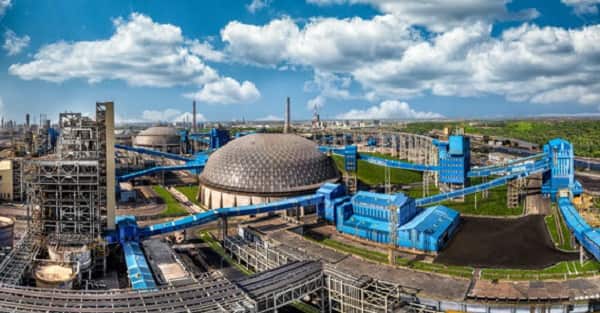
Reliance Jamnagar is not just India’s biggest refinery complex; it is one of the most famous refining assets in the world. Located in Jamnagar, Gujarat, this massive refining and petrochemical hub has turned India into a major exporter of petroleum products. Reliance describes Jamnagar as the world’s largest integrated single-location refining complex.
PPAC lists two Reliance refining units at Jamnagar — RIL Jamnagar with 33 MMTPA and RPL SEZ Jamnagar with 35.2 MMTPA, taking the total Jamnagar complex capacity to around 68.2 MMTPA.
The refinery is known for high complexity, large-scale crude processing, export capability, petrochemical integration, and operational flexibility. Its location near the coast gives it strong logistics support for crude imports and product exports. For India’s refining story, Jamnagar remains the crown jewel.
Owner: Reliance Industries Limited
Location: Jamnagar, Gujarat
Capacity: Around 68.2 MMTPA combined
Major strength: World-scale integrated refining and petrochemical complex
2. Nayara Energy Vadinar Refinery, Gujarat
Vadinar Refinery is another giant from Gujarat and is India’s second-largest single-site refinery after Jamnagar. Owned and operated by Nayara Energy, it is located in Devbhumi Dwarka district near the Gulf of Kutch. Nayara Energy says the Vadinar refinery has a capacity of 20 MMTPA and is capable of processing a wide range of crude oils, from light to ultra-heavy grades.
Its high complexity makes it an important refinery for producing cleaner and higher-value fuels. The coastal location gives it a strong advantage in crude handling and product movement. Vadinar plays a major role in India’s private-sector refining capacity and petroleum product supply.
Owner: Nayara Energy
Location: Vadinar, Gujarat
Capacity: 20 MMTPA
Major strength: High-complexity private-sector refinery
3. BPCL Kochi Refinery, Kerala
BPCL Kochi Refinery is one of India’s most important refineries in the southern region. Located at Ambalamugal near Kochi, it supplies petroleum products to Kerala and nearby states. After its Integrated Refinery Expansion Project, BPCL says Kochi Refinery’s capacity was increased to 15.5 MMTPA.
Kochi Refinery is also important because of its petrochemical growth. It has helped Kerala develop downstream chemical and industrial opportunities. Its location near the coast supports crude imports, while its modern units help produce cleaner fuels. For south India, this refinery is a major energy pillar.
Owner: Bharat Petroleum Corporation Limited
Location: Kochi, Kerala
Capacity: 15.5 MMTPA
Major strength: Large southern refinery with petrochemical integration
4. IOCL Panipat Refinery and Petrochemical Complex, Haryana
Panipat Refinery is one of IndianOil’s most important refinery-cum-petrochemical assets. Located in Haryana, it serves north India’s huge demand for petrol, diesel, ATF, LPG and petrochemical products. IndianOil’s official refining data lists Panipat Refinery and Petrochemical Complex at 15 MMTPA.
Its strategic location near Delhi-NCR, Haryana, Punjab, Uttar Pradesh and Rajasthan makes it extremely important. Panipat is not only a fuel refinery but also a petrochemical centre, producing key inputs for plastics, textiles and other industries. IndianOil has also been working on expansion and modernisation projects at Panipat to meet future demand.
Owner: Indian Oil Corporation Limited
Location: Panipat, Haryana
Capacity: 15 MMTPA
Major strength: Key refinery for north India and petrochemical production
5. IOCL Paradip Refinery, Odisha
Paradip Refinery is one of the most modern public-sector refineries in India. Located on the Odisha coast, it has a strong advantage in crude oil import, marine logistics and product evacuation. IndianOil lists Paradip Refinery’s installed capacity at 15 MMTPA.
This refinery is strategically important for eastern India and also for export possibilities. It can process a wide range of crude oils and is connected with pipelines and port infrastructure. Paradip has also become a major part of India’s plan to strengthen refining and petrochemical capacity on the eastern coast.
Owner: Indian Oil Corporation Limited
Location: Paradip, Odisha
Capacity: 15 MMTPA
Major strength: Coastal refinery serving eastern India
6. HPCL Visakh Refinery, Andhra Pradesh
HPCL’s Visakh Refinery is one of India’s oldest and most important coastal refineries. Located in Visakhapatnam, Andhra Pradesh, it plays a major role in supplying petroleum products to Andhra Pradesh, Telangana, Odisha and other southern-eastern markets. HPCL states that its Visakhapatnam refinery has a capacity of 15 MMTPA.
The refinery has been upgraded over the years and is now a major part of HPCL’s refining network. Its coastal location gives it easy access to imported crude oil, and its product supply network supports both industrial and consumer demand. Visakh Refinery remains one of the strongest energy assets on India’s east coast.
Owner: Hindustan Petroleum Corporation Limited
Location: Visakhapatnam, Andhra Pradesh
Capacity: 15 MMTPA
Major strength: Major east-coast refinery with strong regional supply role
7. MRPL Mangalore Refinery, Karnataka
Mangalore Refinery and Petrochemicals Limited, popularly known as MRPL, is a major refinery located near Mangalore in Karnataka. It is a subsidiary of ONGC and plays a crucial role in India’s west-coast refining network. MRPL’s official profile says the refinery was expanded from its initial capacity to the present capacity of 15 MMTPA.
MRPL is known for its versatile design and ability to process different types of crude oil. It supplies petrol, diesel, LPG, ATF, bitumen, sulphur and other products. Its location near New Mangalore Port gives it strong crude-import and export connectivity. For Karnataka and nearby markets, MRPL is one of the most important refinery assets.
Owner: Mangalore Refinery and Petrochemicals Limited / ONGC
Location: Mangalore, Karnataka
Capacity: 15 MMTPA
Major strength: Versatile coastal refinery with strong port connectivity
8. IOCL Gujarat Refinery, Koyali
IndianOil’s Gujarat Refinery at Koyali near Vadodara is one of India’s oldest and most important public-sector refineries. It has played a major role in India’s refining journey for decades. IndianOil lists Gujarat Refinery’s installed capacity at 13.7 MMTPA.
The refinery is strategically located in one of India’s strongest industrial states. Gujarat has a large demand base for fuels, chemicals, textiles, plastics, ports and manufacturing. The Koyali refinery supports this industrial ecosystem and remains a core part of IndianOil’s western India operations.
Owner: Indian Oil Corporation Limited
Location: Koyali, Vadodara, Gujarat
Capacity: 13.7 MMTPA
Major strength: Old, large and strategically located western India refinery
9. BPCL Mumbai Refinery, Maharashtra
BPCL Mumbai Refinery is one of India’s most important urban refineries. Located in Mumbai, it has a long history and continues to serve one of the country’s biggest fuel markets. PPAC lists BPCL Mumbai Refinery’s capacity at 12 MMTPA.
The refinery’s biggest advantage is its location. Mumbai is India’s financial capital, a major port city, and a huge fuel-consuming market. The refinery supports demand for petrol, diesel, aviation fuel, LPG and other petroleum products in Maharashtra and nearby regions. Despite being located in a dense urban zone, it remains a strategic refinery for western India.
Owner: Bharat Petroleum Corporation Limited
Location: Mumbai, Maharashtra
Capacity: 12 MMTPA
Major strength: Strategic refinery for Mumbai and western India
10. Guru Gobind Singh Refinery, Bathinda, Punjab
Guru Gobind Singh Refinery at Bathinda is operated by HPCL-Mittal Energy Limited, a joint venture of HPCL and Mittal Energy. HMEL says the Bathinda complex includes an 11.3 MMTPA crude oil refinery along with major petrochemical facilities.
This refinery is highly important for Punjab, Haryana, Rajasthan, Jammu & Kashmir, Himachal Pradesh, Delhi-NCR and nearby markets. It is also one of the best examples of refinery-petrochemical integration in north India. Along with fuels, it supports polymer and petrochemical production, adding more industrial value beyond basic refining.
Owner: HPCL-Mittal Energy Limited
Location: Bathinda, Punjab
Capacity: 11.3 MMTPA
Major strength: Integrated refinery-petrochemical complex in north India
Important 2026 Update: Barmer Refinery, Rajasthan
In 2026, India also added a major new name to its refining map — the HPCL Rajasthan Refinery at Pachpadra, Balotra. PIB described the HRRL project as a 9 MMTPA greenfield refinery-cum-petrochemical complex with 2.4 MMTPA petrochemical production capacity, implemented by HPCL and the Government of Rajasthan.
On July 4, 2026, Prime Minister Narendra Modi dedicated this integrated refinery-cum-petrochemical complex to the nation. It is not in the top 10 by capacity yet, but strategically it is one of India’s most important new refinery projects because it gives Rajasthan a major petroleum and petrochemical industrial base.
Conclusion
India’s refinery network is no longer just about producing petrol and diesel. It is now linked with petrochemicals, exports, industrial growth, energy security and regional development. From Jamnagar and Vadinar to Panipat, Paradip, Kochi, Mangalore and the new Barmer refinery, these energy giants are shaping India’s economic future.