 By Hemant Sharma
 France is often imagined through postcards—romantic streets, cafés, fashion, and famous monuments. But beyond the stereotypes lies a country full of oddities, surprises, and small details that make it endlessly interesting. France is ancient and modern at the same time. It respects tradition deeply, yet constantly reinvents itself.
From food habits and geography to history and everyday life, France has layers most people never notice. These ten fun facts reveal a lighter, curious side of France that goes far beyond clichés and tourist brochures.
1. France Is the Most Visited Country in the World
France consistently ranks as the most visited country on Earth.
Millions of tourists arrive every year to see its cities, countryside, beaches, mountains, and cultural landmarks. What makes this impressive is that visitors don’t come for just one reason. Some come for art, others for food, history, fashion, skiing, wine, or simple village life.
Few countries offer so many different experiences within such a compact space.
2. France Has More Time Zones Than Any Other Country
This surprises almost everyone.
France has more time zones than any other country in the world—even more than Russia or the United States. That’s because France includes overseas territories spread across the globe, from the Caribbean to the Pacific Ocean.
When you count them all, France officially spans 12 time zones, making it a country where the sun is always rising somewhere under its flag.
3. Bread Is Taken Very Seriously
In France, bread is not just food—it’s culture.
The traditional baguette has strict rules about how it’s made. By law, a “traditional baguette” can only include flour, water, yeast, and salt. No preservatives. No shortcuts.
Many people still buy fresh bread daily, sometimes twice a day. Walking home with a baguette under your arm isn’t a stereotype—it’s normal life.
4. France Produces an Incredible Amount of Cheese
France is famous for cheese, and the numbers back it up.
There are over 1,200 recognized varieties of French cheese, ranging from soft and creamy to hard and sharp. Some are aged for years, others eaten fresh. Many are tied to specific regions and protected by law.
Cheese in France isn’t just a snack. It’s a course. It has its own moment in a meal.
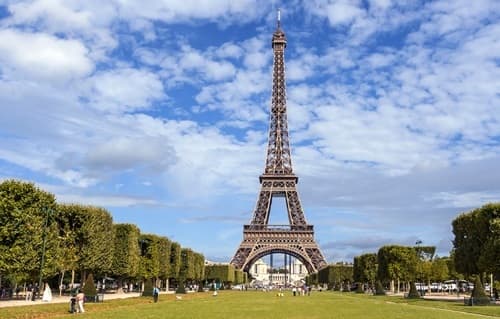
5. The Eiffel Tower Was Meant to Be Temporary
The Eiffel Tower is now the symbol of France, but it wasn’t always loved.
When it was built for the 1889 World’s Fair, many artists and writers hated it. They called it ugly and useless. The plan was to dismantle it after 20 years.
It survived only because it proved useful as a radio transmission tower. What was once nearly removed is now one of the most recognized structures on Earth.
6. France Has Some of the Oldest Laws Still in Use
Parts of France’s legal system date back centuries.
The Napoleonic Code, introduced in the early 1800s, still influences French law today and has shaped legal systems in many other countries. It emphasized equality before the law and clear legal structure.
This means modern France still carries legal ideas born during a time of revolution and empire.
7. Meals Can Last for Hours
In France, eating is not rushed.
Lunches and dinners are social events, not just fuel stops. A proper meal may include multiple courses, conversation, and time to pause. Even schoolchildren are taught to sit, eat slowly, and respect food.
In fact, the French meal structure is officially recognized as part of humanity’s cultural heritage, highlighting how deeply food is woven into daily life.
8. France Has Mountains, Beaches, and Deserts
France’s geography is surprisingly diverse.
It has snowy mountain ranges like the Alps and Pyrenees, sunny Mediterranean beaches, rugged Atlantic coastlines, rolling farmland, forests, and even desert-like regions. Add overseas territories, and you also get tropical rainforests and coral reefs.
You can ski and swim in the sea within the same day—something few countries can offer.
9. French Is Spoken on Almost Every Continent
French is not limited to Europe.
It is spoken across Africa, North America, the Caribbean, the Pacific, and parts of Asia. In many countries, French is used in government, education, and international diplomacy.
This global spread makes French one of the most influential languages in the world, long after France’s colonial era ended.
10. The French Love to Protest
Protesting is almost a national sport in France.
Strikes, marches, and demonstrations are deeply rooted in French political culture. People take to the streets to defend workers’ rights, education, pensions, and social policies.
Rather than being seen as chaos, protest is often viewed as a civic duty—a way to make voices heard and push for change.
Conclusion
France is not just romance, wine, and landmarks. It’s a country shaped by debate, tradition, creativity, and contradiction. It values food but questions authority. It protects old customs while inventing new ones. It can be elegant and rebellious at the same time.
The more you learn about France, the more layered it becomes. These fun facts are just glimpses into a nation that refuses to be simple—and that’s exactly what makes France so endlessly fascinating.