 By Hemant Sharma
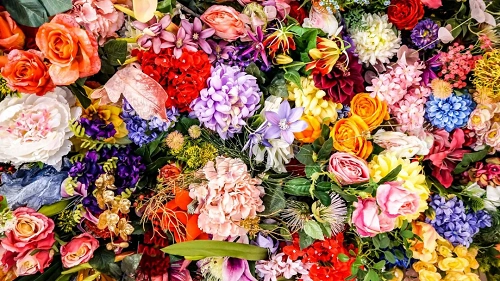
 Flowers are one of nature’s most beautiful creations. They catch our attention with color, fragrance, and shape, but their purpose goes far beyond decoration. Flowers play a vital role in nature, culture, science, and human emotions. They have existed long before humans and will likely continue long after. Below are the top 10 fascinating facts about flowers, explained in detail, to help you understand why flowers are far more important and interesting than they appear.
1. Flowers are essential for life on Earth
Flowers are not just pretty—they are necessary for survival. Most flowering plants reproduce through flowers. They help produce fruits, seeds, and new plants. Many foods humans eat, such as fruits, vegetables, nuts, and grains, depend directly or indirectly on flowering plants. Without flowers, entire ecosystems would collapse.
2. Flowers existed before humans
Flowers appeared on Earth millions of years before humans. Fossil evidence shows that flowering plants existed over 130 million years ago. They survived climate changes, mass extinctions, and geological shifts. Humans are late visitors in a world that flowers helped shape.
3. Not all flowers smell good
While many flowers have sweet fragrances, some smell terrible. Certain flowers produce odors similar to rotting meat, sweat, or decay. These smells are not accidents—they attract specific pollinators like flies and beetles. Beauty and smell in nature are always about function, not human preference.
4. Flowers can communicate without words
Flowers communicate through color, scent, and shape. Bright colors attract pollinators. Strong scents travel long distances. Some flowers even change color after pollination to signal insects that they no longer need visitors. This silent communication system is highly efficient.
5. Some flowers bloom for only a few hours
Not all flowers last days or weeks. Some bloom only once a year and stay open for just a few hours. These short-lived flowers often bloom at night or early morning and rely on specific pollinators. Their brief existence makes them rare and special.
6. Flowers can be incredibly tough
Despite looking delicate, many flowers grow in extreme environments. Some bloom in deserts, frozen mountains, and even volcanic soil. They survive strong winds, harsh sunlight, and poor soil conditions. Their softness hides surprising strength.
7. Flowers follow the Sun
Many flowers move with sunlight, a behavior known as sun-following. They turn their faces toward the Sun during the day to absorb maximum light. This movement helps them grow better and attracts pollinators by keeping flowers warm and visible.
8. Flowers have inspired human culture for centuries
Flowers appear in art, literature, religion, and traditions across the world. They are symbols of love, mourning, peace, celebration, and spirituality. Different cultures attach different meanings to flowers, showing how deeply humans connect emotions with nature.
9. Flowers play a major role in medicine
Many modern medicines come from flowering plants. Painkillers, heart medicines, and anti-cancer drugs have origins in flowers and plants. Traditional medicine systems relied on flowers long before modern science explained how they work.
10. Every flower has a purpose
In nature, nothing is wasted. Every petal, color, scent, and structure serves a purpose—whether it is attracting pollinators, protecting pollen, or ensuring reproduction. Even the most unusual-looking flowers follow precise natural rules shaped by evolution.
Final Thoughts
Flowers may seem simple, but they are powerful. They feed the planet, support wildlife, inspire art, heal illness, and shape ecosystems. Their beauty is not just for humans—it is a result of millions of years of survival and adaptation. The next time you see a flower, remember that you are looking at one of nature’s most successful and meaningful creations.