 By Hemant Sharma
 North America is a land of extremes, stories, and surprises. It stretches from the frozen Arctic in the far north to the warm tropics near the equator. Within this single continent, you’ll find towering mountains, endless plains, deep canyons, dense rainforests, and some of the busiest cities on Earth.
What makes North America especially interesting is how many worlds seem to exist inside it. Ancient civilizations once flourished here long before modern nations appeared. Today, cutting-edge technology and age-old traditions live side by side. From geography to culture, from wildlife to human history, North America is full of facts that don’t always make it into textbooks.
Let’s take a closer look at 10 interesting facts about North America.
1. North America Is the Third-Largest Continent
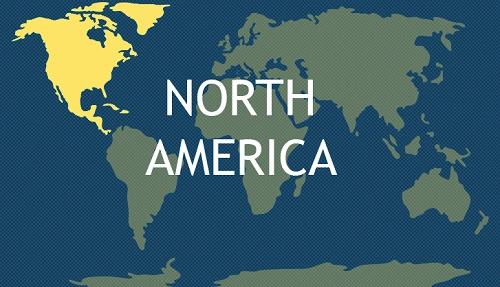
North America is the third-largest continent in the world, after Asia and Africa. It covers about 24.7 million square kilometers, which is roughly 16% of the Earth’s land surface.
Despite being smaller than Asia and Africa, North America packs an incredible amount of variety into its space. Deserts, glaciers, volcanoes, coastlines, and fertile farmland all exist within the same continent. This diversity is one of its defining features.
2. It Contains Some of the World’s Most Extreme Landscapes
North America is home to both one of the hottest places and one of the coldest places on Earth. Death Valley records extreme heat, while parts of northern Canada and Greenland experience brutal cold.
The continent also hosts vast mountain ranges like the Rockies, deep natural wonders like the Grand Canyon, and long river systems such as the Mississippi–Missouri. Few places on Earth show such dramatic contrasts in such close proximity.
3. The Grand Canyon Is Not the Deepest, But It Is One of the Oldest
Many people think the Grand Canyon is the deepest canyon in the world, but that isn’t true. However, it is one of the oldest and most visually dramatic.
Carved mainly by the Colorado River over millions of years, the canyon reveals layers of Earth’s history like an open book. Some exposed rocks are nearly two billion years old, making it a geological treasure.
4. North America Was Home to Advanced Ancient Civilizations
Long before European explorers arrived, North America was home to advanced indigenous civilizations. The Maya, Aztec, and many Native American cultures built cities, developed calendars, practiced astronomy, and created complex social systems.
These civilizations made major contributions to agriculture, mathematics, and architecture. Crops like maize (corn), tomatoes, and chocolate have roots in this part of the world and are now staples globally.
5. It Has the World’s Largest Freshwater System
North America holds a massive share of the planet’s freshwater thanks to the Great Lakes. This system contains about 20% of the world’s surface freshwater.
The lakes are so large that they behave like inland seas, complete with waves, storms, and shipping routes. They support millions of people, industries, and ecosystems across both the United States and Canada.
6. North America Is Made of Multiple Tectonic Plates
Unlike some continents that rest mainly on one tectonic plate, North America sits on several tectonic plates. This is why earthquakes and volcanic activity occur in certain regions.
The western edge of the continent is especially active. This tectonic complexity has shaped mountains, valleys, and coastlines over millions of years, constantly reshaping the land.
7. The Continent Has an Incredible Range of Wildlife
From polar bears in the Arctic to jaguars in the south, North America supports an extraordinary range of animals. Bison once roamed the plains in huge numbers. Bald eagles soar across forests and coastlines.
This wide range of wildlife exists because of the continent’s varied climate zones. Few places on Earth support such different species within a single landmass.
8. North America Has One of the World’s Longest Coastlines
Thanks to its shape and many islands, North America has one of the longest coastlines in the world. It borders the Arctic Ocean, Atlantic Ocean, and Pacific Ocean.
This long coastline has influenced trade, exploration, fishing, and cultural exchange for centuries. It also means the continent is highly affected by hurricanes, storms, and rising sea levels.
9. It Is Home to the World’s Largest Economy
North America plays a major role in the global economy. The continent includes some of the world’s strongest financial systems, advanced industries, and innovation hubs.
Technology, entertainment, agriculture, manufacturing, and energy production all thrive here. What’s interesting is that traditional farming communities and modern tech cities often exist just a few hours apart.
10. North America Is Culturally One of the Most Diverse Places on Earth
North America is a blend of indigenous traditions, European influences, African heritage, and immigrant cultures from nearly every part of the world. Languages, food habits, festivals, and lifestyles change dramatically from region to region.
This cultural mix is constantly evolving. It makes North America not just a continent, but a living experiment in human diversity and coexistence.
Conclusion
North America is far more than a map shape or a list of countries. It is a continent shaped by time, nature, and human ambition. From ancient civilizations to modern cities, from frozen tundra to sun-scorched deserts, it tells countless stories at once.
Understanding these facts helps us see North America not just as a place on Earth, but as a powerful chapter in the planet’s ongoing story.