 By Hemant Sharma
 Tamil is not just a language. It is a living record of human thought that has survived wars, empires, migrations, and centuries of change. Spoken by millions today and written for more than two thousand years, Tamil carries memories of ancient societies while remaining fully alive in the modern world.
What makes Tamil truly special is its continuity. Many ancient languages exist only in books or inscriptions. Tamil is different. The language of old poems still breathes in everyday speech, songs, cinema, and literature. These ten facts help explain why Tamil holds such a unique place among the world’s languages.
1. Tamil Is One of the Oldest Living Classical Languages
Tamil is considered one of the oldest living classical languages in the world. Unlike languages that evolved so much that their ancient forms are no longer understood, Tamil has preserved a strong link between its past and present.
Texts written over two thousand years ago can still be read and appreciated by modern Tamil readers with some guidance. This unbroken flow across time is extremely rare in human history.
2. Tamil Has a Literary History Over 2,000 Years Old
Tamil literature dates back to at least 300 BCE, possibly earlier. The Sangam period produced some of the finest early poetry in the world, focusing on love, war, nature, ethics, and society.
These poems were not religious fantasies or royal praise alone. They described real human emotions, landscapes, and daily life. This realism gives early Tamil literature a modern, relatable feel even today.
3. Tamil Was Declared a Classical Language of India
Tamil was the first language to be officially declared a classical language by the Government of India. This recognition was based on its ancient origin, rich literature, independent grammatical tradition, and long cultural history.
The declaration was not symbolic. It highlighted Tamil’s deep scholarly foundation and its contribution to philosophy, ethics, science, and art.
4. Tamil Grammar Is Extremely Structured and Scientific
Tamil grammar is detailed, logical, and highly developed. One of its earliest grammar texts, Tolkappiyam, does not just explain language—it discusses human behavior, social norms, emotions, and aesthetics.
Tamil grammar divides sounds, words, and meanings with great precision. Many linguists admire how early Tamil scholars approached language almost like a science, centuries before modern linguistics existed.
5. Tamil Has Its Own Unique Script
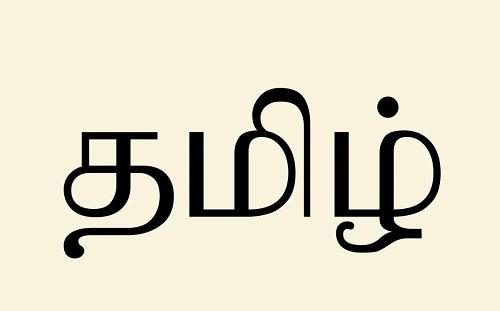
The Tamil script is distinct and instantly recognizable. It has rounded letters, designed in a way that suited writing on palm leaves without tearing them.
Unlike many scripts, Tamil does not use symbols for sounds like “ba,” “da,” or “ja” in their pure form. Instead, pronunciation changes based on context. This makes Tamil script deeply phonetic and rule-based rather than rigid.
6. Tamil Is Spoken Beyond India
Tamil is not limited to one region or one country. It is spoken widely in Sri Lanka, Singapore, Malaysia, and among large communities across the world.
In some countries, Tamil has official status and is taught in schools. This global presence exists because Tamil-speaking communities carried their language wherever they went—and protected it fiercely.
7. Tamil Literature Covers Every Aspect of Life
Tamil writing does not focus on one theme. It covers love, morality, politics, devotion, humor, sorrow, and social criticism.
Works like Thirukkural discuss ethics and human conduct in simple couplets that are still quoted today. The beauty of Tamil literature lies in its balance—deep philosophy expressed in clear, everyday language.
8. Tamil Has Influenced Many Other Languages
Tamil has influenced several languages in South and Southeast Asia. Words of Tamil origin appear in Malayalam, Kannada, Telugu, Sinhala, and even in some Southeast Asian languages due to ancient trade and cultural exchange.
At the same time, Tamil absorbed foreign words while reshaping them to fit its structure. This ability to interact without losing identity helped the language survive for centuries.
9. Tamil Is Central to Identity, Not Just Communication
For Tamil speakers, the language is more than a tool—it is identity. Language pride in Tamil culture is intense and emotional.
Movements, literature, cinema, and music have all played roles in preserving and protecting Tamil. People often describe Tamil not as something they speak, but something they belong to.
10. Tamil Continues to Grow in the Modern World
Despite its ancient roots, Tamil is not stuck in the past. It thrives in modern media, films, technology, and the internet. Tamil content is created daily in news, podcasts, research, and digital platforms.
New words are constantly formed to describe modern ideas, proving that Tamil is flexible and alive. Its strength lies in adaptation without forgetting its roots.
Conclusion
Tamil is not remarkable just because it is old. It is remarkable because it is continuous. Few languages can claim such depth without becoming distant or obsolete. Tamil connects ancient poets and modern speakers through the same linguistic thread.
In a world where many languages are disappearing, Tamil stands firm—rooted in history, alive in the present, and confident about the future. That is not just linguistic survival. That is cultural endurance.