 By Meghna Sharma
 A food order can now travel from kitchen to customer without the diner ever seeing a restaurant signboard. Somewhere behind an apartment block, office district or high street, one kitchen may be preparing a biryani for one brand, a pizza for another and a dessert for a third—all for customers who know the brand on their phone but may never know the kitchen behind it. That invisible restaurant model has become a serious part of India’s food business.
India’s cloud kitchen market is estimated at about US$1.39 billion in 2026, and the strongest operators have moved well beyond the simple idea of a delivery-only kitchen. They use shared production, data-led menus, central kitchens, partner restaurants, direct-ordering apps and increasingly hybrid formats such as kiosks and dine-in stores. For this ranking, the key factors are active kitchen scale, city reach, strength of consumer brands, technology, operational control and current expansion. Multi-brand operators and delivery-first chains are both included where cloud kitchens remain central to the business model. Based on those factors, here are the Top 10 Cloud Kitchen Chains in India in 2026.
1. Rebel Foods
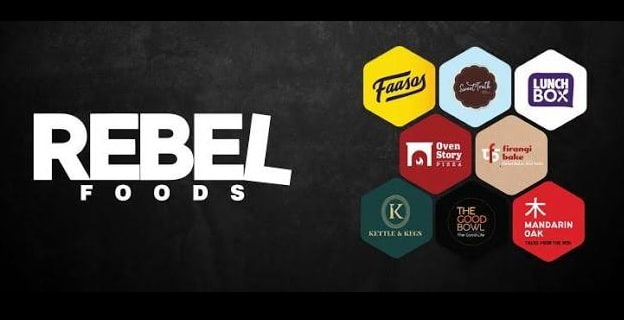
Rebel Foods remains the benchmark for cloud kitchens in India and the company that most clearly demonstrated how several restaurant brands can be run from the same kitchen. Its current corporate information describes a global network of more than 4,000 internet restaurants operating from 450+ kitchens across 70+ cities. India remains the core market, with brands such as Faasos, Behrouz Biryani, Oven Story, The Good Bowl, LunchBox and Sweet Truth reaching customers through the same underlying kitchen infrastructure.
Rebel’s biggest advantage is its operating system. Rather than treating each virtual brand as a separate restaurant, it uses shared supply chains, kitchen workflows, automation and demand data to decide which brands should operate in which catchments. EatSure gives the company a direct consumer channel, while Rebel Launcher allows outside brands to plug into the network. Its scale, brand portfolio and ability to launch new concepts quickly keep Rebel Foods comfortably at No. 1.
2. EatClub Brands
EatClub Brands, which grew out of BOX8, operates one of India’s largest full-stack cloud kitchen networks. The company currently describes a network of 500+ kitchens across major markets including Mumbai, Delhi NCR, Bengaluru, Hyderabad, Pune, Chennai and Kolkata. Its portfolio includes BOX8, MOJO Pizza, Itminaan Biryani, WeFit, LeanCrust Pizza, NH1 Bowls, ZAZA Mughal Biryani, Globo Ice Creams and several other delivery brands.
The company controls much of the chain from procurement and food preparation to technology and last-mile delivery, while its EatClub app encourages customers to order across brands in a single ecosystem. That multi-brand density is its biggest strength: one kitchen can serve different meal occasions without carrying the costs of several dining rooms. EatClub’s scale keeps it in the top tier, although a September 2026 food-safety enforcement action affecting a Goregaon, Mumbai unit also underlines how critical compliance has become for large cloud-kitchen networks.
3. Curefoods
Curefoods has grown rapidly since 2020 into one of India’s largest multi-brand food platforms. Current company and 2026 disclosures describe more than 500 service locations across 70+ cities, with over 300 cloud kitchens and roughly 200 offline stores. Its portfolio includes EatFit, Sharief Bhai Biryani, OLIO, Arambam, Nomad Pizza, CakeZone, Frozen Bottle and Krispy Kreme.
Curefoods uses a kitchen-first operating model in which several brands share central production, supply chains and technology while retaining distinct consumer identities. Around 70–75% of food preparation is centralised for many operations, leaving the final cooking or assembly closer to the customer. The company is also becoming more omnichannel, but cloud kitchens remain central to its economics. Strong category diversity—from health food and biryani to pizza and desserts—makes Curefoods one of the country’s most important food-tech operators.
4. Kouzina Food Tech
Kouzina has built one of India’s most extensive asset-light cloud-kitchen networks. Its June 2026 network disclosure reported 298 active live kitchens, while its broader platform spans dozens of cities and thousands of virtual restaurant listings. Brands under the group include WarmOven, KaatiZone, Indiana Burgers, Burger It Up and newer meal concepts, and the company has also invested in and scaled external food brands.
Its model differs from a company that owns every kitchen. Kouzina works heavily with partner kitchens, helping existing food businesses run additional virtual brands using common recipes, supply systems and technology. This allows it to reach smaller cities without building a full kitchen from scratch each time. The result is a network that can scale quickly while keeping capital requirements relatively low.
5. Dil Foods
Dil Foods has emerged as one of the most interesting virtual-brand networks in India. Its current platform reports 300+ partner outlets across six cities, with 10 live brands including Khichdi Bar, Dil Punjabi Daily, Bihari Bowl, Bhole Ke Chole, House of Andhra, The Chaat Cult and Aahar. Rather than asking restaurant partners to build new kitchens, Dil turns spare capacity in existing kitchens into additional delivery brands.
That model is especially attractive in an industry where kitchen utilisation can decide profitability. Dil supplies brand concepts, processes and ready-to-cook components, trains existing staff and connects the new virtual brands to online ordering channels. In 2026 it also entered a licensing arrangement to restart selected FreshMenu kitchens, extending its influence beyond its own brand portfolio. Its 300+ outlet partner network gives it a strong place in the top five.
6. Bigspoon
Ahmedabad-based Bigspoon is a multi-brand cloud kitchen company with more than 80 kitchens across 35 cities and 16 states. Its current portfolio includes brands such as Mehfil Biryani by Zakir Khan, East Pizza Co., Makhni Brothers, Meals101, Oven & Grill, Thali Central, The Wrap Co. and Monkey Fries.
Bigspoon’s biggest distinction is its reach beyond only the largest metros. It has deliberately built an omni-channel and multi-city network that can bring delivery brands into Tier 2 markets where national cloud-kitchen competition is thinner. Shared kitchen infrastructure lets it spread fixed costs across several cuisines and price points. Its network is much smaller than the four leaders, but 80+ kitchens gives it genuine national-chain scale.
7. Biryani By Kilo
Biryani By Kilo is no longer a pure cloud kitchen, but delivery-first operations remain central to the brand that began by cooking individual orders in earthen handis. The company currently reports 70+ dine-in outlets and serves customers across a large national city network stretching from Delhi NCR and Mumbai to Kolkata, Hyderabad, Bengaluru, Jaipur, Bhubaneswar, Guwahati and many other markets.
Its model is unusual because it resisted the most extreme version of cloud-kitchen batch production. Biryanis are positioned as freshly dum-cooked for each order, with the handi itself becoming part of the brand experience. BBK has increasingly added dine-in locations, but its delivery heritage, centralised operating systems and large multi-city kitchen network keep it relevant to any 2026 ranking of cloud-kitchen-born chains.
8. Biryani Blues
Biryani Blues has also evolved from a delivery-led concept into a hybrid chain. Its current platform advertises 80+ biryani outlets across 10+ cities, with locations in Delhi NCR, Bengaluru, Lucknow, Jaipur, Patna, Bhubaneswar and other markets. Delivery remains a major part of the business even where the brand now operates customer-facing outlets.
The chain focuses on Hyderabadi-style biryani and related meal occasions, using a relatively narrow cuisine focus compared with multi-brand cloud-kitchen companies. That specialisation helps with kitchen standardisation and repeat ordering. Biryani Blues belongs on this list because it shows how a cloud-kitchen-era delivery brand can build a physical network without giving up the economics and customer habits created by online ordering.
9. Ghost Kitchens India
Ghost Kitchens India operates as both a brand builder and a partner network rather than a single consumer-facing restaurant chain. Its current company profile cites around 150 partners across 40+ cities. The platform develops and operates brands such as Starboy Pizza, Big Fat Monk and Maa Ki Khichdi while also partnering with outside restaurant concepts and helping them scale through shared kitchens and franchise structures.
The company has increasingly moved toward an omnichannel model, taking selected cloud brands into dine-in formats and working with celebrity-backed concepts such as BadBoy Pizza. Its 2026 strategy has focused on expanding cloud-kitchen coverage as well as using the same operating platform to grow founder-led QSR brands. The network is smaller than the national leaders but is one of the more active independent cloud-kitchen platforms in western India.
10. Zomoz
Zomoz has built a large delivery-oriented momo network across cities including Hyderabad, Bengaluru, Chennai, Pune, Mysuru, Mangaluru, Mumbai and Kolkata. Its current location pages show dozens of service points in Hyderabad and Bengaluru alone, along with a mix of delivery kitchens, mall counters and corporate-campus outlets.
The company is more specialised than the multi-brand operators above it, but momos are well suited to a distributed kitchen model: they can be produced consistently, finished quickly and delivered across dense urban catchments. Zomoz also sells through major delivery platforms and EatSure in selected markets. Its multi-city network and delivery-led roots give it the final place in this 2026 ranking.
Conclusion
India’s cloud-kitchen industry in 2026 looks very different from the early delivery-only boom. Rebel Foods, EatClub, Curefoods and Kouzina now operate sophisticated networks where technology, shared supply chains and brand portfolios matter as much as the kitchen itself. Dil Foods shows that an existing restaurant can become part of a virtual-brand network without building new infrastructure, while Bigspoon has taken the model deeper into smaller cities.
The category is also becoming more hybrid. Biryani By Kilo, Biryani Blues and several former delivery-only brands now use dine-in outlets, kiosks or food courts alongside cloud kitchens. That does not mean the cloud model is disappearing. It means the best operators are using cloud kitchens as one part of a wider food-distribution system. In the next phase, profitability, hygiene, repeat orders and direct customer relationships are likely to matter more than simply launching the highest number of virtual brands.
FAQs
Q1. Why do several different food brands sometimes show the same address on delivery apps?
They may be virtual brands operating from the same cloud kitchen. A single kitchen can prepare food for several brand names, each with its own menu and online listing. This is a normal part of the multi-brand cloud-kitchen model, although customers can still check the FSSAI details and seller information shown on the platform.
Q2. How can customers check whether a cloud kitchen has a valid food licence?
Every food business in India is required to operate under the applicable FSSAI registration or licence. Delivery listings and invoices generally display FSSAI information, and customers can verify licence details through official FSSAI consumer services. A well-known app listing should not be treated as a substitute for food-safety compliance.
Q3. Are cloud-kitchen meals automatically cheaper than food from dine-in restaurants?
Not necessarily. Cloud kitchens save front-of-house rent and service costs, but they can pay significant commissions to delivery platforms and spend heavily on packaging, discounts and digital marketing. Some brands pass their lower property costs to customers, while others price at the same level as conventional restaurants.
Q4. Can cloud kitchens legally operate from residential buildings?
The answer depends on the property, local municipal rules, fire-safety requirements and the licences needed for commercial food preparation. An FSSAI licence alone does not automatically settle zoning or building-use questions. Enforcement has become stricter in several Indian cities, so operators need to check both food-safety and local land-use requirements before starting.