 By Meghna Sharma
Watermelon is one of India’s favourite summer fruits, valued for its high water content, refreshing sweetness and ability to thrive in warm weather. From riverbed cultivation in Odisha and Uttar Pradesh to commercial fields in Karnataka, Tamil Nadu, Rajasthan and Maharashtra, it is both a popular seasonal fruit and an important cash crop.
Indian farming now includes large traditional watermelons, compact icebox types and high-yielding hybrids bred for sweetness, disease tolerance, transport and attractive flesh colour. Fruit size, rind strength, seed type and total soluble solids (TSS or °Brix) can differ greatly between varieties, affecting both eating quality and market value.
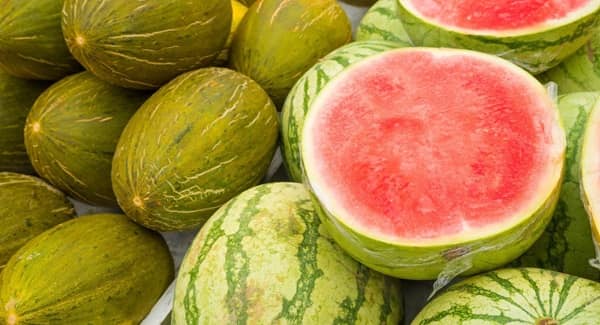
In 2026, the best variety is not simply the biggest or sweetest one. Climate, maturity period, market distance and consumer preference all matter. This guide focuses on well-documented varieties with distinct value under Indian conditions. Now, let’s check out the top 10 watermelon varieties in India.
1. Sugar Baby
Sugar Baby is one of the best-known compact watermelon varieties grown in India. Its dark rind, deep-coloured flesh and relatively early harvest make it useful for smaller families and local markets.
- Origin & type: An introduced variety widely recommended in Indian horticulture.
- Fruit profile: Round fruits with a bluish-black to dark green rind and deep pink-red flesh.
- Size & maturity: Usually 3-5 kg and ready in about 85-90 days under suitable conditions.
- Sweetness: Commonly around 11-13°Brix.
- Best suited for: Fresh eating, smaller households and early-season production.
2. Arka Manik
Arka Manik is one of India’s best-known public-bred watermelon varieties. Developed by ICAR-IIHR, it combines attractive striped fruits and high sweetness with useful disease resistance.
- Origin: ICAR-Indian Institute of Horticultural Research, Bengaluru.
- Fruit profile: Oval, light green fruits with dark stripes and deep crimson granular flesh.
- Size & sweetness: About 6 kg on average, with reported TSS of roughly 12-15°Brix.
- Special strength: Resistant to powdery mildew, downy mildew and anthracnose.
- Yield potential: Around 60 tonnes per hectare under suitable management.
3. Arka Jyoti
Arka Jyoti is a mid-season F1 hybrid valued for good yield, attractive rind pattern and bright crimson flesh. Its medium-large fruits fit well into commercial wholesale markets.
- Origin: Developed at ICAR-IIHR, Bengaluru.
- Fruit profile: Round to oval fruits with light green rind, dark stripes and crimson-red flesh.
- Size: Commonly around 5-8 kg.
- Sweetness: Generally around 11-13°Brix under good management.
- Best suited for: Commercial production requiring good yield and market appearance.
4. Arka Muthu
Arka Muthu is an icebox-type watermelon designed for consumers who prefer smaller fruits. Its compact size is also useful for modern retail, refrigeration and high-density cultivation.
- Origin: Released by ICAR-IIHR.
- Fruit profile: Round fruits with dark green stripes and deep red flesh.
- Size: About 2.5-3 kg.
- Maturity & sweetness: Roughly 75-80 days, with TSS around 12-14°Brix.
- Cultivation advantage: Suitable for precision farming and high-density planting.
5. Arka Shyama
Arka Shyama stands out because of its dark greenish-black rind. This early icebox-type watermelon combines a premium appearance with crisp, dark red flesh.
- Origin: Developed by ICAR-IIHR.
- Fruit profile: Oblong fruit with very dark rind and dark red flesh.
- Texture: Crisp and sweet.
- Maturity: Early, generally around 65-70 days.
- Sweetness: Reported at about 12°Brix.
6. Arka Akash
Arka Akash is a high-yielding F1 hybrid for growers seeking uniform striped fruits and strong productivity. Its red flesh and balanced sweetness give it broad fresh-market appeal.
- Origin: Developed by ICAR-IIHR.
- Fruit profile: Round to oval, light green fruits with dark green stripes and red flesh.
- Sweetness: Around 12°Brix.
- Yield potential: Approximately 75-80 tonnes per hectare in IIHR descriptions.
- Best suited for: Intensive commercial cultivation and organised fresh-fruit markets.
7. Arka Aiswarya
Arka Aiswarya is another high-yielding IIHR F1 hybrid, recognised for oblong fruits and sweet red flesh. It is especially useful where growers want high marketable yield.
- Origin: Developed by ICAR-IIHR.
- Fruit profile: Oblong fruits with red, sweet flesh.
- Sweetness: Reported TSS around 12-13°Brix.
- Yield potential: About 80 tonnes per hectare under favourable management.
- Best suited for: Commercial supply to wholesale and organised retail markets.
8. Durgapura Meetha
Durgapura Meetha is a classic Rajasthan-bred variety valued for large fruits, dark red flesh and good keeping quality. Its thicker rind is useful when fruit must withstand handling and longer transport.
- Origin: Agricultural Research Station, Durgapura, Rajasthan.
- Fruit profile: Round fruit with a thick light green rind and sweet dark red flesh.
- Size: Generally around 6-8 kg.
- Maturity & sweetness: Late, around 125 days, with TSS close to 11°Brix.
- Market advantage: Good keeping and transport quality.
9. Durgapura Kesar
Durgapura Kesar is distinctive because its flesh is yellow to saffron coloured instead of red. This unusual appearance can help it stand out in specialty and direct-sale markets.
- Origin: Agricultural Research Station, Durgapura, Rajasthan.
- Fruit profile: Green striped rind with yellow or saffron-coloured flesh.
- Size: Commonly around 4-5 kg.
- Taste: Moderately sweet.
- Best suited for: Specialty markets and consumers looking for unusual watermelon colours.
10. PKM 1
PKM 1 is an established Tamil Nadu variety suited to warm southern conditions. It produces comparatively large fruits with dark green skin and pinkish-red flesh.
- Origin: Released through Tamil Nadu Agricultural University.
- Fruit profile: Large dark green fruits with pink to red flesh.
- Crop duration: Around 122-135 days under recommended cultivation.
- Yield: Reported at about 36-38 tonnes per hectare.
- Best suited for: Warm-region open-field cultivation.
Practical Buyer’s Guide: How to Choose a Good Watermelon
Variety matters, but harvest maturity and handling can make an even bigger difference to eating quality. Watermelon does not become dramatically sweeter after harvest, so selecting a properly mature fruit is important.
- Field spot: A creamy yellow patch where the fruit rested on the ground is usually a useful maturity sign.
- Rind condition: Choose a firm fruit without major soft spots, deep cracks or leaking areas.
- Weight: A good watermelon should feel reasonably heavy for its size.
- Choose the right size: Icebox types suit small families; larger, thicker-rinded fruits work better for groups and transport.
- For growers: Match the variety to season, disease pressure, irrigation, market distance and seed availability.
Conclusion
India offers watermelon varieties for almost every market, from compact Sugar Baby and Arka Muthu to large Durgapura Meetha and high-yielding Arka hybrids. Farmers should choose according to climate and market needs, while consumers should focus on freshness, maturity and eating quality rather than size alone.
Frequently Asked Questions
Q. Which watermelon variety is the sweetest in India?
Arka Manik is notable for reported TSS of about 12-15°Brix, while Arka Muthu and several modern hybrids can also be very sweet. Sunlight, irrigation and harvest maturity strongly influence actual sweetness.
Q. Which watermelon variety is best for a small family?
Sugar Baby and Arka Muthu are practical choices because their smaller fruits reduce waste and are easier to refrigerate after cutting.
Q. Which watermelon variety is suitable for long-distance transport?
Durgapura Meetha is known for its thick rind and good keeping quality. Commercial growers should also consider fruit firmness, harvest stage and transport conditions.
Q. Are yellow-fleshed watermelons naturally yellow?
Yes. Varieties such as Durgapura Kesar naturally develop yellow or saffron-coloured flesh because of their genetics. The colour does not mean the fruit is unripe.