 By Meghna Sharma
India’s indigenous cattle heritage is as diverse as its climate. From the dry plains of Rajasthan and Gujarat to the humid Deccan and tropical Kerala, generations of farmers and pastoral communities have developed cattle that can cope with heat, seasonal fodder shortages and local disease pressure while supplying milk, manure and, in many regions, draught power. In livestock science these are called breeds, although many readers commonly search for them as cow varieties.
In 2026, native cattle are receiving renewed attention not only for dairy farming but also for climate resilience, conservation and scientific breeding. Programmes led by ICAR, NDDB and state agencies are using performance recording, superior germplasm, genomic selection and assisted reproductive technologies to improve important indigenous breeds without losing their regional identity. For farmers, however, the best cow is not simply the breed with the biggest milk figure. Feed availability, heat tolerance, fertility, veterinary support and the quality of the individual animal matter just as much.
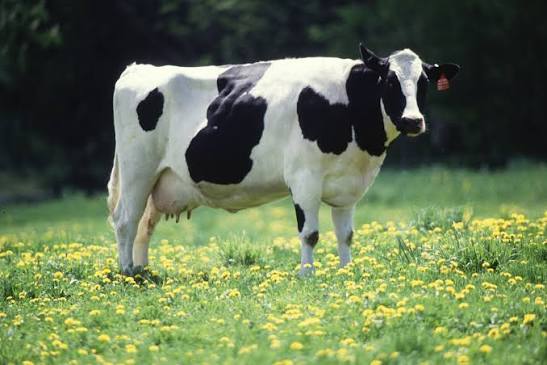
This list therefore focuses on ten widely recognised Indian cattle breeds selected for dairy value, adaptability, regional importance and genetic conservation. Milk figures are useful guides, not guarantees, because actual production changes with genetics, parity, nutrition, health and management. Now, let’s check out the top 10 cow varieties in India.
1. Gir – Gujarat’s Iconic Dairy Breed
Gir is one of India’s best-known indigenous dairy breeds and is closely associated with the Saurashtra region of Gujarat. Its distinctive domed forehead, long pendulous ears and red-to-speckled coat make it easy to recognise. Beyond appearance, farmers value Gir for its dairy potential and ability to perform under hot Indian conditions.
- Native tract & identity: Amreli, Bhavnagar, Junagadh and Rajkot districts of Gujarat; primarily a milch breed.
- Milk potential: NDDB lists an average lactation yield of about 2,110 kg, with a reported range of roughly 800-3,300 kg.
- Key traits: Medium-to-large frame, characteristic convex forehead, long drooping ears and good adaptation to warm climates.
- Best suited for: Dairy farms seeking a recognised indigenous milch breed, especially where heat adaptability and access to quality Gir breeding stock are important.
2. Sahiwal – One of India’s Finest Indigenous Milch Breeds
Sahiwal has long been regarded as one of the strongest dairy performers among South Asian zebu cattle. In India, its important breeding tract includes Punjab and Sri Ganganagar in Rajasthan. The breed is usually reddish dun to brown and is known for a calm dairy type, heat tolerance and relatively strong milk performance under good management.
- Native tract & identity: Ferozpur and Amritsar districts of Punjab and Sri Ganganagar district of Rajasthan; a specialised milch breed.
- Milk potential: NDDB reports an average lactation yield of about 2,325 kg, with a range of around 1,600-2,750 kg.
- Key traits: Reddish coat, loose skin, well-developed udder in good dairy animals and strong adaptation to hot conditions.
- 2026 relevance: Sahiwal is at the centre of current genetic-improvement work, including genomic selection and advanced embryo technologies aimed at multiplying superior germplasm.
3. Red Sindhi – Compact, Heat-Tolerant Dairy Cattle
Red Sindhi is a recognised indigenous milch breed maintained in several parts of India, although its historical home tract lies in Sindh. Its deep reddish-brown coat and compact dairy build make it distinctive. The breed has been used both in pure breeding and in crossbreeding programmes because of its adaptation to tropical conditions.
- Indian distribution: Found in several states, including parts of Punjab, Haryana, Rajasthan, Uttarakhand, Odisha, Tamil Nadu, Bihar, Kerala and Assam.
- Milk character: Primarily valued as a dairy breed; yield varies widely with breeding line, feeding and herd management.
- Key traits: Red to dark reddish-brown coat, moderate body size and useful tropical adaptability.
- Best suited for: Farmers interested in an indigenous dairy breed with a long history of use in warm and humid production systems.
4. Tharparkar – Desert-Adapted Dual-Purpose Breed
Tharparkar is a striking white-to-grey breed shaped by the arid environment of western Rajasthan and the Kutch region. It combines milk production with the ability of males to perform draught work, making it a classic dual-purpose breed. Its ability to function in hot, dry conditions gives it special relevance as climate stress becomes a bigger livestock-management concern.
- Native tract & identity: Barmer, Jaisalmer and Jodhpur in Rajasthan and Kutch in Gujarat; used for milk and draught.
- Milk potential: NDDB gives an average lactation yield of about 1,749 kg, with a range of roughly 913-2,147 kg.
- Key traits: White or light-grey coat, hardy constitution and strong adaptation to dry climates and limited resources.
- Best suited for: Arid and semi-arid farms where resilience, moderate milk production and dual-purpose utility are more important than maximum yield alone.
5. Rathi – Rajasthan’s Reliable Milk Breed
Rathi is an important dairy breed of north-western Rajasthan and deserves more attention outside its home region. It developed under hot, dry conditions where animals must remain productive despite environmental stress. Coat colour can vary, but brown animals with white patches are commonly associated with the breed.
- Native tract & identity: Bikaner, Sri Ganganagar and Jaisalmer districts of Rajasthan; classified mainly as a milch breed.
- Milk potential: NDDB records an average lactation yield of about 1,560 kg, with a range of approximately 1,062-2,810 kg.
- Key traits: Useful dairy ability combined with adaptation to Rajasthan’s heat and variable fodder conditions.
- Best suited for: Farmers in hot, dry regions who want an indigenous milch breed backed by organised breed-improvement programmes.
6. Kankrej – Powerful Dairy and Draught Cattle
Kankrej is a large, impressive breed from Gujarat and adjoining Rajasthan. The animals are usually silver-grey to iron-grey, with strong bodies and distinctive lyre-shaped horns. Cows contribute milk while bulls have traditionally been valued for farm work, giving Kankrej a well-established dual-purpose role.
- Native tract & identity: North Gujarat and areas around the Rann of Kutch, extending into Barmer and Jodhpur in Rajasthan.
- Milk potential: NDDB lists an average lactation yield of about 1,738 kg.
- Key traits: Large frame, strong legs, grey coat, characteristic horns and good endurance in hot, demanding environments.
- Best suited for: Mixed crop-livestock farms that value both milk and robust dual-purpose genetics rather than a dairy-only animal.
7. Hariana – Hardy North Indian Dual-Purpose Cattle
Hariana cattle are closely linked with the farming landscape of Haryana. Traditionally, the breed supplied both milk and strong working bullocks. Mechanisation has reduced the importance of draught animals, but Hariana remains valuable as a native genetic resource and as a breed adapted to the hot plains of northern India.
- Native tract & identity: Hisar, Rohtak, Sonipat, Gurugram, Jind and Jhajjar districts of Haryana; milk and draught use.
- Milk potential: NDDB reports an average lactation yield of about 997 kg, with considerable variation among animals.
- Key traits: Generally white to light grey, hardy, active and noted by ICAR for endurance in hot climates.
- Best suited for: Farmers interested in a locally adapted north Indian breed, particularly where conservation and dual-purpose traits matter.
8. Ongole – Andhra Pradesh’s Famous Strong Cattle
Ongole cattle are among India’s most internationally recognised zebu breeds. Originating in Andhra Pradesh, they are known for their size, muscular build, prominent hump and glossy white coat. Historically, strength and draught ability have been central to the breed, while cows also provide milk.
- Native tract & identity: Andhra Pradesh, especially the traditional Ongole breeding region; classified for milk and draught.
- Milk potential: An NDDB statistical profile reports average lactation yield of about 798 kg and average milk fat around 3.8%.
- Key traits: Large body, strong frame, white coat and notable endurance; bulls are especially valued for power.
- Best suited for: Low-to-moderate input systems where strength, adaptability and preservation of distinctive indigenous genetics are priorities.
9. Deoni – The Deccan’s Practical Dual-Purpose Breed
Deoni cattle developed in the Deccan region and combine useful milk production with working ability. Their black-and-white patterning is distinctive, although colour distribution differs among animals. The breed is particularly relevant to parts of Maharashtra and Karnataka where mixed farming remains important.
- Native tract & identity: Maharashtra and Karnataka; recognised as a milk-and-draught breed.
- Milk potential: NDDB’s Karnataka profile notes that Deoni cows can yield up to about 1,500 kg per lactation, though herd averages can be lower.
- Key traits: Sturdy body, good working ability and adaptation to Deccan conditions.
- Best suited for: Mixed farms that need a hardy animal capable of contributing milk while retaining useful dual-purpose characteristics.
10. Vechur – Kerala’s Small Native Dairy Breed
Vechur is one of India’s smallest indigenous cattle breeds and is closely associated with Kerala. Its compact size is not a weakness; it allows the animal to fit low-input smallholder systems where land, housing and feed are limited. The breed is also an important conservation symbol in Indian livestock biodiversity.
- Native tract & identity: Kerala; maintained mainly for milk and manure.
- Milk potential: NDDB’s Kerala profile reports an average lactation yield of about 561 kg, with milk fat around 4.7-5.8%.
- Key traits: Small body size, comparatively low maintenance requirement and adaptation to humid tropical conditions.
- Best suited for: Small farms and conservation-oriented households where manageable body size and local adaptability are more important than high-volume commercial milk production.
Practical Farmer’s Guide: How to Choose the Right Cow Breed
A breed name alone does not guarantee a profitable dairy animal. Before buying, evaluate the cow, the farm and the support available in your area.
- Match the breed to your climate and fodder: A high-potential cow will underperform if heat stress, water shortage or poor-quality feed are constant problems.
- Ask for full lactation records: Do not judge a cow only by a claimed peak daily yield. Check previous lactation yield, calving history and current stage of lactation.
- Check health and conformation: Inspect the udder, teats, feet, legs, body condition, appetite and temperament. Review vaccination, deworming and disease-testing records where available.
- Verify breeding history: Buy from a reliable breeder or organised farm and ask for pedigree, artificial-insemination or sire details when possible. Colour alone is not proof of breed purity.
Conclusion
India’s indigenous cattle breeds represent generations of farmer knowledge, natural selection and regional adaptation. Gir and Sahiwal stand out for dairy potential, while breeds such as Tharparkar, Kankrej, Ongole and Deoni combine resilience with dual-purpose value. Choosing the right breed means matching genetics with climate, feed, health care and realistic farm goals.
Frequently Asked Questions
Q. Which indigenous cow breed gives the most milk in India?
Among the major recognised indigenous dairy breeds, Sahiwal and Gir are among the strongest performers. NDDB lists average lactation yields of about 2,325 kg for Sahiwal and 2,110 kg for Gir. Individual elite cows can perform much better, but management strongly affects production.
Q. Which Indian cow breed is best for hot and dry climates?
Tharparkar, Sahiwal, Gir, Rathi and Kankrej are all known for adaptation to hot conditions. The best choice depends on local fodder, water availability, disease pressure and whether the farm wants mainly milk or dual-purpose utility.
Q. What is the difference between Gir and Sahiwal cows?
Gir originated in Gujarat and is famous for its convex forehead and long drooping ears. Sahiwal is associated with Punjab and Rajasthan and usually has a reddish-dun coat. Both are important indigenous milch breeds, with Sahiwal showing a slightly higher NDDB average lactation yield.
Q. Which is one of the smallest cow breeds in India?
Vechur of Kerala is one of India’s smallest recognised indigenous cattle breeds. It produces much less milk than large specialised dairy breeds, but its small body, local adaptability and lower resource requirement make it important for smallholder systems and conservation.