 By Hemant Sharma
 Teak wood, commonly known in India as Sagwan, is one of the most sought-after hardwoods in the world. Famous for its durability, water resistance, and natural beauty, it is widely used in furniture, flooring, doors, and boat building. With its high demand, teak wood is often adulterated or substituted with inferior woods, making it essential for buyers, carpenters, and furniture makers to know how to identify genuine teak wood.
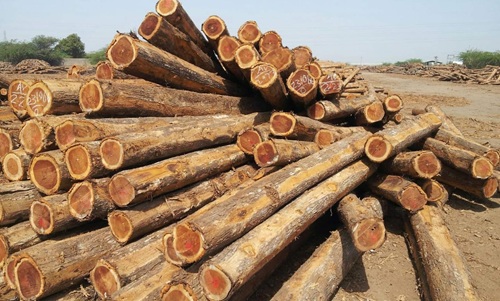
1. Color and Grain Patterns
- Natural Color: Genuine teak has a golden to medium brown hue that darkens with age. Newly cut teak may appear lighter, but it develops a rich patina over time.
- Grain: The wood has a straight grain with occasional wavy patterns.
- Texture: Teak wood feels smooth yet coarse, providing a pleasant tactile experience.
- Contrast with Fake Woods: Cheaper substitutes may have uniform color or artificial polish, lacking natural variations.
2. Weight and Density
- Teak is a dense hardwood, giving it a hefty and solid feel.
- If you lift a plank or piece of furniture, genuine teak feels heavier than common softwoods like pine or sal wood.
- Low-density wood that is light and hollow is unlikely to be true teak.
3. Natural Oil Content
- Teak contains natural oils that make it resistant to water, termites, and fungal attacks.
- Touch Test: Rubbing the wood with a finger may leave a slight oily feel, especially on freshly cut pieces.
- Water Test: Drops of water on teak wood do not soak immediately, while water on fake wood is absorbed quickly.
- This natural oil content also allows teak to age gracefully without requiring constant polishing.
4. Smell Test
- Freshly cut teak emits a distinct, pleasant woody aroma.
- Older or polished pieces retain a mild scent.
- If the wood smells chemical, synthetic, or odorless, it may be a substitute or treated wood.
5. Resistance to Pests
- Teak’s natural oils make it highly resistant to termites and insects.
- Over time, genuine teak shows minimal signs of pest damage, unlike other woods which may develop holes or bore marks.
6. Knots and Imperfections
- Genuine teak wood may have small knots or streaks, which add to its natural character.
- Wood that looks too uniform and flawless is likely engineered, stained, or laminated to imitate teak.
- Checking the edges and back of the plank can reveal authentic grain and imperfections, confirming it is real
7. Flexibility and Hardness Test
- Teak is hard but flexible, allowing it to withstand pressure without cracking easily.
- A gentle scratch test with a fingernail or coin should leave a slight mark but not penetrate deeply.
- Inferior woods are often soft and prone to dents, making them unsuitable for long-term use.
8. Price and Source Verification
- Teak is rare and expensive, so extremely cheap wood sold as teak is likely fake.
- Verify the source or seller credibility. Genuine teak usually comes from:
- India (Kerala, Karnataka, Odisha)
- Myanmar (Burmese teak)
- African teak (Iroko, a teak alternative)
- Always request certificates or documentation, especially for large-scale purchases.
Quick Comparison Table: Teak vs Fake Woods
| Feature | Genuine Teak (Sagwan) | Fake/Substitute Wood |
| Color | Golden to medium brown | Too uniform, pale, or artificially dark |
| Grain | Straight with occasional wavy patterns | Flat or engineered grain |
| Weight | Heavy and dense | Light and hollow |
| Natural Oil | Slightly oily to touch, water-resistant | Dry, absorbs water quickly |
| Smell | Pleasant woody aroma | Chemical or odorless |
| Resistance to Pests | Naturally termite-resistant | Easily damaged by insects |
Final Thoughts
Identifying genuine teak wood requires attention to color, grain, weight, natural oils, aroma, and resistance to pests. By using these simple tests, buyers and carpenters can ensure they are investing in durable, long-lasting, and high-quality wood. Authentic teak not only enhances the beauty of furniture and interiors but also provides longevity, strength, and minimal maintenance, making it a worthy investment for any home or project.