 By Hemant Sharma
 Rabindranath Tagore was not just a poet or a writer—he was a way of thinking. At a time when the world was divided by empire, race, and rigid traditions, Tagore spoke the language of humanity, freedom, and inner truth. His words were gentle, but their impact was powerful. He questioned authority without anger and celebrated life without arrogance.
Tagore believed that education should awaken curiosity, that art should heal the soul, and that freedom should begin in the mind. He lived during a turbulent period of colonial rule, yet his vision was global, timeless, and deeply personal. These ten facts reveal why Rabindranath Tagore remains one of the most influential thinkers India has ever produced.
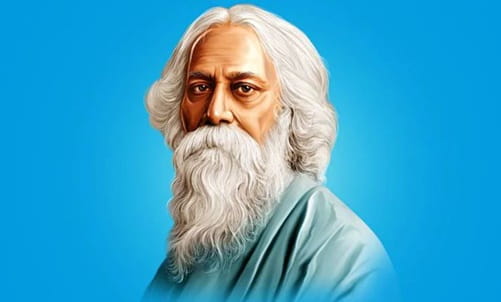
1. Rabindranath Tagore Was Asia’s First Nobel Laureate
In 1913, Rabindranath Tagore became the first Asian to win the Nobel Prize in Literature.
He received the award for Gitanjali, a collection of deeply spiritual poems that spoke about the relationship between the human soul and the divine. What impressed the world was not just his poetry, but its simplicity and universality. His work crossed cultural boundaries without losing its Indian soul.
2. He Wrote the National Anthems of Two Countries
Rabindranath Tagore is the only person in history to have written the national anthems of two nations.
India’s Jana Gana Mana and Bangladesh’s Amar Shonar Bangla were both written by him. Interestingly, parts of a third anthem—Sri Lanka’s—were also inspired by his work. This shows how deeply his ideas resonated across borders.
3. Tagore Was Largely Self-Educated
Tagore did not enjoy formal schooling and often found it restrictive.
He learned mostly at home through reading, observation, and interaction with scholars and artists. This unconventional education shaped his belief that learning should be natural, creative, and free from fear. His personal experience later influenced his revolutionary ideas about education.
4. He Founded Visva-Bharati University
Tagore founded Visva-Bharati University at Shantiniketan with a unique vision.
He wanted a place where the world could meet in one nest—where Eastern and Western knowledge could exist together. Classes were held under trees, not within closed walls. Education, for Tagore, was not about exams but about harmony with nature and life.
5. Tagore Was a Strong Critic of Blind Nationalism
Although Tagore loved India deeply, he strongly criticized blind nationalism.
He believed nationalism without humanity leads to hatred and destruction. His views sometimes put him at odds with other freedom fighters, but he never compromised his principles. Tagore believed true freedom must include moral and spiritual growth, not just political independence.
6. He Returned His Knighthood in Protest
In 1915, the British government awarded Tagore a knighthood.
But after the Jallianwala Bagh massacre in 1919, Tagore renounced the title in protest. This act was quiet yet powerful. He did not shout slogans—he let his conscience speak. The gesture earned him immense respect across India and the world.
7. Tagore Was Also a Painter
Many people don’t know that Tagore became a painter later in life, in his sixties.
He created thousands of artworks with bold lines and abstract forms. His paintings were exhibited internationally and admired for their originality. Tagore believed creativity had no age limit, and his artistic journey proved that learning never truly ends.
8. He Wrote in Almost Every Literary Form
Tagore was astonishingly versatile.
He wrote poetry, short stories, novels, essays, plays, songs, travelogues, and philosophical works. He also composed over 2,000 songs, now known as Rabindra Sangeet. His writing captured emotions ranging from love and sorrow to social injustice and spiritual awakening.
9. He Had a Deep Influence on World Thinkers
Tagore interacted with some of the greatest minds of his time, including Albert Einstein.
Their conversations explored science, truth, and consciousness. Tagore’s thoughts on humanity, freedom, and spirituality influenced thinkers far beyond India. He was seen not just as an Indian poet, but as a global philosopher.
10. Tagore Believed Freedom Begins Within
For Tagore, freedom was not just political—it was inner liberation.
He believed fear, ignorance, and narrow thinking enslave people more than external rulers. His famous line, “Where the mind is without fear,” captures this philosophy perfectly. True independence, he believed, comes when the mind learns to think freely and compassionately.
Conclusion
Rabindranath Tagore was not a voice of rebellion through anger, but through clarity. He taught the world that culture without humanity is empty, education without curiosity is useless, and freedom without conscience is dangerous.
Even today, his words feel relevant because they speak to the inner life of human beings. Tagore did not try to dominate the world—he tried to understand it. And in doing so, he left behind a legacy that continues to guide minds across generations, languages, and borders.