 By Hemant Sharma
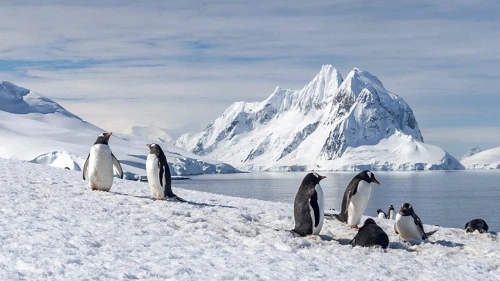
 Antarctica is the most mysterious continent on Earth. It doesn’t have cities, permanent residents, or native human cultures. Yet it plays a massive role in controlling the planet’s climate, oceans, and future. Covered almost entirely in ice, Antarctica looks silent and empty—but beneath that silence lies constant movement, extreme science, and powerful natural forces.
Antarctica is not just “the coldest place on Earth.” It is a land of records, contradictions, and surprises. It holds secrets about Earth’s past, warnings about its future, and environments so extreme that they challenge the limits of life itself. These ten facts reveal why Antarctica is far more fascinating than a frozen wasteland.
1. Antarctica Is the Coldest Place Ever Recorded on Earth
Antarctica holds the record for the lowest temperature ever measured on Earth. In 1983, temperatures at the Vostok research station dropped to about −89°C.
Some satellite data even suggest temperatures lower than −90°C in certain regions. This extreme cold exists because Antarctica receives very little sunlight, has high elevation, and reflects heat due to its ice-covered surface. In many ways, it is colder than outer space at times.
2. Antarctica Is the Driest Continent on the Planet
Despite being covered in ice, Antarctica is technically a desert. Large parts of the continent receive less rainfall than the Sahara Desert.
Snowfall is extremely low, and in some valleys, it hasn’t snowed for millions of years. The ice sheet exists not because of heavy snowfall, but because whatever snow does fall never melts. This makes Antarctica one of the strangest deserts on Earth.
3. Antarctica Contains About 70% of Earth’s Freshwater
Roughly 70% of the world’s freshwater is locked inside Antarctica’s ice sheets. If all this ice melted, global sea levels could rise by nearly 60 meters.
This is why scientists closely monitor Antarctica. Even small changes in ice stability can affect coastlines worldwide. What happens in Antarctica never stays in Antarctica—it affects the entire planet.
4. No One Owns Antarctica
Antarctica is not owned by any country. It is governed by the Antarctic Treaty System, signed in 1959.
The treaty bans military activity, nuclear testing, and mineral mining. Antarctica is reserved for peaceful scientific research only. It is one of the few places on Earth where international cooperation truly works without borders.
5. Antarctica Has No Permanent Residents
There are no permanent human residents in Antarctica. Scientists and support staff live there temporarily, usually for research purposes.
During summer, about 4,000–5,000 people stay on the continent. In winter, that number drops to around 1,000 due to extreme conditions. Living there requires mental strength as much as physical endurance.
6. Antarctica Is Home to Life in Extreme Conditions
Even in brutal cold, life exists. Antarctica is home to penguins, seals, krill, and microorganisms that survive under ice and in freezing water.
Some bacteria can live in subglacial lakes buried beneath kilometers of ice. These organisms help scientists understand how life might survive on icy planets and moons beyond Earth.
7. The South Pole Is Not the Coldest Place in Antarctica
Surprisingly, the South Pole is not the coldest spot on the continent. The coldest temperatures occur on high Antarctic plateaus far from the coast.
The South Pole is extremely cold, but coastal winds and atmospheric conditions make inland regions even colder. Antarctica constantly challenges assumptions.
8. Antarctica Has Active Volcanoes
Beneath all that ice, Antarctica is geologically active. It has active volcanoes, including Mount Erebus, one of the southernmost active volcanoes on Earth.
Mount Erebus even has a permanent lava lake. This proves Antarctica is not a dead land—it is dynamic, with fire hidden beneath ice.
9. Time and Daylight Behave Strangely in Antarctica
Antarctica experiences six months of daylight and six months of darkness. During summer, the sun never sets. During winter, it never rises.
This extreme daylight cycle affects sleep, mental health, and biological rhythms. Researchers often rely on strict schedules and artificial lighting to stay balanced.
10. Antarctica Holds Clues to Earth’s Past and Future
Ice cores drilled from Antarctica act like time capsules. They contain trapped air bubbles from thousands of years ago.
By studying them, scientists can understand past climates, atmospheric changes, and carbon levels. Antarctica helps predict future climate patterns, making it one of the most important places for global science.
Conclusion
Antarctica may look empty, but it is one of the most powerful places on Earth. It controls sea levels, reflects sunlight, influences weather, and stores the planet’s history in ice.
In a world shaped by human activity, Antarctica stands as a reminder of nature’s scale and strength. It belongs to no one, yet affects everyone. Silent, frozen, and vast—Antarctica is not just a continent. It is Earth’s warning, memory, and mirror all at once.