 By Hemant Sharma
 Photography feels completely normal today. Everyone carries a camera in their pocket. Photos are taken, edited, shared, and forgotten within minutes. But behind this everyday habit is a powerful invention that changed how humans see the world, remember the past, and understand reality.
Photography is not just about pressing a button. It is about light, time, chemistry, technology, and perception. A photograph can freeze a moment forever, shape public opinion, or preserve memories long after people are gone. From its slow and difficult beginnings to today’s instant images, photography has quietly reshaped human history.
Now let’s check out the top 10 interesting facts about photography, explained below.
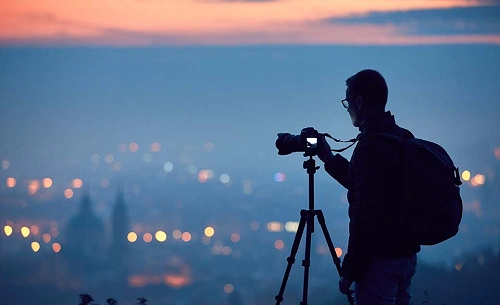
1. The First Photographs Took Hours to Capture
Early photography was nothing like today. The first permanent photograph, created in the early 19th century, required several hours of exposure to light.
People had to stay extremely still, which is why early photos rarely show movement or smiling faces. Any moving object simply disappeared from the image. Photography began as a slow scientific experiment, not a quick way to capture memories.
2. Photography Literally Means “Drawing with Light”
The word photography comes from Greek words meaning “light” and “drawing.” This is not symbolic—it is exact.
A photograph is created when light hits a surface that can record it, whether film or a digital sensor. Without light, photography is impossible. Every image you see is essentially a record of how light behaved at a specific moment in time.
3. Early Photos Were Black and White for a Reason
Black-and-white photography wasn’t an artistic choice at first. Early photographic materials simply could not record color.
Even when color photography became possible, it was expensive and unstable. Black-and-white photos lasted longer and were easier to develop. Over time, the lack of color became a powerful artistic style rather than a limitation.
4. The Human Eye Sees Differently Than a Camera
Cameras do not see the world the way humans do. The human eye constantly adjusts to light, shadows, and movement.
A camera captures only a single exposure unless programmed otherwise. That’s why photos sometimes look darker, brighter, or flatter than real life. Photography is not reality—it is an interpretation shaped by technology and settings.
5. The First Cameras Had No Viewfinder
Early photographers couldn’t see what they were capturing. Some early cameras didn’t have viewfinders at all.
Photographers had to guess the framing, angle, and composition. Photography required patience, experience, and luck. Modern tools make photography easier, but the skill behind good composition still matters.
6. Photographs Can Influence History
Photography has changed the course of history more than most people realize. Images from wars, protests, and disasters have shaped public opinion and political decisions.
A single photograph can spark outrage, inspire movements, or expose hidden truths. Photography doesn’t just record events—it can influence how the world reacts to them.
7. Digital Photography Is Extremely New
Digital photography feels old, but it’s actually very recent. The first digital camera prototype was created in the 1970s, and early images were extremely low quality.
Film photography dominated for decades. Only in the last 20–30 years has digital photography become the norm. In historical terms, we are still in the early phase of the digital image era.
8. A Photograph Is Already in the Past
The moment a photo is taken, it becomes history. Even if the delay is only a fraction of a second, the captured moment no longer exists.
This makes photography emotionally powerful. Every photo is proof that time has moved forward. That’s why old photographs feel nostalgic or emotional—they show moments that can never return.
9. Editing Has Always Been Part of Photography
Photo editing did not begin with apps or software. Even in the darkroom era, photographers adjusted brightness, contrast, shadows, and sharpness.
Cropping, retouching, and manipulation existed long before digital tools. What has changed is speed and accessibility, not the idea itself. Photography has never been completely untouched by human choice.
10. Photography Changed How Humans Remember
Before photography, memory relied on stories, paintings, and written descriptions. Photography introduced visual proof.
It changed how families remember loved ones, how history is documented, and how identity is preserved. Photographs allow people to see faces and moments long after voices are gone. This shift altered human memory forever.
Final Thought
Photography is more than a hobby or a profession. It is a way humans learned to stop time, even if only for a moment. From slow chemical experiments to instant digital images, photography has always been about light meeting memory.
Every photograph carries two stories—the moment it shows and the moment it was taken. And in that quiet space between light and time, photography continues to shape how we see the world.