 By Hemant Sharma
 India’s highways, bridges, metro lines, rail tracks, factories, cars, ships, defence equipment and high-rise buildings all carry one silent signature — steel. A steel plant is not just an industrial unit. It is a city of fire, ore, coal, machines, furnaces, workers and engineering power. In 2026, India’s steel sector is moving through a major growth phase, with the country aiming to expand national steel capacity toward 300 million tonnes by 2030-31. The Ministry of Steel has reported India’s crude steel capacity at 179.515 MTPA in 2023-24, showing how rapidly the sector is scaling up.
Here are the top 10 major steel plants in India in 2026, based on capacity, industrial importance, product range and strategic role.
1. JSW Vijayanagar Works, Karnataka
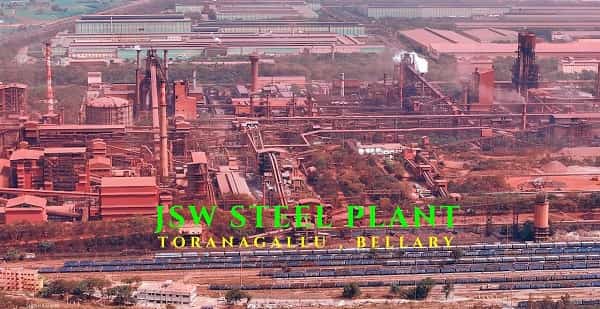
JSW Vijayanagar Works at Toranagallu in Karnataka is one of India’s biggest steel-making centres. JSW lists the plant at 17.5 MTPA crude steel capacity, including 5 MTPA under commissioning, making it one of the world’s largest integrated steel plants.
The plant is known for scale, modern technology, high productivity and strong backward integration. It produces hot rolled coils, cold rolled products, coated products, long products and special grades used in infrastructure, automotive, energy and construction sectors. Its location in the mineral-rich Ballari region gives it a strong raw material advantage.
2. Jindal Steel Angul Plant, Odisha
Jindal Steel’s Angul plant in Odisha has become one of India’s most powerful private-sector steel facilities. The company’s Odisha page lists 12 MTPA steelmaking capacity at Angul, along with blast furnace, plate mill, bar rod mill, hot strip mill and pellet plant facilities.
The plant is important because it combines steelmaking, power, mining and downstream value addition. It is also known for its large blast furnace and technology-driven steel production. Angul has become central to Jindal Steel’s future expansion plans.
3. Tata Steel Jamshedpur Works, Jharkhand
Tata Steel Jamshedpur is more than a steel plant; it is the birthplace of India’s modern steel industry. Started in the early 20th century, it remains one of the country’s most respected integrated steel plants. Tata Steel lists the Jamshedpur plant at 11 MTPA capacity.
The plant produces flat and long steel products for automotive, construction, engineering and industrial sectors. What makes Jamshedpur special is its long operating history, strong quality reputation and deep connection with the city’s development.
4. JSW Dolvi Works, Maharashtra
JSW Dolvi Works in Maharashtra is a major coastal integrated steel plant. JSW states that Dolvi has 10 MTPA total capacity and is expanding from 10 MTPA to 15 MTPA to meet growing demand for high-value steel.
Its coastal location gives it a logistics advantage for raw material handling and product movement. Dolvi produces hot rolled coils and value-added steel for automotive, industrial, infrastructure and consumer durable sectors. It is one of JSW Steel’s most strategic growth assets.
5. AM/NS India Hazira Plant, Gujarat
ArcelorMittal Nippon Steel India’s Hazira plant in Gujarat is one of India’s largest flat steel production centres. AM/NS India states that its Hazira steel factory has an achievable capacity of 9 MTPA and serves a wide range of industrial applications.
Hazira is important for automotive steel, hot rolled products, coated steel and high-strength steel. The plant is also undergoing a major expansion, with earlier company announcements targeting growth from 9 MTPA to 15 MTPA.
6. Tata Steel Kalinganagar, Odisha
Tata Steel Kalinganagar is one of India’s most modern steel plants. In 2025, Tata Steel announced that the plant’s Phase II expansion increased crude steel capacity from 3 MTPA to 8 MTPA.
This plant is known for advanced technology, high-quality flat products and strong focus on efficiency. It supports India’s need for automotive steel, high-end industrial steel and import substitution. Kalinganagar is also a key reason behind Tata Steel India’s recent production growth.
7. Visakhapatnam Steel Plant, Andhra Pradesh
Visakhapatnam Steel Plant, operated by Rashtriya Ispat Nigam Limited, is India’s first shore-based integrated steel plant. The Ministry of Steel describes it as having 7.3 MTPA liquid steel capacity at Visakhapatnam.
The plant produces long steel products such as rebars, wire rods, rounds, squares, billets and structural products. Its coastal location, public-sector importance and strong product reputation make it one of India’s major steel assets.
8. SAIL Bhilai Steel Plant, Chhattisgarh
Bhilai Steel Plant is one of SAIL’s most iconic plants and a major supplier of rails, plates, structural steel and long products. A 2026 PIB update mentioned the proposed expansion of Bhilai Steel Plant from 6.8 MTPA to 10.2 MTPA, showing its current large base and future growth path.
Bhilai has supplied steel for many national infrastructure projects, including railways, bridges and defence-related applications. Its rail and structural steel capabilities give it a special position in India’s public-sector steel network.
9. Tata Steel Meramandali, Odisha
Tata Steel Meramandali is one of India’s largest flat steel plants. Tata Steel lists the Meramandali plant in Odisha at 5.6 MTPA capacity.
The plant is important for flat steel production and strengthens Tata Steel’s Odisha-based manufacturing footprint. Along with Kalinganagar, it gives Tata Steel a very strong position in eastern India, close to raw material sources and industrial demand centres.
10. SAIL Bokaro Steel Plant, Jharkhand
Bokaro Steel Plant is one of SAIL’s most important flat steel plants. A 2026 Lok Sabha document states that Bokaro Steel Plant has a crude steel production capacity of approximately 5.25 MTPA, with SAIL’s Board approving a 2.65 MTPA brownfield expansion.
Bokaro supplies hot rolled coils, cold rolled products and other flat steel grades used in automobiles, pipes, engineering and construction. Its location in Jharkhand gives it access to India’s mineral belt and makes it a major eastern steel hub.
Conclusion
India’s major steel plants are the engines behind the country’s infrastructure and manufacturing growth. From JSW Vijayanagar and Tata Jamshedpur to SAIL Bhilai, AM/NS Hazira and Tata Kalinganagar, these plants are shaping India’s industrial future with scale, technology and expansion.