 By Hemant Sharma
 Robots are no longer just metal figures from science fiction movies. They quietly exist around us—on factory floors, inside hospitals, in our phones, and even exploring distant planets. Most of the time, we don’t notice them because modern robots are designed to work silently in the background, solving problems, saving time, and reducing human effort.
What makes robots fascinating is not just what they do, but how fast they are evolving. They are learning, adapting, and in some cases, making decisions on their own. From simple machines that follow commands to advanced systems that mimic human behavior, robots are changing how the world functions. Here are ten powerful facts about robots that reveal how deeply they are shaping our present—and our future.
1. The Word “Robot” Originally Meant Forced Labor
The word robot comes from the Czech word “robota,” which means forced labor or drudgery.
It was first used in a 1920 play by writer Karel Čapek. In the story, robots were artificial workers created to serve humans, but eventually rebelled. The term perfectly captured the early idea of robots as tireless workers meant to do tasks humans found exhausting or undesirable.
Interestingly, the original idea of robots was never about intelligence—it was about labor. Only later did the concept evolve into thinking machines.
2. Robots Don’t Always Look Like Humans
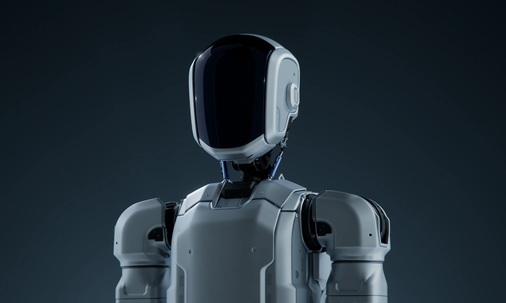
When people hear the word robot, they often imagine a human-shaped machine. In reality, most robots don’t look human at all.
Industrial robots are usually just robotic arms. Software robots exist only as code. Surgical robots resemble complex tools, not people. Even space robots often look more like boxes with wheels than humanoids.
Humanoid robots are actually rare because copying the human body is extremely difficult. Nature perfected it over millions of years. Engineers focus more on function than appearance.
3. Robots Are Already Performing Surgeries
In modern hospitals, robots assist doctors in performing highly precise surgeries.
These machines don’t replace surgeons, but they enhance their abilities. A surgeon controls the robot, which translates hand movements into ultra-precise actions. This reduces hand tremors, improves accuracy, and allows smaller incisions.
As a result, patients experience less pain, reduced blood loss, and faster recovery. In this case, robots are not cold machines—they are tools that directly improve human care.
4. Robots Are Exploring Places Humans Can’t
Robots have reached places where humans may never go.
They explore deep oceans, active volcanoes, nuclear disaster zones, and distant planets. Space rovers work in extreme temperatures, radiation, and isolation without rest. Deep-sea robots survive crushing pressure that would instantly kill a human.
Without robots, much of what we know about Mars, ocean floors, and hazardous environments would remain a mystery.
5. Artificial Intelligence Gave Robots a “Brain”
Earlier robots simply followed fixed instructions. Modern robots can learn.
With artificial intelligence and machine learning, robots can analyze data, recognize patterns, and improve their performance over time. Some robots learn to walk better by falling. Others improve accuracy by studying past mistakes.
This ability to adapt is what makes today’s robots fundamentally different from machines of the past. They are no longer just tools—they are systems that evolve.
6. Robots Don’t Get Tired, But They Still Make Mistakes
Robots can work 24/7 without breaks, sleep, or boredom.
That’s why factories rely heavily on them. However, robots are not perfect. They can malfunction, misinterpret data, or fail in unexpected situations. Unlike humans, they lack common sense unless explicitly programmed or trained for it.
This is why human supervision is still essential. Robots are powerful assistants, not flawless replacements.
7. Robots Are Creating Jobs While Replacing Others
One common fear is that robots will take away all jobs.
The truth is more balanced. Robots do replace repetitive and dangerous tasks, but they also create new roles—robot maintenance, programming, AI training, system monitoring, and design. Entire industries have emerged around robotics.
History shows that technology reshapes work rather than destroying it completely. The challenge lies in adapting skills, not fighting progress.
8. Some Robots Can Show Emotions—But They Don’t Feel Them
Certain robots are designed to smile, frown, or respond emotionally.
They can detect facial expressions, voice tones, and body language. This makes them useful in customer service, education, and elder care. However, these “emotions” are simulations, not feelings.
Robots don’t experience happiness or sadness. They recognize patterns and respond in ways that appear emotional. The illusion is convincing—but the experience is still uniquely human.
9. Robots Are Learning to Work With Humans, Not Replace Them
Modern robotics focuses on collaboration rather than replacement.
These robots, often called collaborative robots, or cobots, are designed to work safely alongside humans. They assist in lifting heavy objects, assembling parts, or handling precision tasks.
Instead of removing humans from the workplace, robots are becoming teammates—handling physical strain while humans focus on creativity, judgment, and decision-making.
10. Robots Are Forcing Humans to Redefine Intelligence
Robots can calculate faster than humans, remember more data, and perform tasks with extreme precision.
Yet, they struggle with creativity, empathy, moral judgment, and intuition. This contrast has forced humans to rethink what intelligence truly means. Is intelligence speed? Accuracy? Or understanding and wisdom?
Robots highlight what makes humans unique. They don’t diminish humanity—they define it more clearly.
Conclusion
Robots are not the future—they are the present. They work quietly in the background, powering industries, supporting healthcare, and expanding human reach into unknown worlds. They are neither heroes nor villains. They are tools shaped by human intent.
The real question is not what robots will become, but what humans choose to do with them. Technology reflects the values of its creators. As robots grow more capable, responsibility grows alongside them.
Understanding robots is not about fearing machines. It’s about understanding ourselves—our limits, our strengths, and the choices we make as creators of intelligence beyond our own.