 By Hemant Sharma
 India’s forests are full of stories. Some are loud — tigers moving through grasslands, elephants crossing rivers, birds filling the morning sky. But some stories are almost silent. A tiny cycad growing on rocky hills. A carnivorous pitcher plant hiding in Meghalaya. A rare Himalayan herb pulled from the soil for medicine. An orchid so beautiful that collectors nearly erased it from the wild.
Endangered plants do not get the same attention as animals, but they are just as important. They hold medicines, protect soil, feed insects, support forests and carry the genetic memory of ancient landscapes. The IUCN considers Critically Endangered, Endangered and Vulnerable species as “threatened with extinction,” and India has many such plant species across the Himalayas, Western Ghats, Northeast India, deserts and dry forests.
Here are the top 10 endangered plant species in India in 2026, selected for rarity, ecological value, legal protection, medicinal importance and extinction risk.
1. Beddome’s Cycad
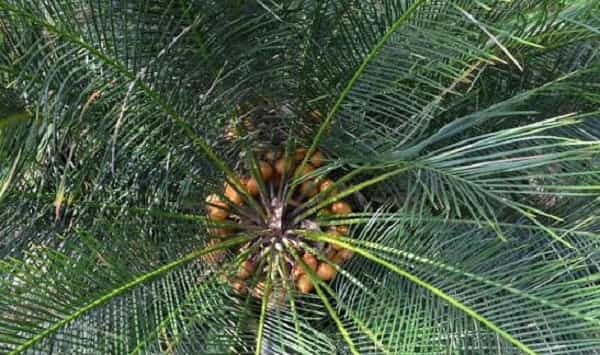
Beddome’s Cycad, scientifically known as Cycas beddomei, is one of India’s most precious ancient plants. It is found mainly in the Eastern Ghats of Andhra Pradesh, especially around rocky and dry hill slopes. Cycads look like palms, but they are much older in evolutionary history. They belong to a plant group that existed even before flowering plants became dominant.
This species is listed among India’s specially protected plants under Schedule VI of the Wildlife Protection Act, along with a few other rare plant species. Its wild population has suffered because of habitat pressure, illegal collection and slow natural regeneration. Since cycads grow slowly, any damage to wild plants takes many years to recover.
2. Guggul
Guggul, or Commiphora wightii, is a small, thorny medicinal shrub found mainly in dry parts of Rajasthan, Gujarat, Madhya Pradesh, Maharashtra and Haryana. It is famous for its gum resin, which has been used in Ayurveda and traditional medicine for centuries.
The problem is that the same resin has pushed the plant into danger. To extract gum, people often damage the bark badly, and many plants do not survive repeated tapping. A 2024 case study describes Guggul as Critically Endangered and notes that overexploitation has depleted its natural population in dry regions of India. Guggul is a perfect example of how medicinal value can become a threat when harvesting is not controlled.
3. Indian Pitcher Plant
The Indian Pitcher Plant, Nepenthes khasiana, is one of India’s most unusual plants. It is a carnivorous plant that traps insects inside modified pitcher-like leaves. It is mainly found in Meghalaya and nearby parts of Northeast India. In a country full of neem, banyan, mango and peepal, this insect-eating plant feels almost like something from another world.
It is protected under Schedule VI of the Wildlife Protection Act, which shows its legal conservation importance in India. Its major threats include habitat destruction, mining, forest degradation, collection for curiosity and very limited natural distribution. Because it grows only in specific moist habitats, even small ecological changes can affect its survival.
4. Agarwood
Agarwood, or Aquilaria malaccensis, is one of the most valuable tree species found in Northeast India. It produces a fragrant resin used in perfumes, incense, traditional medicine and religious products. This resin is so valuable that agarwood has been called “liquid gold” in many markets.
But this value has made the tree highly vulnerable. BSI’s Non-Detriment Finding report notes that Aquilaria malaccensis is listed as Critically Endangered on the IUCN Red List and is also covered under CITES trade regulation. Illegal felling, resin extraction, habitat loss and wild trade pressure have reduced its natural population. Cultivation is increasing, but wild agarwood forests still need strong protection.
5. Himalayan Yew
The Himalayan Yew, Taxus wallichiana, is a slow-growing conifer found in Himalayan regions. It is famous because compounds from yew species are used in cancer-related medicines. This medicinal importance has made the tree scientifically valuable, but it has also invited heavy exploitation.
Studies and conservation summaries describe Taxus wallichiana as endangered, with climate change and overharvesting becoming serious concerns in the Indian Himalayan region. Its leaves and bark have been collected heavily, and because the tree grows slowly, natural recovery is difficult. Protecting Himalayan Yew means protecting both mountain forests and future medicinal resources.
6. Jatamansi
Jatamansi, or Nardostachys jatamansi, is a high-altitude Himalayan medicinal herb. It grows in cold alpine and subalpine regions and is valued for its aromatic rhizomes. Traditional medicine systems use it for many purposes, especially related to calming, fragrance and herbal formulations.
The IMPPAT database lists Nardostachys jatamansi as Critically Endangered, and Kew describes its native range from the Himalaya to western and central China and northern Myanmar. The biggest threat is overharvesting of rhizomes, because removing the underground part often kills the plant. Climate change, grazing and shrinking alpine habitats add more pressure.
7. Kuth
Kuth, also known as Saussurea costus or Saussurea lappa, is another highly valued Himalayan medicinal plant. Its roots are used in traditional medicine, perfumes and herbal products. It is found mainly in the western Himalayas, especially Jammu & Kashmir and Himachal Pradesh.
Kuth is one of the few plants listed under Schedule VI of India’s Wildlife Protection Act. A conservation study also describes it as Critically Endangered on the IUCN Red List and notes that wild collection of Costus is banned in India. Its decline is mainly linked to excessive root collection, illegal trade and shrinking natural habitats.
8. Atis
Atis, or Aconitum heterophyllum, is a rare Himalayan medicinal herb found in Jammu & Kashmir, Himachal Pradesh and Uttarakhand. It grows in subalpine and alpine slopes, usually at high elevations. Its roots are used in traditional medicine, but like many Himalayan herbs, that usefulness has become its weakness.
Recent conservation reporting from Uttarakhand listed Aconitum heterophyllum among endangered species targeted for reintroduction into natural habitats. The plant faces threats from overcollection, habitat degradation, grazing and climate-related changes in high-altitude ecosystems. Since it grows in narrow mountain zones, its natural recovery is slow.
9. Paphiopedilum druryi
Paphiopedilum druryi, also called Sahyadri Gold Orchid or a lady’s slipper orchid, is one of India’s rarest orchids. It is endemic to the southern Western Ghats, especially the Agasthyamalai region. Its slipper-shaped flower makes it highly attractive, but that beauty has also made it a target for collectors.
A Botanical Survey of India document notes that Paphiopedilum druryi falls under the Critically Endangered category according to IUCN version 2021-3, while India Flora Online also records it as Critically Endangered and endemic to the southern Western Ghats. Its major threats are illegal collection, small wild population, habitat disturbance and very restricted distribution.
10. Khasi Holly
Khasi Holly, or Ilex khasiana, is a rare tree endemic to the Khasi Hills of Meghalaya. It is one of those plants most Indians have never heard of, yet it is among the most endangered trees in the country. It survives only in limited pockets, which makes it highly vulnerable to habitat damage.
A scientific study describes Ilex khasiana as a rare and critically endangered holly tree endemic to the Khasi Hills of Meghalaya. Another study reported that only around 3,000 individuals were surviving and highlighted the need for reintroduction planning. Forest disturbance, low regeneration and small population size are its biggest threats.
Why These Plants Are Disappearing
The main reasons are overharvesting, illegal trade, habitat destruction, road building, mining, grazing, climate change and poor natural regeneration. Medicinal plants like Guggul, Jatamansi, Kuth and Atis are collected for roots, resin or rhizomes. Orchids like Paphiopedilum druryi suffer because of collectors. Rare trees like Khasi Holly and Agarwood lose habitat and face trade pressure.
India has legal protection for some of these plants, but conservation must go beyond paper. Botanical gardens, seed banks, tissue culture, community protection, forest restoration and controlled cultivation are all needed.
Conclusion
India’s endangered plants are living medicines, living history and living beauty. Saving them means protecting forests, traditional knowledge and future biodiversity. If these silent green treasures disappear, the loss will be far deeper than we can imagine.