 By Hemant Sharma
 India’s rivers do more than flow through mountains, valleys and plains. They carry electricity, irrigation, drinking water, flood control and regional development. A hydro power plant looks calm from outside, but inside it is a powerful engineering world where falling water spins giant turbines and sends clean electricity into the grid.
In 2026, hydro power has become even more important for India because solar and wind need balancing support, and hydro plants can quickly increase or reduce generation during peak demand. India’s major hydro stations are spread across the Himalayas, Western Ghats, Narmada basin, Krishna basin and North-East India. This list focuses on India’s biggest and most important hydro power plants by installed capacity, strategic value and current relevance.
1. Tehri Hydro Power Complex, Uttarakhand
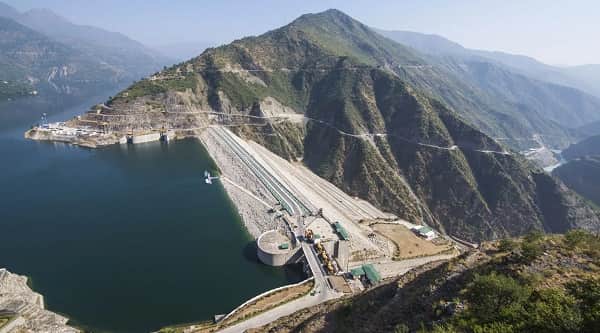
Tehri Hydro Power Complex is one of India’s most important hydro energy assets. Built on the Bhagirathi River in Uttarakhand, it includes Tehri Dam & HPP, Koteshwar HEP and Tehri Pumped Storage Plant. In 2026, PIB noted that the complex comprises Tehri HPP of 1,000 MW, Koteshwar HPP of 400 MW and Tehri PSP of 1,000 MW, taking the total installed capacity to 2,400 MW.
Tehri is not only about electricity. It also supports irrigation, drinking water supply and flood moderation. The pumped storage component makes it more valuable in today’s renewable-heavy power system because it can store energy and supply peak power when demand rises.
- Capacity: 2,400 MW
- River: Bhagirathi
- Operator: THDC India Limited
2. Koyna Hydroelectric Project, Maharashtra
Koyna Hydroelectric Project is one of India’s most famous and powerful hydro projects. Located in Satara district of Maharashtra, it uses the waters of the Koyna River and the natural height of the Western Ghats to generate electricity. Maharashtra Water Resources Department documents mention Koyna’s installed hydropower capacity as 1,960 MW.
The project has multiple stages and underground powerhouses. It is often called the lifeline of Maharashtra’s power system because it provides valuable peaking power. Koyna is also an engineering landmark because of its location, tunnel system and use of high hydraulic head.
- Capacity: 1,960 MW
- River: Koyna
- State: Maharashtra
3. Srisailam Hydroelectric Project, Andhra Pradesh and Telangana
Srisailam is one of the biggest hydro power projects in southern India. Built on the Krishna River, it has powerhouses on both sides of the dam. APGENCO lists Srisailam Right Bank Power House at 770 MW, while the Left Bank Power House adds another 900 MW, taking the combined hydro capacity to 1,670 MW.
The project is important for power generation, irrigation and water management. Since it is linked with the Krishna basin, its generation depends heavily on monsoon inflows and reservoir levels. Srisailam remains one of the strongest hydro assets in peninsular India.
- Capacity: 1,670 MW
- River: Krishna
- States: Andhra Pradesh and Telangana
4. Nathpa Jhakri Hydro Power Station, Himachal Pradesh
Nathpa Jhakri Hydro Power Station is one of the finest run-of-the-river hydro projects in India. Located on the Sutlej River in Himachal Pradesh, it is operated by SJVN. SJVN describes Nathpa Jhakri as a 1,500 MW hydro power station designed to generate 6,612 million units annually.
The plant uses a long headrace tunnel and an underground powerhouse. It is a major electricity supplier for north India and is known for handling heavy silt conditions in the Sutlej. Its successful operation makes it a benchmark project in Himalayan hydropower.
- Capacity: 1,500 MW
- River: Sutlej
- Operator: SJVN
5. Sardar Sarovar Hydro Electric Project, Gujarat
Sardar Sarovar is one of India’s most discussed multipurpose river projects. Located on the Narmada River in Gujarat, it supports irrigation, drinking water supply and power generation. The Sardar Sarovar Narmada Nigam states that the project generates 1,450 MW through six 200 MW Francis pump-turbines in the riverbed powerhouse and five 50 MW Kaplan turbines in the canal head powerhouse.
The project benefits Gujarat, Madhya Pradesh, Maharashtra and Rajasthan in different ways. Its power generation is especially useful during monsoon periods when reservoir levels are strong.
- Capacity: 1,450 MW
- River: Narmada
- State: Gujarat
6. Bhakra Hydel Power Houses, Himachal Pradesh and Punjab
Bhakra is one of the most iconic dam projects in India’s development history. Built on the Sutlej River, it remains a symbol of post-independence engineering ambition. BBMB lists Bhakra Right Bank Power House at 785 MW and Bhakra Left Bank Power House at 630 MW, giving a combined capacity of 1,415 MW.
Bhakra supplies power to northern states and also supports irrigation through the Bhakra-Nangal system. Its huge reservoir, Gobind Sagar, plays an important role in water storage and regional agriculture.
- Capacity: 1,415 MW
- River: Sutlej
- Operator: Bhakra Beas Management Board
7. Karcham Wangtoo Hydro Power Plant, Himachal Pradesh
Karcham Wangtoo is India’s largest private-sector hydro power plant. Located in Kinnaur district of Himachal Pradesh on the Sutlej River, it is operated by JSW Energy. JSW Energy lists the plant with a 1,091 MW capacity and run-of-river design.
The project has underground infrastructure and strong sediment management systems. It plays a major role in Himachal Pradesh’s hydro economy and supplies clean power through long-term power purchase agreements.
- Capacity: 1,091 MW
- River: Sutlej
- Operator: JSW Energy
8. Sharavathi Hydroelectric Project, Karnataka
Sharavathi is one of Karnataka’s most important hydro projects. Located in the Western Ghats, it uses the waters of the Sharavathi River, the same river associated with the famous Jog Falls. Karnataka SLDC lists Sharavathi generating station with a capacity of 1,035 MW.
The project is crucial for Karnataka’s grid, especially during peak demand. It is also part of a sensitive ecological region, so future development around Sharavathi needs careful environmental balance.
- Capacity: 1,035 MW
- River: Sharavathi
- State: Karnataka
9. Indira Sagar Power Station, Madhya Pradesh
Indira Sagar Power Station is a major hydro project on the Narmada River in Madhya Pradesh. NHPC/NHDC lists the project at 1,000 MW, with eight units of 125 MW each, and commercial operation from May 2005.
Apart from electricity, the project is important for irrigation and water management in the Narmada basin. It is one of central India’s biggest hydro assets and supports Madhya Pradesh’s clean power supply.
- Capacity: 1,000 MW
- River: Narmada
- Operator: NHDC
10. Subansiri Lower Hydroelectric Project, Arunachal Pradesh and Assam
Subansiri Lower is one of India’s most important hydro projects in 2026. Located on the Subansiri River near the Arunachal Pradesh-Assam border, it is being developed by NHPC. The project has a planned capacity of 2,000 MW through eight units of 250 MW each, with NHPC showing completion expected around March 2027.
By 2026, the project had entered phased commissioning. Reports in May 2026 stated that the fourth unit had begun commercial operation, taking operational capacity to 1,000 MW. This makes Subansiri Lower one of the most significant hydro developments in India’s current power sector.
- Planned capacity: 2,000 MW
- Operational capacity in 2026: Around 1,000 MW
- Operator: NHPC
Conclusion
India’s major hydro power plants are not just electricity projects; they are river-based engines of development. From Tehri and Koyna to Nathpa Jhakri, Sardar Sarovar and Subansiri Lower, these projects will remain important for clean power, grid stability and India’s future energy security.