 By Hemant Sharma
 Some trees take decades to become useful. Others rise like a green miracle. One monsoon passes, then another, and suddenly a small sapling becomes a tall shade-giver, a timber source, a wind barrier, a fruit provider, or a home for birds. In a country like India, where summers are getting harsher and open spaces are shrinking, fast growing trees are not just beautiful additions. They are practical climate helpers.
Fast growing trees are useful for home gardens, farms, roadsides, institutions, parks, agroforestry, and commercial plantations. But the right tree must be chosen according to soil, rainfall, water availability, space, and local ecology. Some trees are excellent for timber, some for shade, some for fodder, and some for soil improvement. Here are the top 10 fast growing trees in India that are popular, useful, and suitable for different Indian conditions.
1. Melia Dubia / Malabar Neem
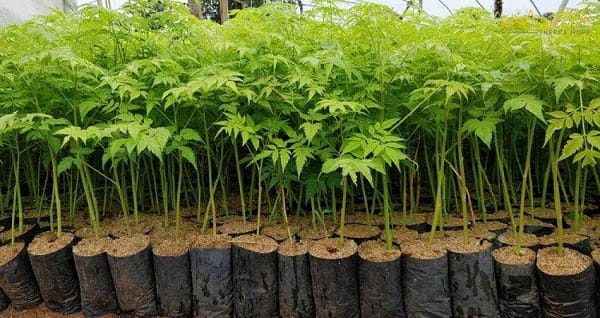
Melia Dubia, popularly called Malabar Neem, is one of the most talked-about fast growing timber trees in India. It is different from common neem and is mainly grown for plywood, pulpwood, packing cases, matchwood, and commercial timber. ICAR sources describe Melia dubia as a promising agroforestry tree because of its fast growth, good pulp recovery, and strong wood quality.
This tree grows straight, has comparatively low branching, and can be managed well in farm forestry. Farmers in Tamil Nadu, Karnataka, Andhra Pradesh, Telangana, and parts of Maharashtra have shown growing interest in it. With proper spacing, irrigation, and soil care, it can give a good return in a shorter period compared to many traditional timber trees.
2. Eucalyptus
Eucalyptus is one of the fastest growing plantation trees in India. It is widely planted for paper pulp, poles, fuelwood, and industrial wood. Its straight growth and short rotation make it attractive for commercial plantations. Studies on agroforestry in India have repeatedly included eucalyptus among important fast growing species, along with poplar, leucaena, and bamboo.
However, eucalyptus should not be planted blindly everywhere. It needs proper site selection. In water-scarce regions, large-scale monoculture plantation can create ecological concerns. It performs better when planted with planning, proper spacing, soil management, and expert guidance. For farmers with suitable land and market linkage, it can be a strong commercial option.
3. Poplar
Poplar is a highly preferred fast growing tree in north India, especially in Punjab, Haryana, western Uttar Pradesh, Uttarakhand, and parts of Himachal Pradesh. It is commonly used in agroforestry because crops can be grown under it during the early years. Poplar wood is used in plywood, matchsticks, furniture boards, packaging, and sports goods.
Under good conditions, poplar can grow very quickly and become harvest-ready in a few years. It loves fertile alluvial soil and irrigation, which is why it has become popular in the Indo-Gangetic plains. For farmers who want a tree that works well with agriculture, poplar remains one of the most practical choices.
4. Subabul
Subabul, scientifically known as Leucaena leucocephala, is a fast growing multipurpose tree. It is valued for fodder, fuelwood, green manure, pulpwood, and soil improvement. It belongs to the legume family, so it can help improve soil fertility through nitrogen fixation.
World Agroforestry describes Leucaena as useful for shade, shelterbelts, fodder, and agroforestry systems. Subabul grows well in many tropical and subtropical parts of India, especially where the climate is warm. It is often planted on farm boundaries, wastelands, and degraded lands. Still, it should be managed carefully because in some places it can spread aggressively if left unchecked.
5. Kadamba
Kadamba, also called Kadam, is one of India’s most graceful fast growing trees. It has a straight trunk, broad leaves, and beautiful round yellow-orange flowers. It is also spiritually important in Indian culture and is associated with Lord Krishna.
From a practical angle, Kadamba is excellent for shade, timber, pulp, plywood, and ornamental planting. World Agroforestry notes that Kadamba usually shows fast growth during the first 6–8 years and can be felled around 10–15 years depending on purpose and conditions. It grows best in moist, warm, tropical regions and is suitable for parks, campuses, village roads, and agroforestry plots.
6. Moringa / Drumstick Tree
Moringa is one of the fastest useful trees for Indian homes and farms. It is not just a tree; it is almost a kitchen companion. Its leaves, pods, flowers, and seeds are useful. The drumstick pods are widely used in Indian cooking, especially in South India.
World Agroforestry describes moringa as an extremely fast-growing tree, with young trees capable of reaching impressive height within just a few months under good conditions. It can grow in dry areas, needs less care after establishment, and responds well to pruning. For small gardens, farms, and nutrition-focused planting, moringa is one of the best choices.
7. Casuarina
Casuarina is a fast growing tree widely planted in coastal India. It is especially common in Tamil Nadu, Andhra Pradesh, Odisha, West Bengal, and coastal Karnataka. It is valued for fuelwood, poles, paper pulp, windbreaks, and coastal shelterbelts.
World Agroforestry records that Casuarina equisetifolia shows fast early growth and can grow around 2 metres per year under favourable conditions. Its ability to grow in sandy and coastal soils makes it highly useful for protecting shorelines and reducing wind damage. It is not the best tree for every home garden, but for coastal belts and farm forestry, it is very valuable.
8. Gmelina / Gamhar
Gmelina, commonly known as Gamhar, is a fast growing timber tree found in many parts of India. It produces light but useful wood, which is used for furniture, plywood, matchwood, packing boxes, and general construction work.
World Agroforestry describes Gmelina arborea as suitable for agroforestry because of its fast growth, easy establishment, and good regeneration from seeds and sprouts. It grows well in warm climates and does best in well-drained soil. For farmers looking for a timber tree with relatively quick returns, Gamhar is a strong option.
9. Gulmohar
Gulmohar is one of the most beautiful fast growing ornamental trees in India. When it blooms, the whole tree looks like it has caught fire with red-orange flowers. It is commonly seen along roads, in parks, schools, colleges, and large gardens.
World Agroforestry describes Delonix regia as fast growing, though it also notes that the tree has shallow roots and needs careful pruning and suitable placement. Gulmohar is not usually grown for timber. Its real value lies in beauty, shade, and urban landscaping. It needs enough open space because its canopy spreads wide.
10. Karanj
Karanj, also known as Pongamia, is a hardy, medium-sized fast growing tree suitable for Indian conditions. It is commonly planted on roadsides, farm boundaries, degraded lands, and community spaces. Its seeds contain oil, which has been studied for biodiesel and other uses.
CIFOR notes that Pongamia has a wide native distribution in Asia and Australia and has strong potential for restoring damaged and degraded landscapes. It is drought-tolerant after establishment and has a strong root system. Karanj is also useful as a shade tree and soil-improving tree, especially in rural and semi-urban areas.
Best Tree for Different Needs
For quick shade, Kadamba, Gulmohar, Karanj, and Neem-type native trees are good choices. For commercial timber, Melia Dubia, Poplar, Gmelina, Eucalyptus, and Casuarina are more practical. For small home use, Moringa is one of the best because it grows fast and gives edible pods and leaves. For coastal areas, Casuarina is highly useful. For farms, Subabul, Poplar, Melia Dubia, and Gmelina can work well depending on local climate and market demand.
Conclusion
Fast growing trees can change a hot, empty space into a living green shelter within a few years. The best choice depends on your land, water, purpose, and region. Plant the right tree in the right place, and it will reward you for years.