 By Hemant Sharma
 Isaac Newton is often remembered as the man who explained gravity after watching an apple fall. While that story is famous, it barely scratches the surface of who Newton really was. He was not just a scientist, but a complex, intense, and sometimes mysterious human being whose ideas reshaped how we understand the universe.
Newton lived in a time when science, philosophy, religion, and magic often overlapped. He worked in silence, argued fiercely with rivals, and produced ideas so powerful that they dominated science for more than 200 years. These ten interesting facts reveal the lesser-known sides of Isaac Newton and why his legacy is far deeper than a falling apple.
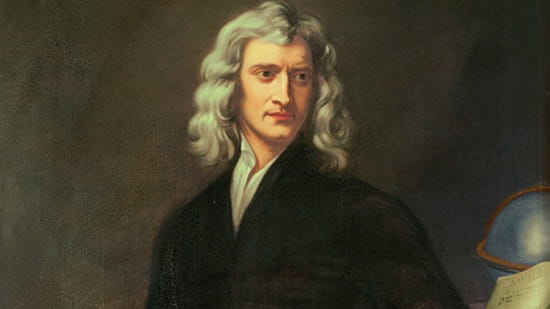
1. Newton Was Born During a Time of Crisis
Isaac Newton was born in 1643, during a deeply unstable period in England.
The country was in the middle of civil war, disease was common, and infant mortality was high. Newton himself was born prematurely and was so small that many believed he would not survive.
That a child born weak and fragile would grow up to become one of history’s greatest minds is one of the great ironies of science.
2. The Apple Story Is Partly True—but Misunderstood
Yes, an apple really did inspire Newton.
However, the apple did not fall on his head. What mattered was the question it triggered: Why does the apple fall straight down instead of sideways or upward? This simple observation led him to think deeply about forces acting at a distance.
From this, Newton developed the idea that the same force pulling the apple down also governs the motion of the Moon and planets. That insight changed physics forever.
3. Newton Invented Calculus—At the Same Time as Someone Else
Newton developed calculus to solve problems in motion and change.
Around the same time, German mathematician Gottfried Wilhelm Leibniz independently developed his own version of calculus. This led to one of the most bitter disputes in scientific history.
Newton accused Leibniz of plagiarism, and the controversy split European mathematics for decades. Today, both men are credited as co-inventors, but the feud shows Newton’s deeply competitive nature.
4. He Wrote a Book That Defined Science for Centuries
Newton’s most famous work, Principia Mathematica, is one of the most important books ever written.
In it, he explained the laws of motion and universal gravitation using mathematics. These laws described how objects move on Earth and in space with incredible accuracy.
For over 200 years, scientists used Newton’s laws as the foundation of physics. Even today, they are still used in engineering and space travel.
5. Newton Was Obsessed with Light and Color
Newton performed groundbreaking experiments with light.
Using prisms, he showed that white light is actually made of many colors. This contradicted popular beliefs at the time and laid the foundation for modern optics.
He also invented the reflecting telescope, which used mirrors instead of lenses. This design reduced distortion and is still used in powerful telescopes today.
6. Newton Spent More Time on Alchemy Than Physics
One of the most surprising facts is that Newton was deeply involved in alchemy.
He spent years studying ancient texts, experimenting with metals, and searching for hidden knowledge. He believed that nature held secrets that could be unlocked through careful study of symbols and substances.
While alchemy is not considered science today, Newton saw it as a path to understanding the universe at a deeper level. Much of this work was kept secret during his lifetime.
7. He Was Deeply Religious—but Not in a Typical Way
Newton wrote more about religion than science.
He studied the Bible intensely and believed that understanding God’s design was part of understanding nature. However, many of his religious views differed from mainstream beliefs of his time, which is why he kept them private.
For Newton, science and faith were not opposites. They were two ways of exploring the same truth.
8. Newton Was a Difficult Personality
Newton was brilliant—but not easy to work with.
He was private, sensitive to criticism, and held grudges for years. He often avoided debate but reacted fiercely when challenged. Several of his rivals described him as intimidating and unforgiving.
Despite this, his strict standards pushed science toward precision and rigor. He demanded proof, logic, and mathematical clarity when others relied on speculation.
9. He Became One of the Most Powerful Men in England
Later in life, Newton moved away from pure science.
He became the Warden and later the Master of the Royal Mint, where he aggressively fought counterfeiting. He personally investigated criminals and helped reform England’s currency system.
This role gave Newton real political power—something few scientists ever experience.
10. Newton Changed How Humans See the Universe
Before Newton, the universe felt mysterious and unpredictable.
After him, nature seemed governed by clear, mathematical laws. Motion, gravity, light, and force could be measured, predicted, and understood.
Even when later scientists like Einstein went beyond Newton’s ideas, they built on his foundation. Newton didn’t just answer questions—he taught humanity how to ask them.
Conclusion
Isaac Newton was not just a scientist with a clever idea. He was a man driven by obsession, curiosity, and a belief that the universe could be understood through reason. His work bridged the gap between ancient philosophy and modern science.
Behind the calm portraits lies a restless mind that refused to accept easy answers. Newton showed that simple observations can lead to revolutionary ideas—and that one person, thinking deeply and patiently, can change how the entire world understands reality.
Even today, centuries later, when we talk about motion, gravity, light, or scientific method itself, we are still living in Newton’s universe.