 By Hemant Sharma
 Computer engineering sits quietly behind almost everything modern life depends on. Smartphones, laptops, satellites, medical machines, cars, traffic systems, and even household appliances all rely on the work of computer engineers. Yet most people confuse computer engineering with just coding or IT jobs. In reality, it’s much deeper—and far more powerful.
Computer engineering is where hardware and software meet. It blends electronics, mathematics, logic, and programming into one discipline. Computer engineers don’t just write code; they design the machines that run that code. These ten interesting facts reveal why computer engineering is one of the most influential fields shaping the modern world.
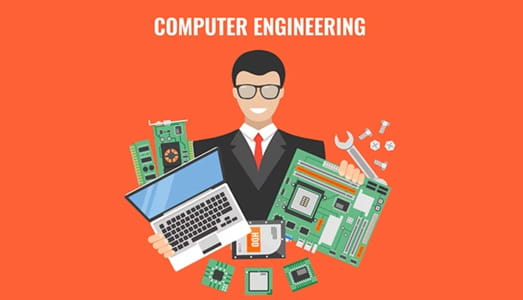
1. Computer Engineering Is a Hybrid Field
Computer engineering is not purely software and not purely hardware.
It exists at the intersection of electrical engineering and computer science. Computer engineers study circuits, microprocessors, logic gates, and signals—but they also write low-level software, firmware, and system-level code.
This hybrid nature allows computer engineers to understand a machine from the inside out. They know how electrons move through circuits and how instructions are executed by a processor.
2. Computer Engineers Design the “Brains” of Devices
Every smart device has a brain.
Microcontrollers, CPUs, GPUs, and embedded systems are all designed or optimized by computer engineers. These tiny chips decide how fast your phone responds, how efficiently a car’s engine runs, or how accurately a medical device works.
Most users interact only with screens and apps. Computer engineers work beneath that layer—where performance, power consumption, and reliability are decided.
3. Computer Engineering Is Older Than Most People Think
Computer engineering did not start with personal computers.
Its roots go back to early electrical systems, telecommunication devices, and wartime computing machines. Long before laptops existed, engineers were already designing logic circuits and programmable systems.
Modern computer engineering evolved as computers became smaller, faster, and more integrated into everyday life—but its foundations are decades old.
4. Computer Engineers Make Software Faster Without Changing Code
Speed does not always come from better software.
Computer engineers improve performance by designing better hardware architectures—faster processors, smarter memory systems, and efficient data pathways. Sometimes, the same program runs dramatically faster just because the hardware is better designed.
This invisible optimization is why newer devices feel smoother even when running similar apps.
5. Embedded Systems Run the World
Most computers don’t look like computers.
Traffic lights, washing machines, elevators, heart monitors, ATMs, cameras, drones, and industrial robots all run on embedded systems—small computers built into larger machines. These systems are designed by computer engineers.
In fact, the number of embedded computers in the world is far greater than laptops or phones. Computer engineering quietly controls everyday life.
6. Computer Engineers Work Closely With Physics
At very small scales, physics matters.
As chips shrink to nanometer sizes, heat, quantum effects, and electrical interference become major challenges. Computer engineers must understand physics to prevent overheating, signal loss, and hardware failure.
This is why advanced computer engineering often feels closer to applied physics than simple programming.
7. Computer Engineering Is Critical to Cybersecurity
Security starts at the hardware level.
Many cyber threats exploit weaknesses in processors, memory, or system architecture—not just software bugs. Computer engineers design secure chips, encryption hardware, and trusted systems that protect data before software even runs.
Modern security is not just about firewalls. It’s about building machines that are secure by design.
8. Computer Engineers Power Artificial Intelligence
AI is not just algorithms—it’s infrastructure.
Training and running artificial intelligence models requires specialized hardware, optimized memory, and high-speed data processing. Computer engineers design the chips and systems that make AI practical and scalable.
Without computer engineering, modern AI would be too slow, too expensive, or too inefficient to use.
9. Computer Engineering Is Everywhere—but Rarely Seen
Most people never meet a computer engineer, yet depend on them constantly.
They work behind the scenes in tech companies, manufacturing plants, research labs, space agencies, hospitals, and defense systems. Their work is hidden inside devices rather than displayed on screens.
When computer engineering is done well, users never notice it. Things just work.
10. Computer Engineering Careers Are Extremely Flexible
A computer engineering degree opens many paths.
Graduates work in hardware design, software development, robotics, AI, networking, automotive systems, aerospace, IoT, and research. Some move into management, startups, or academia.
Because computer engineering teaches problem-solving at the system level, its skills remain valuable even as technologies change.
Conclusion
Computer engineering is the silent architect of the modern world. It doesn’t chase trends—it builds the foundations that trends depend on. Every app, every smart device, every digital service ultimately rests on decisions made by computer engineers.
What makes the field truly interesting is its balance: logic and creativity, theory and application, software and hardware. Computer engineers don’t just ask what a machine should do—they decide how it can do it efficiently, safely, and reliably.
As technology continues to shrink, speed up, and integrate into daily life, computer engineering will only grow more important. It may not always be visible—but without it, the digital world simply wouldn’t exist.