 By Hemant Sharma
 A data center is commonly defined only by its servers, racks, or power capacity. Its long-term performance is heavily dependent on how intelligently these elements are planned to work together.
For senior IT heads & consultants, energy and cooling efficiency begin at the design stage. Every layout decision influences airflow, thermal balance, power distribution, equipment density, and operating cost. This is why data center design for energy and cooling efficiency has become a strategic planning priority.
Today, data center designing is a strategic priority rather than just a technical exercise. But why do design considerations have the biggest impact on energy and cooling efficiency? Let’s explore the key ones.
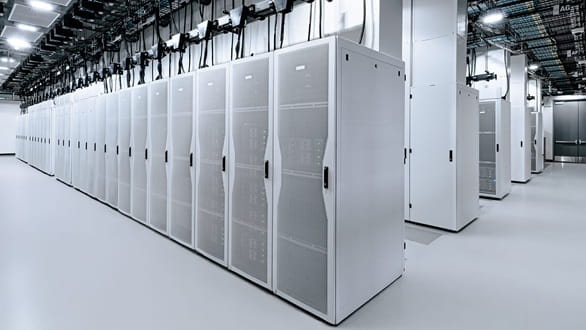
Importance of Data Centers
Data center design shapes how a facility performs under present workloads and how well it adapts to future demand. A well-planned design helps teams move from basic capacity planning toward smarter infrastructure evaluation.
Let’s learn more about why data center design is critical for energy and cooling efficiency.
1. Design Decides How Energy Moves
Data center design influences how power enters, moves through, and supports critical IT equipment. Poorly planned distribution can increase losses across electrical systems.
A structured design approach considers transformers, switchgear, UPS systems, power paths, rack loads, and redundancy requirements together. This helps teams evaluate efficiency beyond equipment selection alone.
When energy pathways are planned clearly, infrastructure teams can support reliability while reducing avoidable energy waste.
2. Cooling Efficiency With Airflow Planning
Cooling is one of the most important areas shaped by data center design. The placement of racks, containment systems, vents, return paths, and cooling units affects thermal performance.
Hot aisle and cold aisle planning help separate supply air from exhaust air. This reduces unnecessary mixing and supports more predictable cooling behavior across the white space.
For operators, better airflow planning can improve cooling effectiveness without depending only on additional cooling capacity.
3. Rack Density Changes Design Priorities
Modern workloads are increasing rack density across many facilities. AI, cloud, enterprise applications, and high-performance computing can place greater thermal demand on infrastructure.
Data center design must account for this shift before equipment is installed. Higher rack density may require stronger airflow control, liquid cooling readiness, improved monitoring, or revised power distribution.
This makes design a forward-looking decision, not a one-time construction exercise.
4. Thermal Management Needs Measurable Control
Efficient facilities depend on more than cooling equipment. They need accurate measurement, control, and visibility across temperature, humidity, airflow, and load conditions.
A strong design supports sensors, monitoring systems, control logic, and operational dashboards from the beginning. This helps teams understand how the facility behaves under different workload conditions.
Data center design becomes more valuable when it enables continuous thermal optimization after commissioning.
5. Energy Efficiency Depends on System-Level Coordination
No single component can make a facility efficient by itself. Cooling, power, space, controls, and IT load must be evaluated as connected systems.
This is where data center design plays a central role. It allows engineering teams to coordinate electrical infrastructure, mechanical systems, and operational controls around real performance goals.
Such coordination supports better decisions on capacity expansion, redundancy models, cooling methods, and future technology integration.
6. Cooling Architecture Must Match the Workload
Different workloads create different cooling demands. A facility designed for moderate enterprise loads may not suit high-density compute requirements without changes.
Air cooling, containment, chilled water systems, rear-door heat exchangers, or liquid cooling readiness may be considered based on workload profile. The right approach depends on heat output, rack density, uptime needs, and future scalability.
Data center design for energy and cooling efficiency helps decision-makers compare these options with greater technical discipline.
Build the Right Foundation for Product Discovery
Effective data center design extends way beyond selecting the right equipment. It only begins with acknowledging the priorities that shape long-term performance. Understanding design priorities is the first step toward smarter infrastructure selection.
Once the facility requirements are clear, teams can evaluate variables like power distribution, cooling systems, monitoring platforms, containment solutions, rack architecture, and control technologies with sharper intent.
A strong design foundation also helps teams make more informed, measurable decisions that support energy efficiency, reliability, and scalability. With the right design and services, every data-center design conversation becomes more focused, measurable, and aligned with long-term energy and cooling efficiency.